





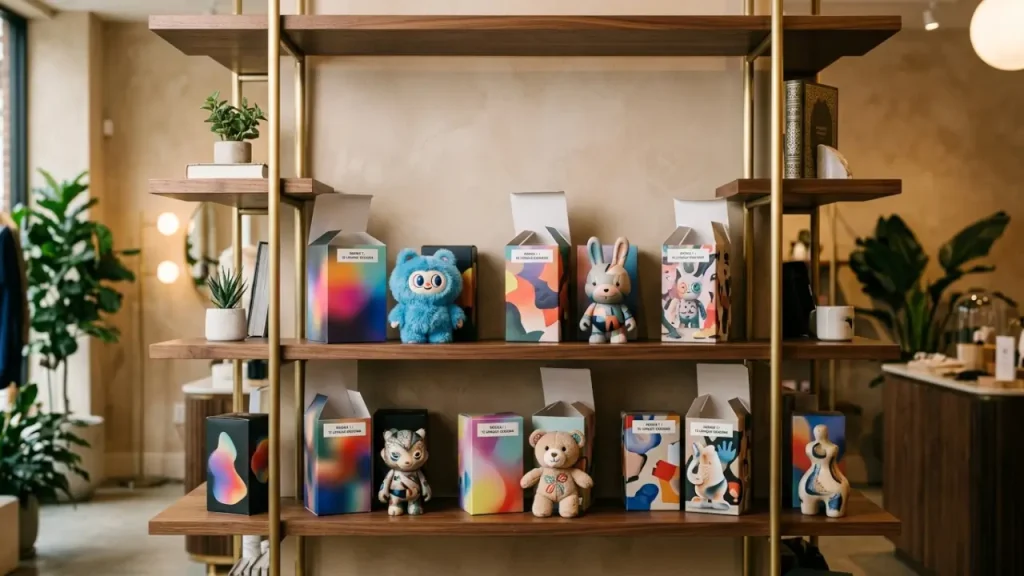
Recognizable characters can increase shopper interest, but they also tempt buyers to approve an order before checking format, assortment, packaging, or documentation. When you evaluate blind box collaborations such as Nommi x Heymi and Hirono x Le Petit Prince, the names on the box are only the starting point of the buying decision.
The commercial question is whether a series fits your store, selling window, display space, customer budget, and replenishment plan. Collaboration status does not automatically make two quotes comparable, nor does it confirm that a product is suitable for every destination market.
Why a Collaboration Is Really Two Buying Decisions
A collaboration combines two things: the appeal of the creative partnership and the practical quality of the product being ordered. A compelling character pairing may generate initial attention, while format, finish, assortment, and packaging determine whether the item actually works at retail.
Start by asking what each side of the collaboration contributes. With Nommi x Heymi, for example, request the exact series name, product format, dimensions, assortment list, and official packaging images rather than assuming it matches another Nommi release. Retailers weighing other Nommi products can use this Nommi plush series comparison to see how format and store positioning change the buying decision.
For Hirono x Le Petit Prince, decide whether customers are drawn mainly to the established literary property, the collectible character style, or both. The answer affects merchandising: an art-toy shop, a bookstore gift area, and a general gift retailer may present the same collaboration very differently.
- Collector stores: prioritize complete-series structure, sealed-case options, hidden-edition information, and box condition.
- Gift shops: focus on recognizable themes, accessible product formats, and gift-ready packaging.
- Book and museum-style stores: consider whether the visual treatment aligns with the audience already buying literary or design gifts.
- Online retailers: need accurate variant images, dimensions, weights, and clear policies for random selection.
Score Each Series by How It Would Be Stocked and Sold
Do not rank collaborations by name recognition alone. Build a scorecard around how each candidate would sit on your shelves. The following table can be reused when comparing these series with options such as the Upsetduck x Carebears Secret Wish Duck or a character-led range covered in the POP MART Disney Princess sourcing guide.
| Evaluation point | What to confirm | Retail decision |
|---|---|---|
| Product format | Figure, plush, charm, articulated doll, magnet, or another format | Confirm it fits the store’s fixtures, price architecture, and customer expectations. |
| Series composition | Regular designs, possible hidden design, and units per sealed case | Decide whether to sell singles, cases, or both. |
| Product dimensions | Item and retail-box measurements | Estimate shelf capacity and parcel size before ordering. |
| Audience overlap | Which property, artist, character, or theme drives demand | Avoid buying two collaborations that compete for exactly the same shopper. |
| Packaging condition | Retail box, inner carton, master carton, and protective packing | Set acceptable standards for collector-facing boxes. |
| Documentation | Product identity, labeling, source documentation, and available compliance information | Verify suitability for the destination market before payment. |
| Reorder feasibility | Current availability, production status, and whether the same assortment can be reordered | Separate limited buying opportunities from replenishable core stock. |
A useful rule is to reject any comparison that lacks the same basic fields. A detailed quote for one series should not be compared with a single unit price for another.
Build the Assortment First, Then Set the Order Quantity
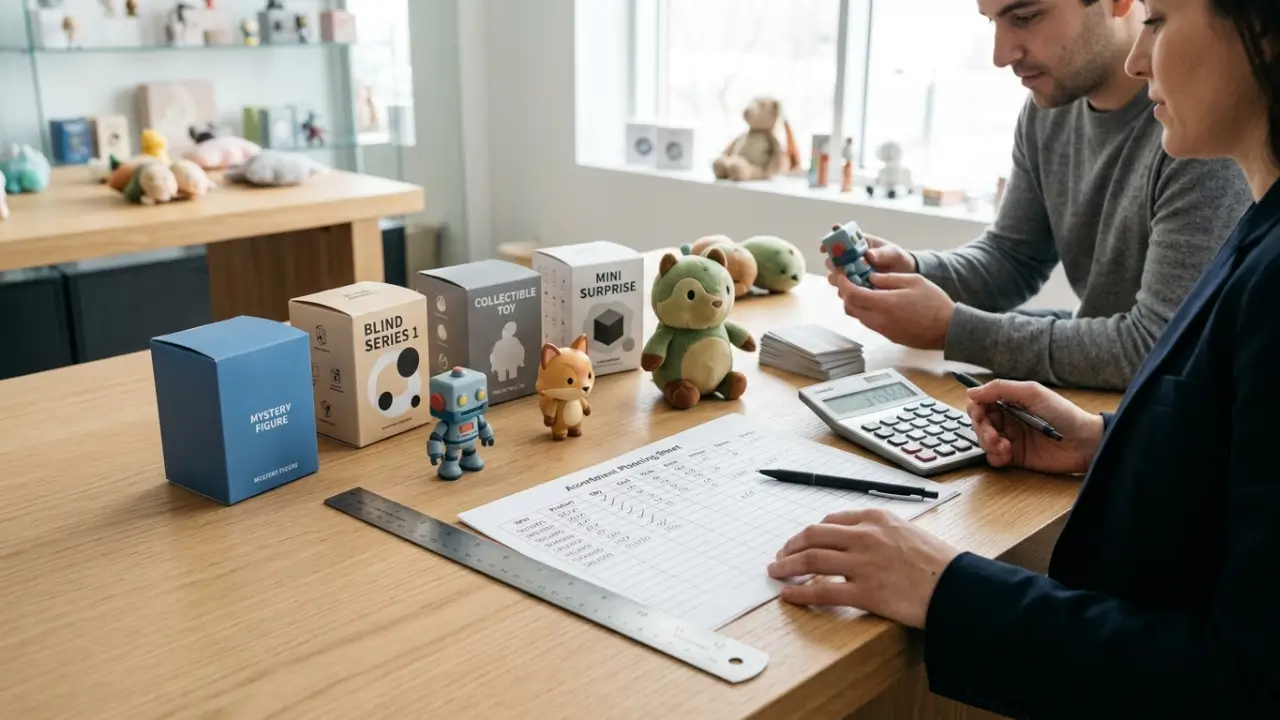
A first order should test a merchandising idea, not simply maximize the number of different series. Decide whether the collaboration will be a feature release, a small counter item, an online collectible, or part of a broader character display.
As a planning example, a retailer testing 60 units might allocate 24 units to the collaboration with the strongest audience match, 18 to a second format, 12 to an accessible gift option, and six to a higher-risk experiment. These figures are only an assortment exercise; actual order quantities depend on supplier MOQ and case configuration.
Ask whether MOQ applies per series, per design, per sealed case, or across a mixed order. Also confirm whether cartons must remain intact. The distinction matters because a low headline MOQ can still create concentration risk if every series has to be purchased in full-case increments.
If variant certainty matters, review the operational differences between sealed series sets and mixed blind box assortments. Do not assume a sealed case guarantees every regular design unless the supplier confirms the assortment structure for that exact release.
When Two Collaboration Quotes Are Not Yet Comparable
Unit price is only one part of the buying decision. Ask each supplier to quote the same product version, order quantity, packaging level, shipping term, and destination. Then calculate an estimated landed unit cost:
Estimated landed unit cost = product cost + export packing + freight + insurance if used + duties and taxes + customs or handling charges, divided by sellable units received.
Keep damaged or unsellable packaging in mind when testing margins. Collector buyers may reject a box that a general gift buyer would accept, so box condition can quietly raise the effective cost per sellable unit.
Request both unit and carton data: units per inner carton, units per master carton, carton dimensions, gross weight, and whether mixed-series consolidation is possible. Without these details, a cheaper unit quote may produce a higher landed cost.
At this stage, shortlist the collaborations that fit your assortment and request like-for-like carton information. A focused inquiry usually produces a more useful response than asking only for “the best price.”
Protect Collector Packaging and Verify the Exact Product
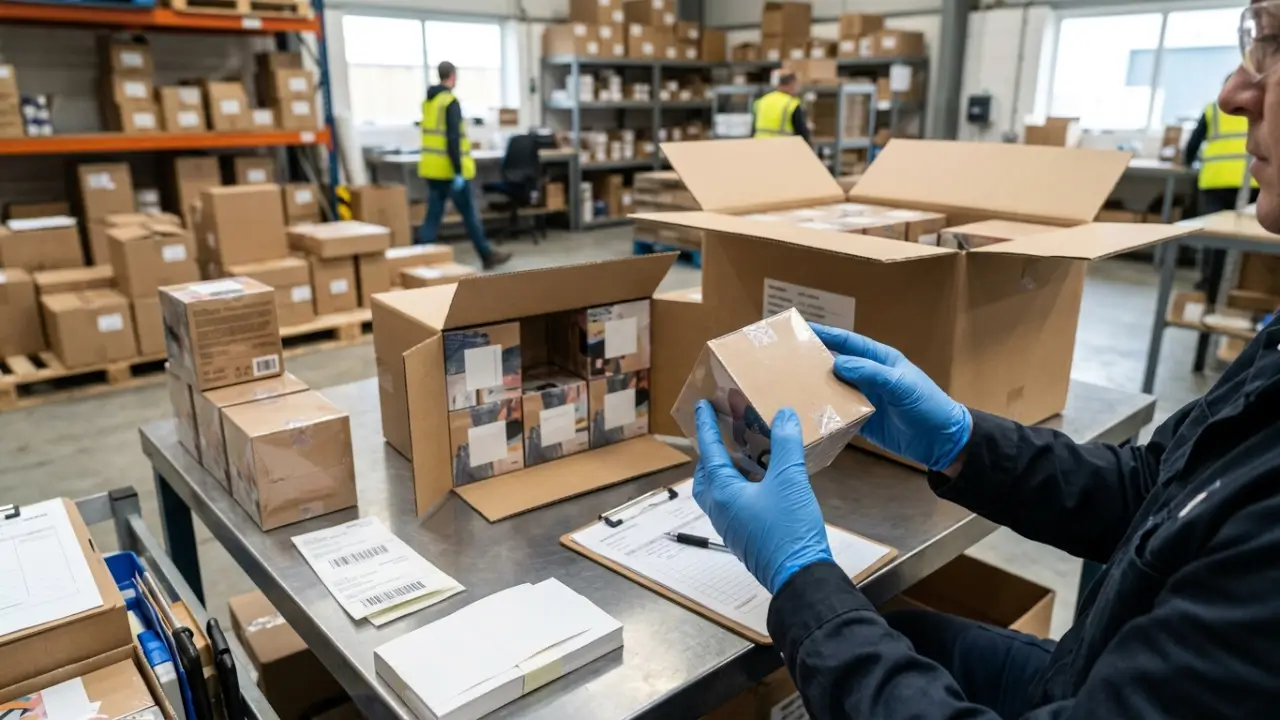
Packaging is part of the merchandise for many collaboration releases. Before approving an order, request current images of the front, back, seals, labels, and case markings for the exact series. Ask whether images are reference renders or photographs of the quoted product.
Prepare a receiving checklist covering:
- Correct series and product format.
- Expected unit count in each carton.
- No major crushing, moisture exposure, punctures, or broken seals.
- Consistent product and packaging labels.
- Visible parts, accessories, or attachments matching the confirmed specification.
- A documented process for reporting shortages or damage.
Also ask what product information and test documentation are available for review. Requirements for toys, collectibles, age grading, small parts, materials, labeling, and importer details vary by destination and sales channel. Verify applicable rules with qualified local resources rather than treating collaboration branding as evidence of compliance.
Plan Reorders Around Each Collaboration’s Selling Pattern
Some collaborations receive a strong launch response and then slow; others build through repeat exposure. Ask whether the quoted item is currently produced, being restocked, or available only from existing inventory. Treat any answer as something to document on the quotation or order record.
Track sales by series and channel instead of combining all blind box revenue. As an example planning rule, a store might review a series when 40% of its test quantity remains, then compare weekly sales with the time required to quote, pay, prepare, and transport a reorder. The threshold is not a supplier promise; it is an internal trigger that helps you avoid reacting after stock has already sold through.
For launch planning, work backward from the required shelf date. Include quotation review, payment processing, order preparation, inspection if arranged, freight, customs clearance, receiving, and merchandising. Leave contingency time because freight and border processing can vary.
Questions That Expose a Weak Collaboration Offer
Red flags include unclear series names, refusal to identify the product format, inconsistent packaging images, prices that exclude unspecified charges, or claims of a “complete set” without an explained case structure. Pressure to pay before carton data or order terms are documented is another reason to pause.
Send a structured inquiry such as:
Please quote the exact collaboration series and product format shown in the attached reference. Include available quantity, MOQ, units per sealed case, master-carton quantity, carton dimensions and gross weight, product dimensions, assortment structure, packaging type, quotation validity, payment terms, preparation estimate, shipping term, and available product or compliance documentation. Please also confirm how shortages, transit damage, and materially incorrect items are handled.
Before accepting the quote, check that the company name and payment recipient are consistent with the commercial documents, clarify which party arranges freight, and retain the confirmed specification. Do not rely on chat photos alone when packaging version or authenticity is commercially important.
Ready to compare collaboration stock? Prepare a shortlist with the exact series, preferred case quantity, destination, required shelf date, and sales channel, then request a written quote covering both product and carton specifications. This gives the supplier enough information to respond accurately and gives your team a defensible basis for approval.
FAQ
Are collaboration blind boxes always easier to sell?
No. A recognizable collaboration can attract attention, but sales still depend on audience fit, product format, presentation, price positioning, and timing. Test demand rather than treating the names alone as proof of sell-through.
What should I confirm before ordering Nommi x Heymi?
Confirm the exact series name, product format, dimensions, case quantity, assortment structure, packaging version, MOQ, and available documentation. Do not assume its specifications match another Nommi series.
Should retailers buy sealed cases or mixed collaboration assortments?
Sealed cases can support case sales and more controlled series merchandising, while mixed assortments can reduce concentration risk. Ask how each option is packed and whether any design distribution is guaranteed for the exact release.
How can I compare prices for different blind box collaborations?
Compare equivalent quantities and include packing, freight, duties, taxes, handling, and expected sellable units. Product dimensions and carton configuration can make a lower unit price more expensive after delivery.
What documentation should a collaboration supplier provide?
Ask for documents that identify the product and seller, plus available labeling, sourcing, and compliance information relevant to the item. Buyers should independently verify import, safety, and labeling requirements for their destination market.
Final Thoughts
Nommi x Heymi, Hirono x Le Petit Prince, and other collaboration releases should be evaluated as both creative products and commercial inventory. Confirm the exact item, compare complete landed-cost inputs, protect packaging, document order terms, and place a test quantity that matches your store’s real audience.

