



In standard retail, a toy’s lifecycle ends the moment it crosses the checkout counter. However, in the art toy and blind box ecosystem, an entirely secondary economy exists: Toy Customizers. These highly skilled hobbyists strip factory paint, sculpt new accessories, and execute intricate repaints to turn mass-produced $15 blind boxes into $150 unique works of art.
For an independent toy store owner, viewing customizers merely as regular shoppers is a massive operational blind spot. In B2B retail strategy, customizers act as an unofficial extension of your operations team. In this guide, we will break down how to leverage local toy customizers to liquidate damaged inventory without taking a financial loss, how to host in-store workshops to drive weekday foot traffic, and how to use customized pieces as premium anchor displays to generate viral UGC.
The B-Grade Arbitrage: Turning Write-Offs into Profit
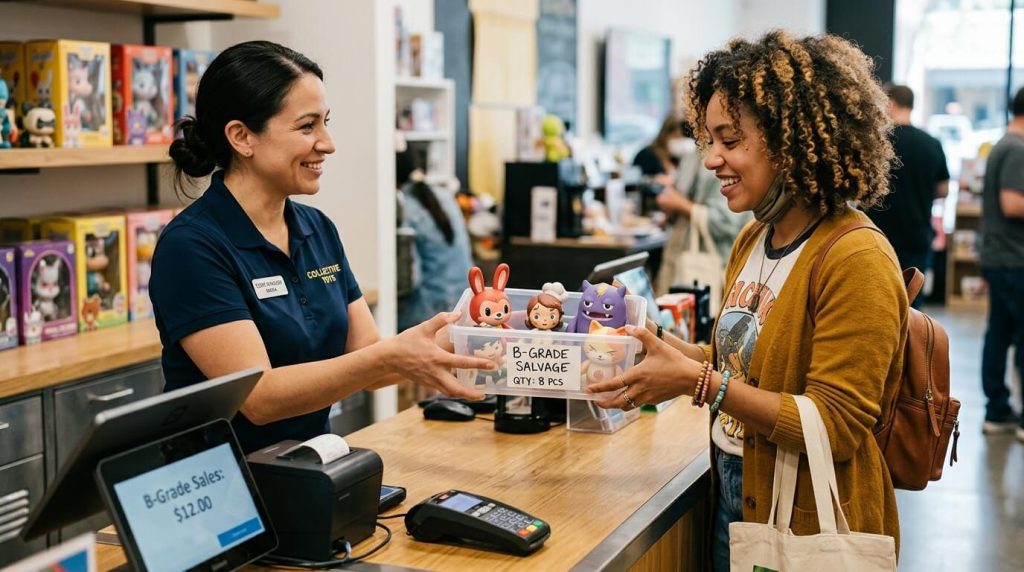
As detailed in our guide on handling factory defects and missing parts, every store eventually accumulates “B-Grade” stock. A figure with a snapped arm, severe paint overspray, or a missing base stand is completely unsellable to a standard collector. To a normal store, this is a 100% margin write-off.
To a toy customizer, a broken arm does not matter because they were going to saw it off and sculpt a new one anyway. A terrible factory paint job is irrelevant because they are going to strip the figure down to the bare vinyl with acetone.
The Salvage SOP: Create a dedicated “Customizer’s Bin” behind the register. When you absorb a broken figure via a customer return, place it in the bin. Reach out to local customizers (via your VIP Discord) and offer them this B-Grade stock at a strict 50% to 60% discount off MSRP. You instantly recover your wholesale acquisition cost, turning a total loss into a break-even transaction, while providing immense value to your local artist community.
Hosting In-Store “Repaint & Sip” Workshops
Brick-and-mortar retail often suffers from the “Weekday Lull”—dead hours on a Tuesday or Wednesday evening where foot traffic plummets to zero. You must weaponize your physical space to combat this.
Partner with a local customizer to host a paid, 2-hour “Intro to Toy Customizing” workshop in your store. The economics of this strategy are a masterclass in covert inventory liquidation.
- The Ticket Bundle: Charge $35 for the workshop ticket. The ticket includes entry, basic acrylic paint usage, and—most importantly—one blind box provided by the store to use as their “blank canvas.”
- The Liquidation Hack: Do not let attendees choose the blind box. As the store owner, you supply the boxes from your dead stock or slow-moving inventory. If you have 20 units of an unpopular series gathering dust, a 20-person workshop instantly liquidates that entire shelf at full MSRP, disguised as an “experiential fee.”
BJD and MJD Upgrades: The Modding Ecosystem
The customization market is heavily skewed toward articulated dolls. Unlike solid PVC figures, 1/12 scale BJD and MJD blind boxes are inherently modular. Customizers love swapping the inset glass eyes, changing the elastic tension, and restyling the hair.
To capture this high-intent demographic, you must cross-merchandise customization supplies right next to the BJD boxes. Stocking raw materials like 10mm/12mm acrylic eyes, doll-safe super glue, or 1/12 scale blank apparel transitions your store from a simple point of sale into a specialized hobby supplier, capturing immense secondary margin.
The “Guest Artist” Anchor Display
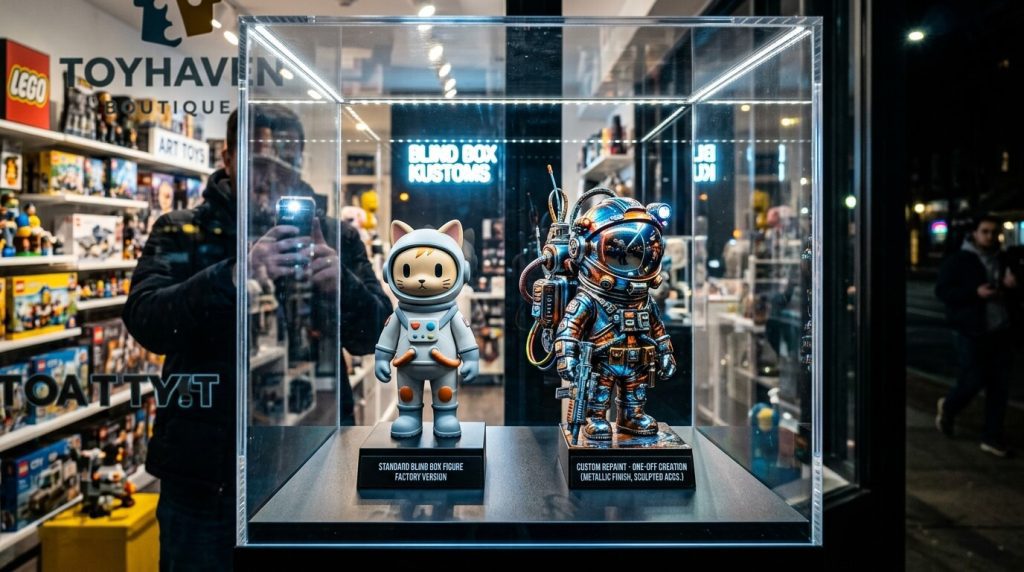
Your store’s front window is your most expensive advertising space. Putting standard factory master cartons in the window looks like a warehouse. Putting a jaw-dropping, one-of-a-kind custom art toy in the window makes your store look like a premium gallery.
The Consignment Agreement: Offer a top local customizer prime real estate inside a locked, illuminated acrylic case in your store’s “Hot Zone.” Display their highly detailed custom figure next to the standard, unpainted factory version to show the contrast.
This creates a massive “hook” for User-Generated Content (UGC). Customers walking by will inevitably stop to film the custom piece for TikTok or Instagram. You can allow the customizer to list the piece for sale on consignment (taking a standard 20% to 30% gallery cut if it sells), but the true ROI is the free social media traffic the piece generates for your storefront.
Customizer Collaboration Strategy Matrix
Use this matrix to train your management team on how to strategically integrate local artists into your retail operations.
| Collaboration Type | Retailer Cost / Input | Retail Objective / ROI | Primary Inventory Used |
|---|---|---|---|
| B-Grade / Salvage Sales | Zero (Selling write-offs at cost) | Margin Recovery: Prevents total loss on defective units. | Broken figures, missing parts. |
| In-Store Customizing Workshops | Staffing hours, basic paint supplies | Dead Stock Liquidation: Fills empty weekday hours and moves stagnant IP. | Unpopular or aging blind box series. |
| Guest Artist Display (Window) | Premium acrylic shelf space | UGC / Marketing: Drives massive foot traffic and local social media tags. | Artist’s own property (Consignment). |
Frequently Asked Questions (FAQ)
Is it legal for customizers to repaint and sell official IPs?
Yes, under the “First Sale Doctrine,” once a physical product is purchased legally, the buyer has the right to alter it and resell that specific physical object. However, customizers cannot cast molds of the figure to create unauthorized resin copies (recasting), as that is a direct violation of copyright. As a retailer, you can confidently sell them the blind boxes, but you should not facilitate the sale of unauthorized resin recasts in your store.
What kind of paint do toy customizers use?
Most professional customizers strip the factory paint using 100% pure acetone and then repaint using high-quality miniature model acrylics (like Citadel, Vallejo, or Vallejo Mecha Color) thinned down for airbrushing. If your store has extra shelf space, stocking these specific hobby paints is an excellent high-margin cross-sell.
How do I find local customizers to partner with?
They are usually already in your store. Pay attention to customers who buy multiple loose boxes and ask specific questions about the plastic type (PVC vs. ABS). Alternatively, search Instagram and TikTok using local geo-tags combined with hashtags like #DesignerToyCustom or #Repaint. Reach out to them via DM with an invitation to view your “B-Grade” salvage bin.
Where can I source complex BJD blind boxes for customizers?
Customizers prefer highly articulated figures with inset eyes for modding. Independent retailers should partner with specialized B2B aggregators like Kidults Box to source complex 1/12 MJD and BJD series directly from verified Dongguan factories, ensuring access to the high-quality blanks that local artists demand.
Viewing local artists as strategic B2B partners allows your store to completely eliminate dead stock liabilities while building a vibrant, community-driven retail brand. If you are preparing to host a custom workshop and need to secure a high volume of cost-effective base figures, exploring a reliable wholesale catalog is your next strategic step.