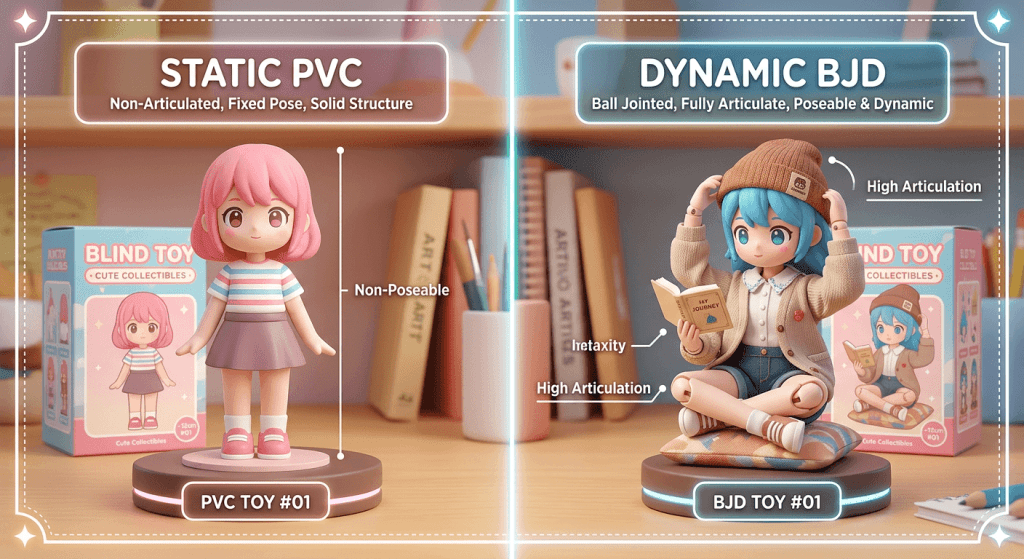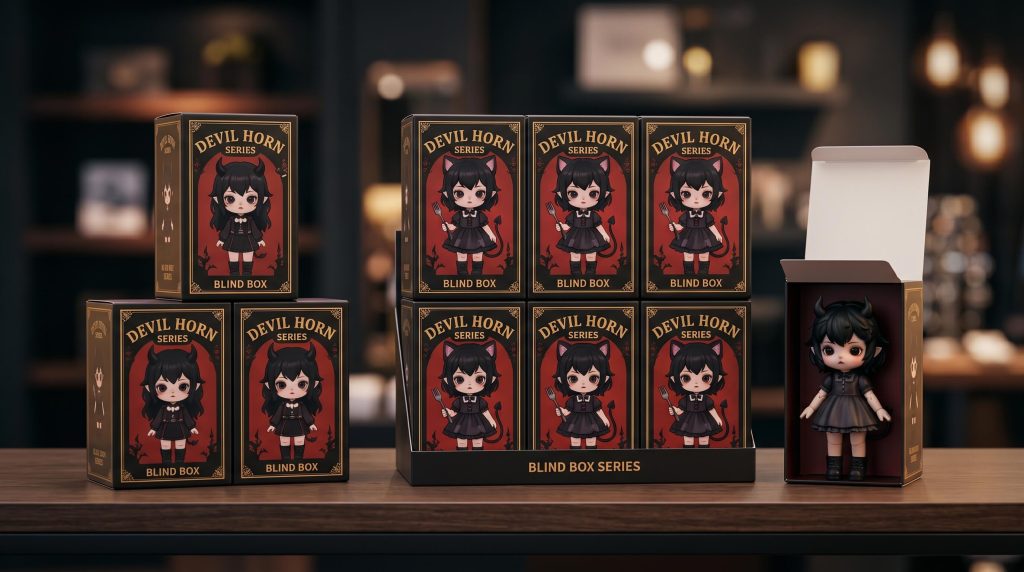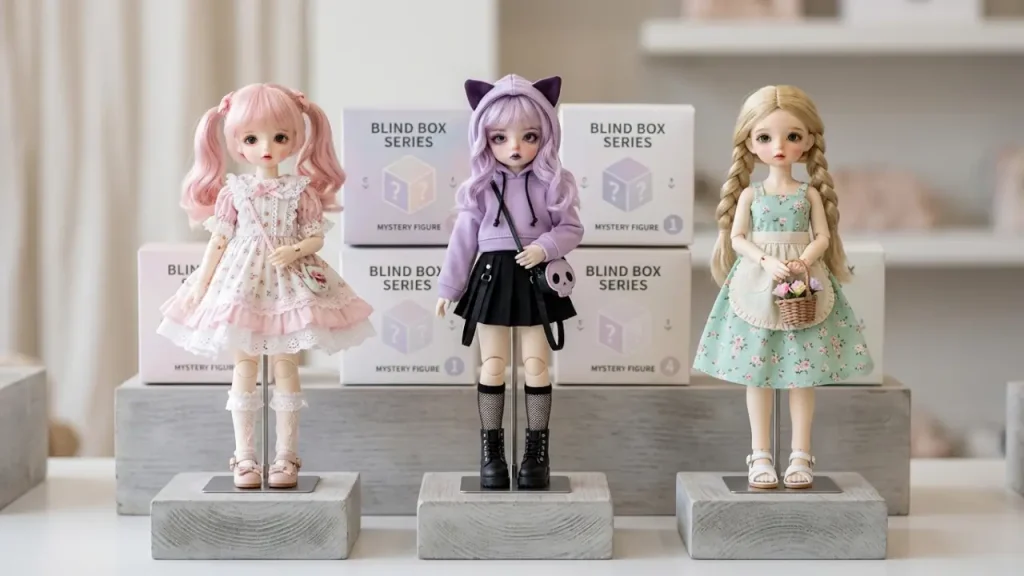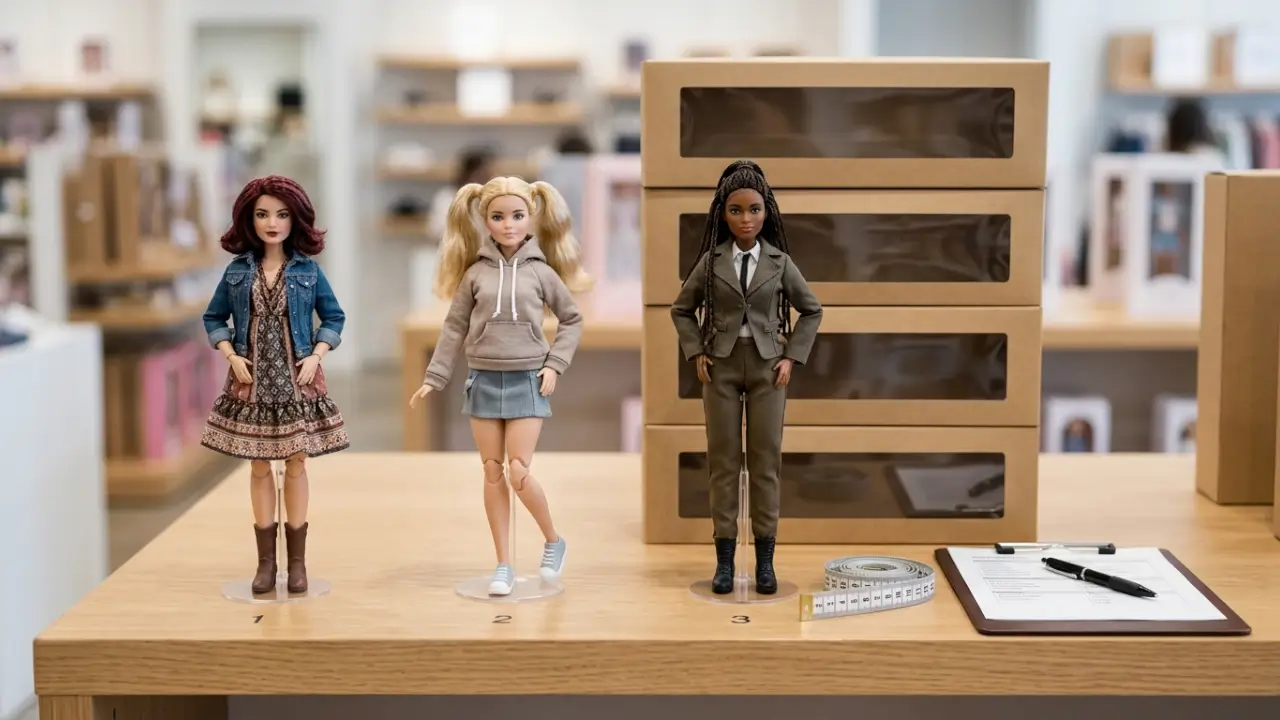




Picking between two collectible doll lines comes down to which one your customers can understand at a glance, your team can merchandise cleanly, and your budget can support through a full order cycle. When buyers weigh Twinkle Polaris against Star Wish Project, the useful question is not simply which looks better, but which of these 1/8 BJD Blind Boxes makes the stronger purchase under confirmed, written supply terms.
No verified specification sheets, assortment details, or supplier quotations accompany this comparison. Neither series can therefore be declared cheaper, more poseable, or better equipped. Use the framework below to compare actual samples and written offers without treating a shared format description as proof that the two products are identical.
What to Verify Before Comparing 1/8 BJD Blind Boxes
Start by confirming the exact edition and SKU for each series. A quotation, a promotional image, and a physical sample must all refer to the same release. Otherwise, a seemingly attractive offer may quietly cover a different configuration than the one pictured.
The 1/8 designation is not a substitute for measured dimensions, and the BJD label alone does not establish the joint construction. Request the following information for both candidates and record each answer side by side.
| Comparison point | Twinkle Polaris: request | Star Wish Project: request | Buying consequence |
|---|---|---|---|
| Edition identity | Exact release name, SKU, and box photos | Exact release name, SKU, and box photos | Prevents comparing different versions |
| Physical size | Measured doll height and boxed dimensions | Measured doll height and boxed dimensions | Determines shelf and parcel fit |
| Joint construction | Mechanism description and posing video | Mechanism description and posing video | Supports accurate customer explanations |
| Materials | Body, hair, clothing, and accessory specifications | Body, hair, clothing, and accessory specifications | Guides handling and product descriptions |
| Box contents | Included items by variant; stand inclusion | Included items by variant; stand inclusion | Separates complete displays from accessory purchases |
| Assortment rules | Regular lineup, duplicates, and any special-variant terms | Regular lineup, duplicates, and any special-variant terms | Prevents unsupported complete-set promises |
| Pack structure | Boxes per case and cases per carton | Boxes per case and cases per carton | Establishes the real order commitment |
| Retail condition | Seal, insert, label, and carton examples | Seal, insert, label, and carton examples | Helps assess resale readiness |
Mark unanswered fields as unresolved rather than assuming the two series match. If an answer affects retail claims, shipping cost, or customer support, obtain it before issuing a purchase order.
Which Series Fits Your Doll Customers?
Evaluate the visual direction from verified lineup images, not from the names Twinkle Polaris and Star Wish Project. Names alone do not establish clothing style, color palette, character count, or accessory content.
- Specialist doll retailers: Compare articulation range, dressing access, and documented accessory fit. Ask whether any removable components require special handling or arrive pre-attached.
- Anime merchandise stores: Judge how easily customers can tell the variants apart and understand the random format. Do not imply an IP affiliation without written evidence.
- Gift shops: Check whether the included contents create a presentable display without extra purchases, and whether the stated age information suits your audience.
- Online sellers: Prioritize accurate dimensions, full content lists, packaging photos, and a clear listing explanation of random selection.
For example, a store serving experienced doll collectors may value documented construction over elaborate presentation, while a gift-led shop may prefer the candidate with clearer contents and simpler setup — once those differences are actually verified against samples.
If this purchase is part of a wider assortment, the guide to choosing blind box products for online anime stores can help frame the channel decision.
How Case Packs Change the First Doll Order
Ask suppliers to distinguish minimum order quantity, sealed-case quantity, and master-carton quantity. Also confirm whether minimums apply per series, per SKU, or across the whole order. These are separate constraints, and conflating them is a common way first orders balloon beyond budget.
A sealed case should not automatically be marketed as a complete set. Request written confirmation of duplicate rules and whether any special variant replaces a regular design in the lineup. If assortment information is unavailable, keep customer-facing claims limited to what is documented.
As a planning example, a retailer might allocate one sealed case of each series to a comparison trial, subject to the supplier’s actual minimums. Reserve sample-opening costs separately so the test does not quietly consume the entire sellable allocation.
Track sales, customer questions, returns, and requests for specific designs. Opening more boxes to chase missing variants can leave an awkward mix of sealed and disclosed stock; decide in advance whether your store will sell both, and how you will label each.
Before committing, request a sample and a matched case-pack quotation for both series. Buyers with limited purchasing capacity can also review assortment planning for small collectible stores before dividing the order budget.
Why the Lower Doll Quote May Cost More to Stock
Compare delivered economics using the same destination and the same delivery basis for both offers. A lower unit quote can lose its advantage if the cartons are bulkier, freight exclusions are greater, or more inventory must be purchased upfront to meet the minimum.
Estimated landed cost per sellable box = total acquisition and inbound costs divided by expected sellable boxes.
Include product cost, inbound freight, applicable duties and taxes, customs or handling charges, and any labeling or inspection expense. Treat recoverable taxes according to your accounting practice. Track display samples and any planning allowance for damage separately; do not assume every purchased box turns into retail revenue.
- Request carton dimensions, gross weight, carton count, and the delivery basis with each quote.
- Separate supplier preparation time from transport time and destination clearance.
- Ask explicitly which charges remain payable by the buyer after dispatch.
- Verify destination import requirements and tariff treatment with a qualified adviser where needed.
For reorders, use observed weekly sell-through and the supplier’s current replenishment estimate. Set a review point before stock reaches the expected replenishment requirement, with a buffer suited to demand uncertainty. Avoid promising customers a restock date based solely on the first shipment.
Protect Doll Joints, Accessories, and Retail Boxes
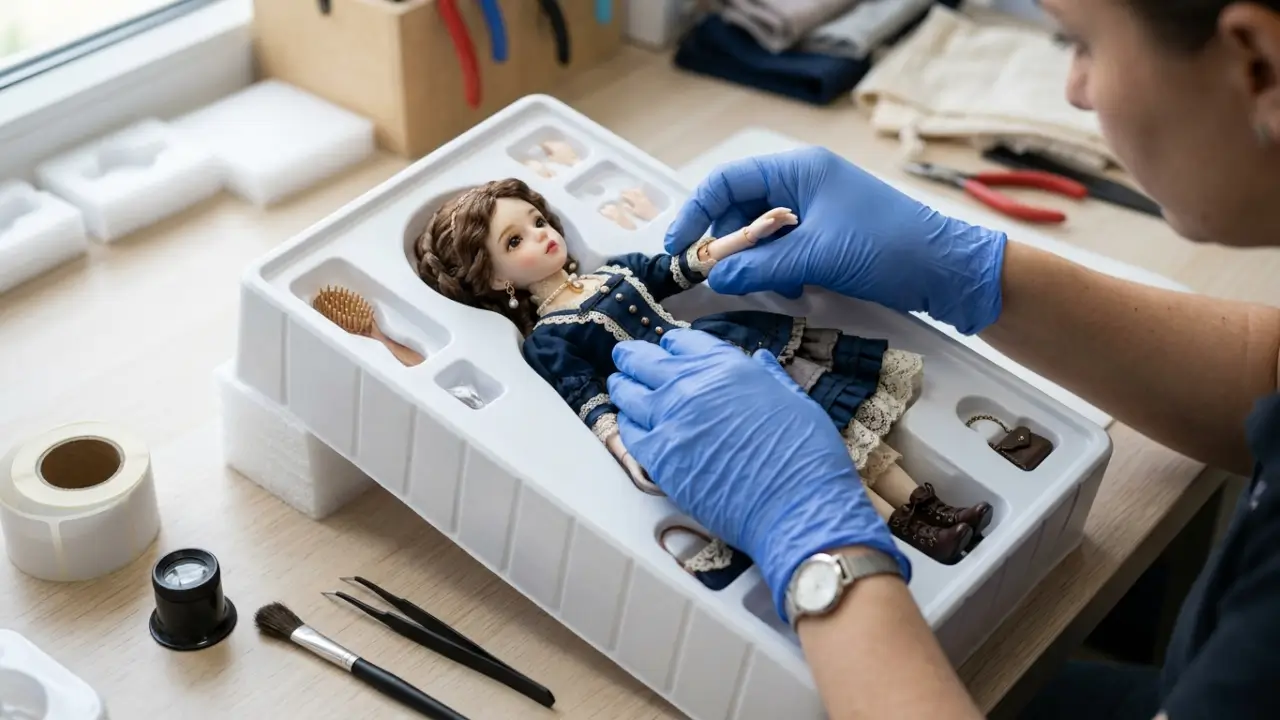
Evaluate both the doll and the packaging. A sample can look appealing while still revealing loose accessories, unsupported joints, or a retail box that scuffs easily. Conversely, an intact outer carton does not establish that every inner box arrived undamaged.
Ask for photos showing the doll’s in-box restraints, accessory compartments, retail-box seal, and master-carton arrangement. Confirm in writing how opened inspection samples will be separated from sealed inventory before shipment.
- Body and joints: Test normal movement without forcing parts; note looseness, cracks, or difficulty holding a pose.
- Finish: Inspect visible surfaces for marks, uneven paint, and color transfer where clothing touches the body.
- Contents: Match accessories and any stand against the confirmed packing list for that specific variant.
- Clothing, if included: Check seams, closures, overall fit, and loose trim.
- Retail packaging: Review crushed corners, broken seals, missing inserts, and obscured labels.
Verify intended age grading, warnings, material documentation, and labeling requirements for your destination. A collectible description does not automatically settle product classification or safety obligations. Request documentation that applies to the exact product rather than accepting unrelated reports.
When a Twinkle Polaris or Star Wish Project Offer Is Not Comparable
Pause the comparison if one offer is for sealed random boxes and the other is for opened, identified dolls. Both can suit a retail strategy, but they carry different customer expectations and different inventory risks, so they should not be ranked against each other directly.
Other warning signs deserve clarification before any payment:
- A quotation uses one series name while its photos show another release.
- A supplier promises a complete assortment without written pack rules.
- Joint claims cannot be supported with specifications or a sample posing video.
- A low quote excludes accessories shown prominently in the sales images.
- Supply provenance, defect handling, or shortage-reporting procedures remain unclear.
Ask for a corrected quotation that names the exact edition, condition, contents, and exclusions. Refusal to resolve a material discrepancy is a more reliable purchasing signal than enthusiastic sales language.
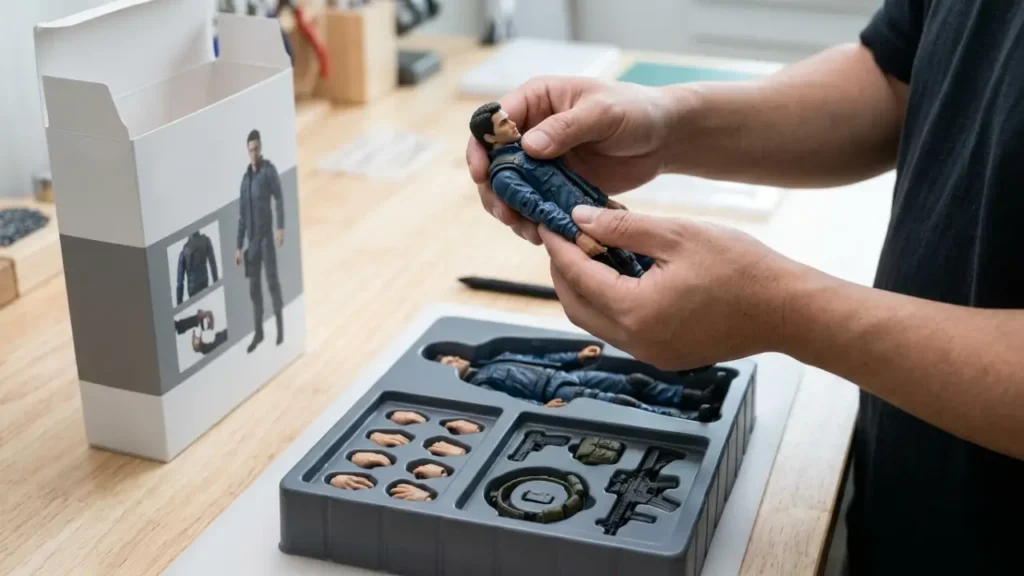
For a related buying exercise, see this four-series figure blind box comparison for retailers. Keep its figure-format considerations separate from the construction checks required for articulated dolls.
Send One Matched Quote Brief for Both Series
Use the same request for Twinkle Polaris and Star Wish Project so responses can be compared line by line. State your sales channel and destination up front; both affect packaging questions and delivery estimates.

The following brief can be adapted without assuming either supplier’s capabilities:
Please quote Twinkle Polaris and Star Wish Project separately for a proposed first order of [quantity] per series, delivered to [destination]. Confirm the exact edition/SKU, doll dimensions, joint construction, materials, included accessories, assortment rules, sealed-case quantity, master-carton quantity, and minimum order conditions.
Please also provide sample options, current availability or production status, preparation estimates, carton dimensions and weights, freight basis, payment terms, applicable product documentation, and the procedure for reporting damaged or missing items. Identify any costs excluded from the quote.
Request the matched quotations and supporting product information before choosing a series. Select the candidate that clears your specification, retail-condition, and landed-cost requirements. If a key field stays unanswered, resolve it before increasing the order.
FAQ
Which is better for retailers: Twinkle Polaris or Star Wish Project?
Neither can be ranked from the supplied information alone. Compare verified samples, exact contents, case terms, and landed cost against your customer profile before selecting either series.
Does 1/8 mean both dolls have the same dimensions?
No. A scale designation does not establish identical height, proportions, or accessory fit. Request actual measurements and verify compatibility before making customer-facing claims.
Does a sealed case guarantee every regular design?
Do not assume so. Obtain written assortment rules covering duplicates and any special-variant substitutions before advertising a case as a complete set.
What should an online store confirm before listing either series?
Confirm the exact edition, dimensions, included items, intended age information, packaging condition, and random-selection terms. Use imagery that matches the stock being purchased.
Should a first order include both series?
A split trial may help if minimums and available cash allow it. Keep the test controlled and compare sell-through, customer questions, and defects before expanding either line.
Before You Place the First Doll Order
Choose between Twinkle Polaris and Star Wish Project on documented differences, not assumed features. Confirm the sample, pack structure, delivered economics, and resale requirements, then place an order sized to generate useful demand evidence without overcommitting cash.