



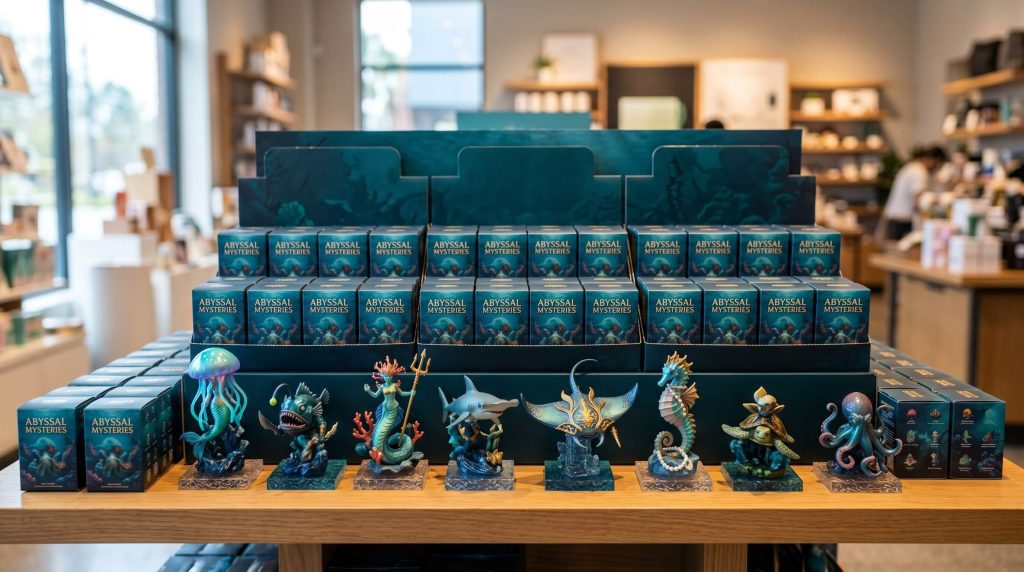
Ocean-themed collectibles can look easy to buy from photos, but retail buyers still need to answer harder questions: will the designs fit the customer base, can the carton plan support a profitable display, and what needs to be confirmed before placing a first order? An ocean-fantasy line like the Maytree Dumia Deep Sea blind box sits in a visual category that can appeal to gift buyers, toy collectors, lifestyle shops, and online mystery-box customers, but sourcing decisions should be based on more than theme appeal.
This guide focuses on practical buying logic for retailers and distributors evaluating a Deep Sea blind box line. It does not assume exact stock, MOQ, certifications, pricing, or lead time. Instead, it gives you a checklist for comparing quotes, planning quantities, reviewing packaging, and reducing avoidable ordering mistakes.
Who Should Consider a Deep Sea Blind Box for Retail Shelves?
An ocean-themed blind box can work in several retail environments, but each buyer type should evaluate it differently. A collectible toy store may focus on character completion and repeat purchase behavior. A gift shop may care more about display impact and impulse gifting. An online seller may need clean product photos, case quantity clarity, and enough assortment depth to support live selling or mystery bundles.
Before requesting a quote, define the role of the Maytree Dumia line in your assortment. Is it a front-counter impulse item, a themed display feature, a seasonal summer or vacation-adjacent product, or a collector-focused release? The answer affects how many cases to test, how much packaging damage you can tolerate, and whether you need full-case purchasing to maintain assortment integrity.
- Collectible toy shops: ask whether sealed cases help preserve assortment expectations.
- Gift and lifestyle stores: check whether box art and individual packaging are display-friendly.
- Online shops: confirm product dimensions, carton details, and image permissions before listing.
- Pop-up retailers: plan lighter test quantities if the selling window is short.
- Distributors: compare carton efficiency and reorder feasibility before scaling.
If you already stock nature or fantasy themes, an ocean story can help broaden the shelf without moving too far from proven customer taste. For example, retailers comparing natural-world concepts may also review this nature-themed collectible guide to think about how forest and sea themes sit together in an assortment.
How to Judge the Maytree Dumia Deep Sea Blind Box Before You Quote
Product selection should start with customer fit, not supplier enthusiasm. For a Deep Sea blind box, ask whether the visual direction matches your current shoppers: cute, dreamy, mysterious, fantasy, pastel, dark ocean, or display-art style. If your customer base is mostly anime collectors, the buying logic may differ from a museum gift shop or coastal souvenir retailer.
Use the table below to turn product photos and supplier messages into a more comparable buying review.
| Buyer Check | What to Ask or Review | Why It Matters |
|---|---|---|
| Theme fit | Does the ocean concept match your existing customer taste and store style? | Theme mismatch can lead to slow sell-through even if the product looks attractive. |
| Assortment structure | Ask how many designs are in the series and whether there are hidden or rare styles. | Collectors often buy more when the series structure is clear. |
| Case quantity | Confirm how many blind boxes are packed per inner case and master carton. | Case quantity affects display planning, freight allocation, and reorder thresholds. |
| Packaging condition | Request photos of individual boxes, inner packaging, and carton packing method. | Blind box packaging is part of the retail product, not just protection. |
| Product dimensions | Ask for item size, box size, carton size, and approximate carton weight if available. | These details help estimate shelf space and shipping impact. |
| Compliance needs | Confirm available labeling, age grading, and documents relevant to your destination market. | Import and resale requirements vary by country and sales channel. |
| Reorder support | Ask whether future replenishment can be quoted and what may change between batches. | A good first sell-through is less useful if replenishment is uncertain. |
| Photo and listing assets | Confirm whether you can use product images for your online store or marketplace listing. | Online conversion depends on accurate, approved visuals. |
Test Case, Full Display, or Mixed Shelf for an Ocean Series?
Retail buyers often make better decisions when they plan the first order as a test, not a final commitment. For example, a small specialty shop may test one or two case packs if the supplier allows it, while a larger store may plan a display quantity across multiple locations. These are planning examples only; actual MOQ and case quantities must be confirmed with the supplier.
A practical first-order plan should answer three questions:
- How many selling points need stock? Count physical stores, pop-up tables, online inventory, and reserve units separately.
- How will the series be displayed? A sealed case display, counter tray, wall shelf, and live-selling format each need different unit depth.
- When will you evaluate reorder performance? Set a simple review point, such as after a defined number of units sell or after the first weekend of promotion.
Buyers with darker or more niche customer groups may also compare how this ocean line contrasts with gothic or moody collectibles, such as this dark aesthetic blind box guide. The goal is not to copy another category, but to understand whether your shelf needs soft ocean fantasy, darker contrast, or a balanced mix.
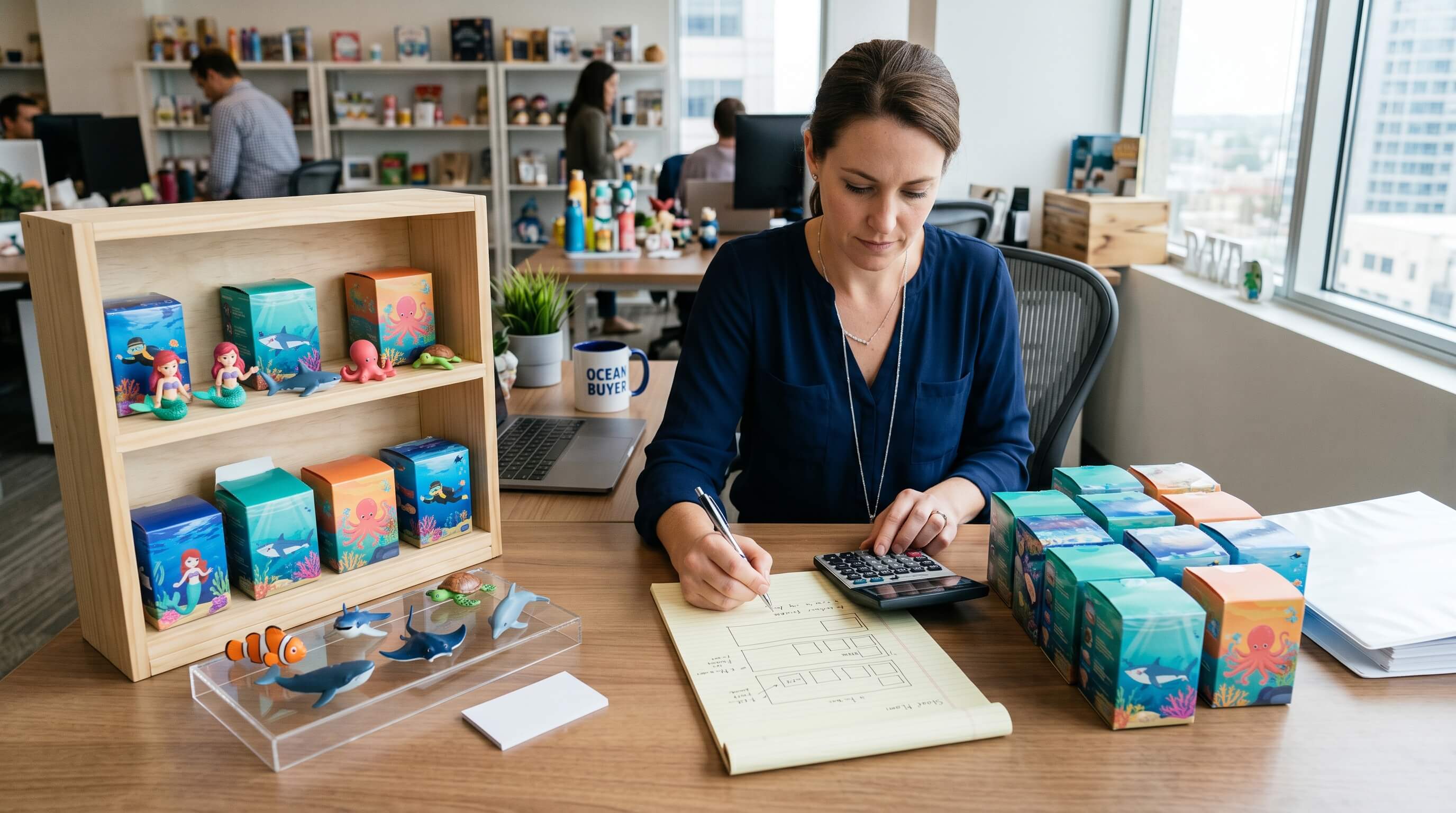
Avoid ordering only because the theme feels fresh. Instead, map it into your current product ladder: entry-price impulse collectibles, mid-tier display figures, premium art dolls, plush accessories, or gift bundles. The Maytree Dumia Deep Sea blind box should have a clear job in that ladder.
Why Carton Math Decides Margin on an Ocean Collectible Launch
Blind box buying is not only about unit cost. Buyers should compare landed cost per sellable unit, including product cost, payment fees where applicable, freight, duties or taxes, inspection costs if used, and potential packaging loss. Even when the product price looks attractive, bulky cartons or fragile retail boxes can weaken the final margin.
As a planning reference, compare quotes in a simple format:
- Unit cost before freight
- Number of pieces per inner case and master carton
- Carton dimensions and estimated weight, if available
- Shipping method options and estimated transit range
- Any extra cost for samples, inspection, labeling, or protective packing
- Expected retail price range in your own store, based on your market
Do not compare two quotes only by the first unit price you receive. A slightly higher unit cost may be more workable if the carton plan is cleaner, packaging is better protected, or communication is more complete. Likewise, a cheaper quote may become expensive if carton dimensions increase freight cost or packaging damage creates unsellable units.
Before you send your first inquiry: collect your target order quantity, destination country, sales channel, and packaging requirements before contacting a supplier about the Maytree Dumia Deep Sea blind box. A clearer inquiry usually produces a more useful quotation.
Packaging Checks for Gift-Ready Deep Sea Blind Boxes
For blind boxes, packaging is part of the buying experience. Customers expect sealed boxes, clean corners, readable artwork, and a sense of surprise. If the box arrives crushed, faded, dirty, or loosely sealed, the product may become harder to sell even if the figure inside is acceptable.
Ask for current packaging photos before ordering. If possible, request images of the individual blind box, inner case, master carton, and any protective material. Do not assume the packaging shown in marketing images is identical to the shipping configuration.
- Retail box: check print clarity, sealing method, barcode area if relevant, and visible damage risk.
- Inner case: confirm whether boxes are held firmly or can shift during transit.
- Master carton: ask whether cartons are suitable for the intended shipping method.
- Labeling: confirm language, age grading, warning labels, and import marks needed for your market.
- Assortment identification: ask whether carton labels help distinguish series, batch, or quantity.
Buyers should also verify compliance needs for their destination market and sales channel. Toy safety, age labeling, small-parts warnings, customs documentation, and marketplace rules can vary. A supplier may provide certain documents, but the buyer remains responsible for confirming what is required before import or resale.
Shipping Timing and Reorder Triggers for the Maytree Dumia Line
Shipping and reorder timing should be planned before the first order sells out. If the Deep Sea blind box becomes popular with your customers, a late reorder can create a gap that loses momentum. If it sells slowly, an oversized reorder can trap cash in inventory. The right trigger depends on your sell-through rate, supplier availability, and shipping method.
For planning, retailers may set reorder signals such as:
- Review after the first case or display quantity reaches a defined sell-through point.
- Reorder before stock falls below the minimum display depth needed for a good presentation.
- Track duplicate-related customer feedback if collectors are buying multiples.
- Separate online reserved stock from in-store display stock to avoid overselling.
- Ask whether replenishment quantities can differ from the first order quantity.
Lead time should be confirmed in writing for each quote. Avoid assuming that the timing from one collectible series applies to another. Production status, stock availability, consolidation, customs processing, and freight conditions can all change. If you sell on a launch calendar, build in buffer time rather than planning around the most optimistic date.
Quality Review Points Before Selling Ocean-Themed Collectibles
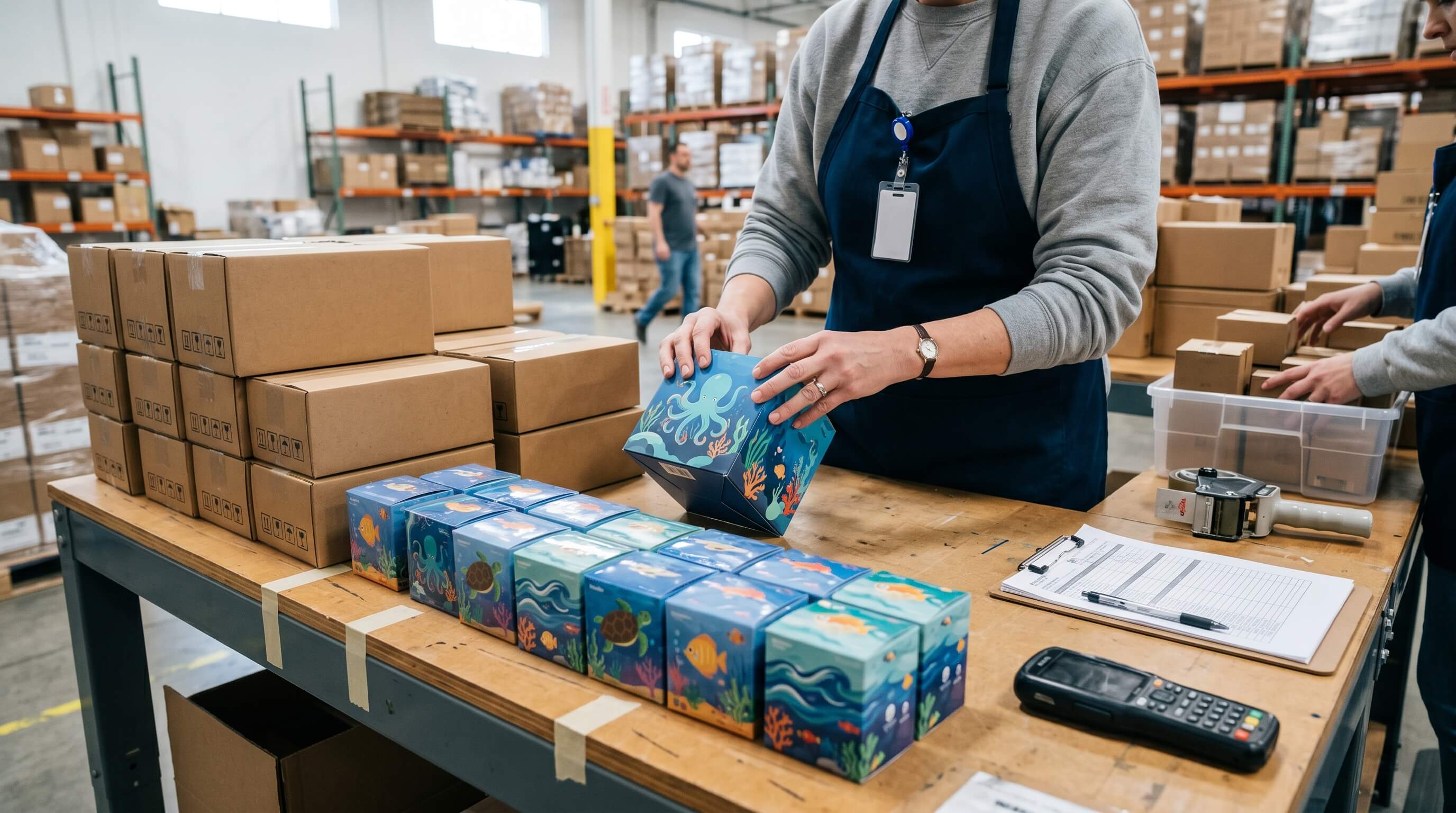
A first delivery should be checked before units go live on shelves or online. The review does not need to be complicated, but it should be consistent. Buyers can create a receiving checklist and record photos so future claims or supplier conversations are based on evidence rather than memory.
Consider checking a sample of units from different parts of the carton. For example, a receiving team may inspect top, middle, and bottom layers to see whether pressure damage is concentrated in one area. This is only a planning example; the inspection level should match order size, product value, and risk tolerance.
- Count cartons and units against the packing list.
- Photograph carton condition before opening if damage is visible.
- Check sealed blind boxes for dents, stains, tears, or loose wrapping.
- Open a small internal sample if your purchasing agreement allows it.
- Review paint, assembly, odor, missing accessories, and obvious defects where visible.
- Document any issue with photos, quantities, and carton references.
Collectors may be sensitive to finish issues, missing parts, or inconsistent packaging. If your store also carries higher-detail doll or art-toy products, you may already use stricter checks. For another perspective on fantasy collectible evaluation, see this fantasy doll buying guide.
Quote Questions That Make a Deep Sea Blind Box Offer Comparable
A vague inquiry often produces a vague quote. To compare suppliers, give each one the same request and ask them to answer in the same structure. This reduces confusion and makes it easier to identify missing details.
Hello, I am interested in quoting the Maytree Dumia Deep Sea blind box for retail resale. Please confirm the available series details, number of designs, case quantity, master carton quantity, product and box dimensions, carton dimensions and estimated weight, MOQ or order quantity rules, current availability or production status, packaging photos, labeling information, payment terms, shipping options to [destination], and any documents available for import or retail compliance review. Please also confirm whether product images may be used for online listings.
When comparing replies, watch for these red flags:
- The quote lists a unit price but no case quantity or carton information.
- Product photos are low quality, inconsistent, or clearly from multiple sources.
- The supplier avoids questions about packaging, labeling, or documents.
- Availability is described as urgent, but no clear order process is provided.
- Shipping estimates are given without destination, carton size, or shipping method.
- The supplier promises compliance for every country without asking where you sell.
Before paying for a bulk order: request a written quote that includes product specification, carton details, packaging confirmation, destination-based shipping terms, and any compliance documents available for your review. If you are comparing Maytree Dumia with other blind box lines, use the same checklist for every supplier so the final decision is based on comparable data.
FAQ
What should retailers confirm before buying the Maytree Dumia Deep Sea blind box?
Retailers should confirm series details, design count, case quantity, MOQ or order quantity rules, packaging photos, carton dimensions, shipping options, labeling information, and any documents needed for their destination market.
Is a Deep Sea blind box better for gift shops or collectible toy stores?
It can fit both, but the buying logic differs. Gift shops may prioritize visual packaging and impulse appeal, while collectible toy stores may focus on assortment structure, repeat purchases, and customer interest in completing the series.
How many units should a retailer order for a first test?
There is no universal number. Buyers should base the first order on case quantity, number of selling locations, display space, budget, and reorder access. A test order should be large enough to display properly but controlled enough to limit inventory risk.
What costs should be included when comparing quotes?
Compare unit cost, case quantity, carton size and weight, freight, duties or taxes, payment costs, inspection costs if used, packaging loss risk, and any labeling or documentation expenses that apply to your market.
Do buyers need compliance documents for ocean-themed blind boxes?
Requirements depend on the destination country, sales channel, age grading, and product materials. Buyers should ask what documents are available and independently verify import, toy safety, labeling, and marketplace requirements before resale.
Before You Place That First Ocean-Themed Order
The Maytree Dumia Deep Sea blind box may be a strong visual addition for stores that already sell collectible toys, fantasy gifts, or themed mystery products. The safer buying decision is to treat it as a commercial assortment choice, not just an attractive product image.
Start with customer fit, then confirm case quantity, packaging, landed cost, shipping timing, and compliance needs. Use a consistent quote template, document supplier answers, and plan reorder triggers before the first display sells down. That process gives buyers a better chance of turning ocean-themed curiosity into repeatable retail performance.