



Plush blind boxes can support strong retail baskets, but only when buyers control the relationship between wholesale cost, landed cost, display space, and sell-through speed. A good plush blind box margin is not one universal number. It depends on whether you run a gift shop, anime store, mall kiosk, museum shop, toy boutique, or event pop-up, because each format has different labor, rent, packaging, and markdown pressure.
This guide gives retailers a practical way to benchmark plush blind box margin before placing a wholesale order. Use it with your current sales reports, shelf capacity, and reorder cadence. If you are still building your category map, start with the broader wholesale blind box buying guide to compare plush with other blind box formats.
Set plush blind box margin targets by store format before you buy
| Buyer type | Margin pressure | Best plush blind box role | Stock action | Shipping logic |
|---|---|---|---|---|
| Gift shops | Moderate, with seasonal peaks | Impulse gift and add-on item | Buy broader designs, avoid overloading one character style | Consolidate with other giftable blind boxes when possible |
| Anime and hobby stores | Higher tolerance for premium character goods | Fandom-driven collectible series | Prioritize series depth and reorder access | Plan cartons around launch windows and repeat customers |
| Mall kiosks | High rent and labor pressure | Fast visual grab item | Choose compact plush formats with quick replenishment | Favor efficient carton use and fewer bulky slow sellers |
| Toy boutiques | Balanced margin and parent approval | Soft collectible with gifting appeal | Test smaller batches across themes before expanding | Keep shipping tied to full display refreshes |
| Event pop-ups | High risk if leftovers are theme-specific | Limited-time novelty purchase | Buy only what can sell through during the event cycle | Confirm packing volume before committing to bulky plush |
Your first benchmark is not the wholesale price alone. It is the margin you need after freight, payment processing, staff handling, display fixtures, damaged packaging, and markdowns. A mall kiosk may need stricter plush blind box margin discipline than a hobby store because kiosk rent and labor are concentrated into a smaller footprint. An anime store may accept slower movement on a high-affinity character series if the line also brings collectors back for other purchases.
Before you buy, write down your target role for the product. Is the plush blind box meant to be a counter add-on, a featured collectible wall, a gift-table item, or an event special? That decision sets your expected stock depth, display commitment, and markdown tolerance.
Build a landed-cost worksheet and allocate plush freight separately
Retail buyers often benchmark margin using the invoice cost, then discover that the actual profit is lower once cartons arrive. Plush is soft but bulky, so freight and storage can matter more than with flat stationery or small hard-plastic figures. Your landed cost review should happen before purchase approval, not after the first reorder.
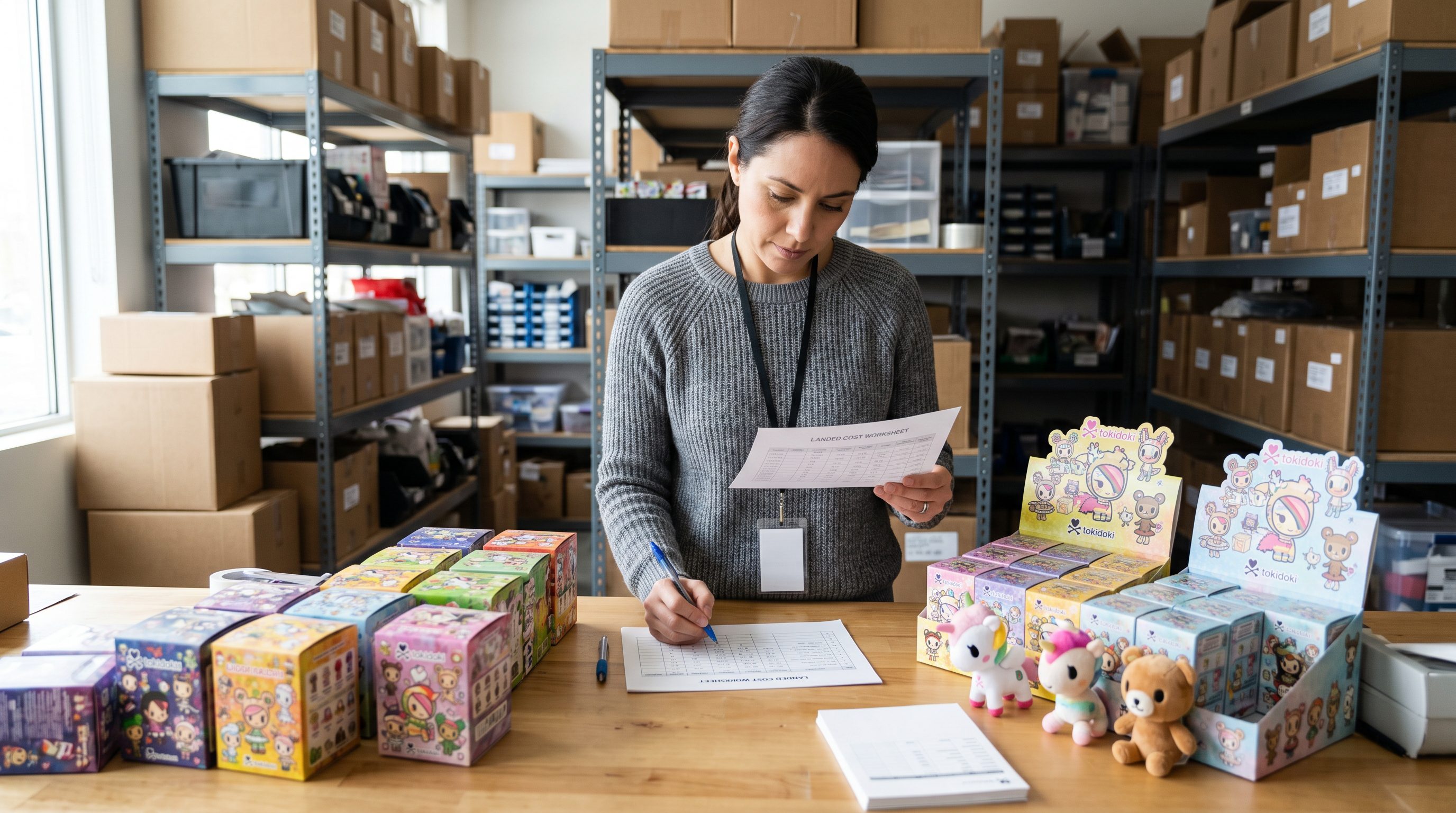
Build a simple landed cost worksheet for each proposed plush blind box series. Include supplier unit cost, inbound freight allocation, duties or import handling if applicable, payment or platform fees, warehouse receiving time, display packaging losses, and any planned promotional discount. Do not average plush blindly with smaller blind boxes in the same shipment. Bulky items may take more carton space and deserve a more specific freight allocation.
Worked landed-cost illustration, using placeholders only: suppose one inbound shipment includes Carton A, a bulky plush blind box carton, and Carton B, a flat or small-item blind box carton. Even if Carton A and Carton B have similar invoice value, Carton A may consume a larger share of carton volume or dimensional weight. In that case, allocate a larger portion of the freight line to Carton A instead of dividing freight evenly by unit count. The exact allocation should come from your actual carton dimensions, shipment volume, freight quote, and receiving records, not from a generic category average.
Use these buyer checks before confirming an order:
- Compare carton volume against expected shelf revenue, not just unit count.
- Ask whether the plush blind box comes in inner packs that are easy for staff to count and restock.
- Check whether the display box, if provided, fits your counter, gondola, slatwall shelf, or kiosk cube.
- Estimate how many units can be merchandised at once without hiding other higher-turn products.
- Separate launch margin from reorder margin, because early testing may carry more freight inefficiency.
If your landed cost pushes the required retail price above what your customers normally accept for blind boxes, do not force the item into the plan. Either adjust the format, bundle it with a stronger theme, test a smaller range, or compare nearby plush options in the plush blind box wholesale category.
Choose plush formats that protect margin by basket type
Plush blind box margin depends heavily on the format inside the box. Plush keychains, mini plush dolls, bag charms, and sit-down plush figures all create different buying behavior. A shopper buying a backpack charm may add it to a larger transaction, while a shopper buying a larger plush may treat it as the main gift.
For counter baskets, compact plush keychains can be easier to place near checkout and may support faster impulse decisions. For anime stores and character-driven retailers, mini dolls or collectible plush figures can justify more dedicated shelf space when the art style connects with the fan base. For gift shops, soft animals, cute food characters, and seasonal themes can work as approachable gifts even when customers are not familiar with a specific IP style.
Match plush format to basket strategy:
- Use plush keychains when you need add-on purchases, compact displays, and easier replenishment.
- Use mini plush dolls when you want a stronger gift item and have shelf depth for a display run.
- Use bag charms when your customer base includes students, commuters, or fashion-accessory buyers.
- Use character sets when repeat collectors are likely to return for missing designs.
- Use broader cute themes when tourists, parents, and casual gift buyers make up the traffic.
The margin benchmark should reflect how the product is sold, not only how it looks in a supplier photo. A counter add-on needs compact packaging, fast recognition, and easy staff replenishment. A featured collectible wall needs stronger series art, clearer case planning, and more reliable reorder visibility.
Order case packs only after you verify mix, displays, and restock counts
Dead stock is one of the fastest ways to weaken plush blind box margin. Plush designs are visible in customer imagination even when the box is blind: shoppers react to the series artwork, character silhouettes, color palette, and rarity messaging. If the full assortment feels too narrow, customers may stop after one purchase. If the assortment feels too wide for your traffic, you may carry leftover cases too long.
Retailers should buy to the realistic number of selling positions they can maintain. A gift shop with one counter display should not stock like an anime store with a collectible wall and a returning fan base. A kiosk should think in terms of fast visual rotation and storage limits. A toy boutique should balance variety with parent-friendly themes and tidy merchandising.
Before approving case quantities, ask the supplier how assortments are packed at a general level: whether cases are mixed, whether display boxes are included, and how reorders are handled. Do not assume every case contains the same character balance. Also avoid building margin projections on chase or rare designs. The base assortment must be profitable even if rare-design excitement only helps sell-through indirectly.
Example buyer inquiry wording to copy and adapt:
Hello, we are evaluating this plush blind box series for retail placement. Please confirm the case mix for one wholesale case, whether counter or shelf display boxes are included, the inner-pack counts for easier restocking, whether we can reorder the same series after the first test order, and the carton dimensions and carton volume for freight estimation. If the assortment can vary by case, please explain how the mix is packed so we can plan shelf facings and replenishment accurately.
Illustrative sell-through decision rule, not a fixed MOQ or reliable timeline: for a new plush blind box series, start with enough stock to fill one planned display facing and leave a small backstock buffer for a 2–4 week selling read. Reorder only if roughly 60–70% of that series has sold through, the retail price is holding without early discounting, and staff can restock the display without mixing series or confusing customers. If sell-through is below that level, first check placement, signage, and case mix before buying more cartons.
Reorder plush series when shelf facings and weekly sell-through trigger it
A healthy plush blind box margin is protected by reorder timing. If you wait too long, the display goes empty and customers move on. If you reorder too aggressively, you may tie cash into bulky cartons while other blind box categories need funding. The goal is to set a reorder trigger that reflects sales velocity, storage space, and supplier availability.
Track weekly sell-through by series, not just total plush sales. A strong week from one character theme should not automatically justify reordering every plush blind box in the store. Record which designs or themes customers ask about, which shelf positions sell fastest, and whether purchases happen as single units or multiple-unit collector buys.
Concrete reorder trigger: review each plush series separately once a week. If a series has only enough units left to support its assigned shelf facings for the next selling period, and weekly per-series sell-through is still steady at the current retail price, start the reorder conversation. Do not use total plush sales as the trigger; a fast-selling animal series should not cause an automatic reorder of a slower fantasy, food, or character series.
Use shelf facings as the control point. If one series earns two facings because it sells consistently, its reorder point should be based on keeping those two facings filled. If another series is reduced to one facing because movement has slowed, its reorder point should be lower or paused. This protects cash flow and keeps bulky plush cartons from crowding out better-performing categories.
Shipping mode also changes the margin conversation. Favor faster transport when you are chasing a live trend, protecting a holiday or event window, or preventing a proven high-performing display from going empty. Favor more economical transport when the series is evergreen, the reset is planned in advance, or you have enough shelf and backstock coverage to avoid an empty-display risk. Exact timing and freight impact vary by order, carton profile, destination, and carrier option, so evaluate shipping mode before committing to a reorder quantity.
Retailers should also consider consolidation. If plush blind boxes are bulky, pairing them with smaller blind box items in the same sourcing plan can improve operational efficiency, but only if the supplier can pack and ship in a way that protects the merchandise. Keep your buying calendar visible: planned resets, school holidays, convention weekends, mall traffic peaks, and tourism seasons should influence reorder timing.
Audit display execution and damage risk before you reorder
Margin benchmarks are only useful if the store execution supports them. Plush blind boxes can lose margin through crushed boxes, messy displays, missing signage, and staff uncertainty. Even when the plush itself is fine, damaged outer packaging can make blind box customers hesitate because the box is part of the collectible experience.
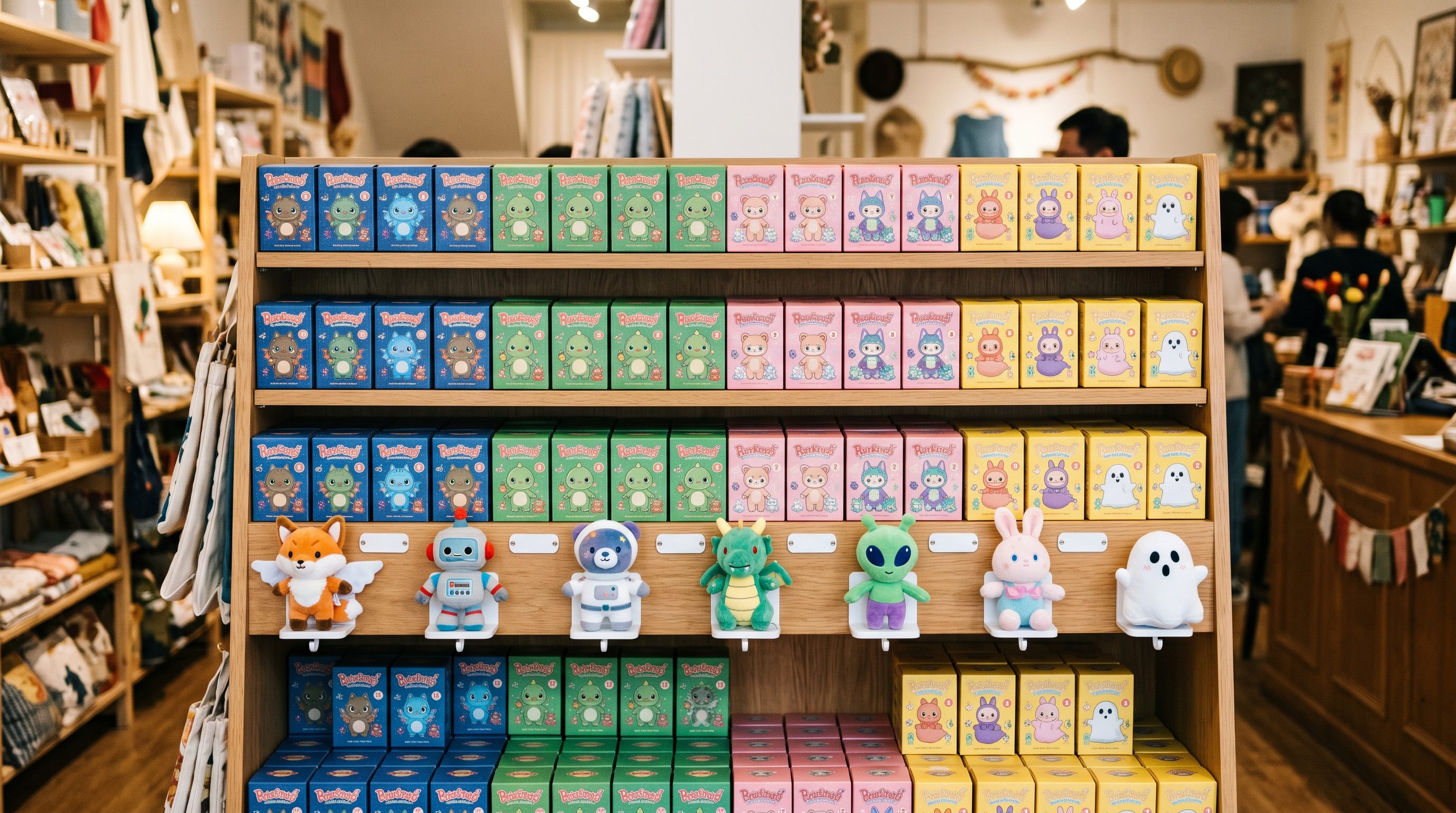
Before reordering, walk the selling area and audit the category. Check whether customers can see the series art from the aisle. Confirm the retail price is clear. Make sure opened samples, if used, are clean and secured. Review whether the display box is still attractive or whether it needs replacement. Ask staff which customer questions come up most often. If shoppers are confused about the blind format, rarity, or size, the display may need better merchandising before more inventory is purchased.
Use the audit to protect margin in four ways:
- Remove crushed or shopworn packaging from prime display positions before it slows the whole series.
- Place best-performing themes at eye level or checkout rather than spreading them across weak locations.
- Limit clearance stickers until you know whether the issue is product demand or poor placement.
- Keep sample plush clean, because dirty samples can reduce confidence in sealed inventory.
For kiosks and pop-ups, display discipline is even more important. Limited space means every slow-facing unit blocks a better seller. For gift shops, seasonal plush should be reviewed before the season ends, not after. For anime stores, collector lines should be checked for reorder requests before customers assume the series is gone permanently.
Source plush blind boxes by margin, carton efficiency, and reorder access
When you contact a supplier, give enough context to receive a useful recommendation. A quote request that only asks for the cheapest plush blind box may lead to the wrong assortment. Instead, share your store type, target retail positioning, preferred product size, display space, shipping destination, expected order scope, and whether you need a test batch or a planned replenishment program.
A strong plush blind box margin comes from matching product format, carton efficiency, assortment planning, and reorder timing. The best wholesale choice for a museum gift shop may not be the best choice for an anime store or mall kiosk. Use your sales data, shelf facings, and carton constraints to guide the sourcing conversation.
Ready to benchmark plush options for your store? Send your assortment goals, display limits, carton questions, and replenishment needs through the wholesale blind box quote request so the team can help you evaluate plush blind box margin with the right stock and shipping logic.
Next steps: see our browse the category to plan your order.