


Your decision is how to test mystery plush in a gift shop without tying up dead inventory, wasting checkout space, or confusing shoppers at the display. The right order depends on who buys from the store, how much counter or wall space is available, how quickly the store can reorder, and whether the product is meant for self-purchase, gifting, travel souvenirs, or impulse checkout sales.
This guide is written for gift shop buyers, museum store managers, tourist retail operators, mall kiosks, anime stores with gift sections, and boutique retailers sourcing wholesale plush blind boxes. Use it to decide which plush format to test, how to structure a first order, what to confirm with the supplier, and when to request a quote from Blind Box Wholesale.
Segment shopper missions before you select a plush blind boxes gift assortment
Before choosing characters, animals, or themes, define the main shopper missions in your store. A tourist gift shop may need small, suitcase-friendly plush items that feel easy to add to a basket. A museum store may need soft, family-friendly designs that match children’s gifting and educational browsing. A mall kiosk may need high-visibility packaging and fast turnover from impulse buyers. An anime store may prioritize collectible character styling and repeat-purchase behavior.
For a practical first buy, sort your shoppers into three groups: quick impulse buyers, planned gift buyers, and collectors. Quick impulse buyers need clear display boxes, easy-to-understand packaging, and low-friction choices. Planned gift buyers care more about perceived quality, cute presentation, and whether the item looks giftable without extra wrapping. Collectors care about series depth, chase-style excitement, and whether the assortment feels worth repeat purchases.
Use this shopper map to brief your supplier. Instead of asking only for “cute plush blind boxes,” tell the supplier whether you need countertop impulse items, plush keychains for travel gifting, larger plush dolls for display impact, or a balanced mix. For a broader sourcing framework, review the wholesale blind box buying guide for retailers before narrowing your plush selection.
Choose counter displays, plush keychains, or plush dolls for your store format
| Wholesale Plush Format | Best Retail Fit | Space Requirement | Buyer Action |
|---|---|---|---|
| Counter display plush blind boxes | Gift shops, museum stores, checkout counters | Lower space demand and easier impulse placement | Confirm display dimensions and how many units fit your checkout area before ordering |
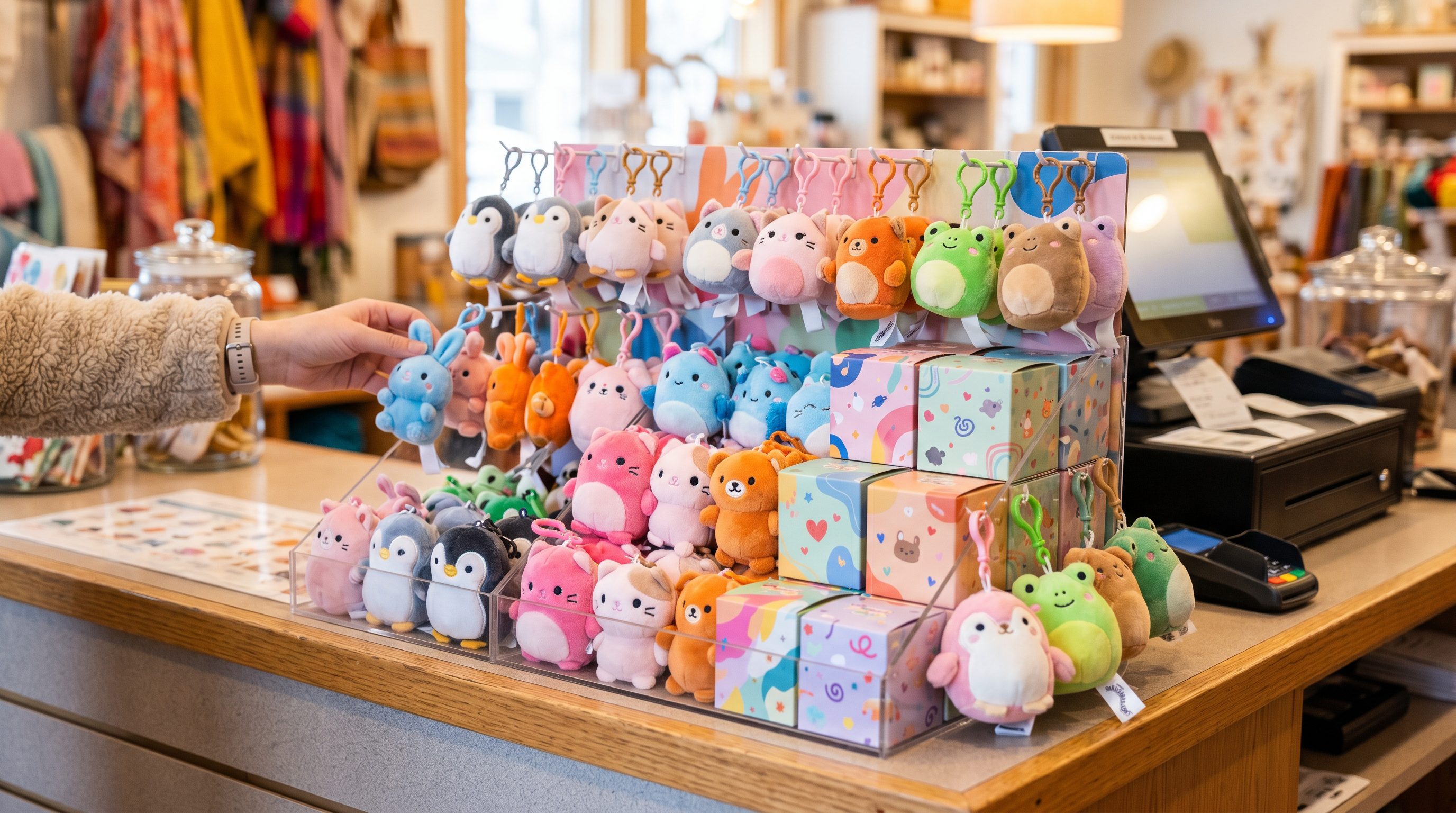
| Plush keychain blind boxes | Tourist shops, kiosks, anime stores, travel retail | Flexible for pegs, baskets, or compact displays | Compare attachment quality, hangtag design, and theft-control display options |
| Larger plush doll blind boxes | Boutiques, character stores, seasonal gift sections | Higher shelf or feature-table demand | Use as a planned feature buy rather than a checkout-only item |
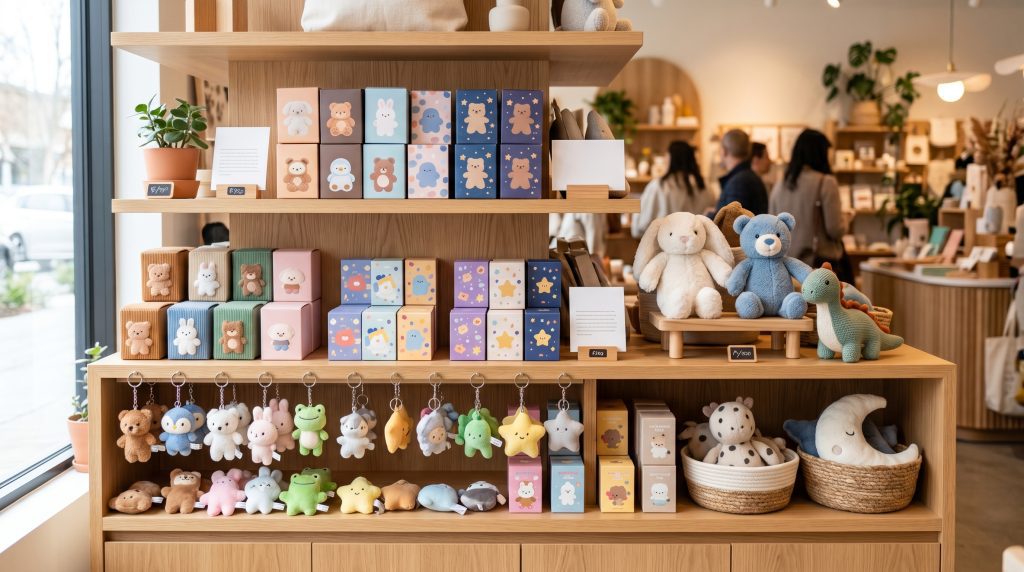
The format decision should come before the artwork decision. A beautiful plush doll series may underperform if your gift shop only has a small checkout counter. A compact plush keychain series may sell better in a tourist shop because customers can attach it to a bag immediately and carry it home easily. A counter display format may be the safest entry point for stores that want to test demand without changing fixture layouts.
If you are deciding between small carryable formats and larger soft toys, compare the merchandising role of each in your actual fixture plan. Keychains usually support travel gifting, bag attachment, and impulse baskets. Plush dolls need more visual space and usually work better as a planned feature, character wall, or seasonal gift table.
Once the format is selected, check available styles in the wholesale plush blind box category. Build your shortlist around display fit, giftability, and replenishment potential rather than ordering every cute design at once.
Need a store-matched recommendation? Share your store type, space constraints, preferred plush format, and launch timing through the Blind Box Wholesale quote request form and ask for a plush recommendation matched to your retail floor.
Build a first-case assortment that tests themes, occasions, and repeat pulls
A gift shop assortment should not rely on one theme unless your store has a very specific customer base. A stronger wholesale order usually combines one broad-appeal plush line, one character or trend-led line, and one compact impulse format. This gives the buyer a way to compare customer response without confusing the shelf.
For broad-appeal designs, look for animals, food-inspired plush, pastel characters, cozy creatures, or simple expressions that work for children, teens, and adult gift buyers. For trend-led designs, choose styles that suit your store identity, such as kawaii, anime-inspired, fantasy, seasonal, or novelty themes. For compact impulse formats, plush keychains and small blind boxes can support checkout conversion, especially when the packaging is easy to understand at a glance.
Avoid making the first purchase too narrow. If every item is from the same color palette, character type, or size, you will not learn which part of the plush blind box program is driving sales. At the same time, avoid over-fragmenting the shelf with too many unrelated series. Customers should be able to understand the section quickly: “small plush gifts,” “mystery plush keychains,” or “collectible soft toys.”
Common plush blind box buying mistakes to avoid:
- Ordering all one palette, character type, or size, which makes performance data too narrow.
- Over-fragmenting the shelf with too many unrelated series, so shoppers cannot understand the section quickly.
- Reordering only because a few early sales look strong, before you know whether repeat demand exists.
- Buying larger plush doll formats for a checkout-only counter with limited display depth.
- Waiting until the display is empty before a holiday, school break, tourist season, convention, or local event peak.
For multi-location buyers, apply the same assortment-planning logic by store type. Tourist stores may need compact, travel-friendly plush keychains. Museum stores may need softer visual themes and clean gift presentation. Anime or pop-culture stores may need collectible styling and deeper series interest. Mall kiosks may need bold packaging and compact replenishment.
Ask MOQ and reorder questions around shelf capacity, cartons, and seasonal peaks
Wholesale buyers should connect MOQ decisions to store capacity, not just to the lowest order a supplier can accept. Ask how the MOQ is structured: by SKU, by series, by display case, by carton, or by mixed assortment. Then compare that structure with the space you can actually merchandise. A gift shop with one checkout display should not buy the same way as a chain buyer filling multiple stores.
For a first order, define three internal rules. First, decide how many display positions you can maintain without crowding the store. Second, decide what level of backstock is practical for your storage room. Third, decide when you will reorder: after a display is mostly depleted, after a theme proves repeat demand, or before a seasonal traffic period. These rules prevent emotional reorders based only on a few strong early sales.
Turn soft MOQ discussions into specific supplier questions. Ask: How is MOQ structured by SKU, series, case, or carton? How many units are packed per master carton? How many displays are packed per carton? What carton cube or volume should we plan for per display? What typical reorder turnaround should we expect for this series? Can mixed assortments be reordered, or does replenishment need to follow the original case or carton structure?
Seasonality matters for plush blind boxes gift programs. Holiday gifting, school breaks, tourist season, convention traffic, and local events can all affect sell-through. If your store depends on seasonal spikes, discuss reorder windows with the supplier early and avoid waiting until the display is empty. If your store has steady local traffic, a smaller recurring replenishment plan may be better than a large one-time stock position.
Do not request exact MOQ advice without giving store context. A useful supplier inquiry should include your store type, number of locations, preferred plush formats, target display area, and whether you want a mixed test or a deeper single-series buy. This helps the supplier recommend a wholesale structure without guessing.
Verify packaging, barcode setup, and crush protection before shipment
Packaging is a buying decision, not just a visual detail. Gift shop customers often judge blind boxes from the front panel, character lineup, box finish, and whether the item feels appropriate as a present. Ask for product photos, packaging photos, and carton information before confirming a wholesale order.
If your store uses POS scanning, confirm the barcode setup before approving the shipment. Ask whether barcodes are applied per retail unit, per inner display, or both. Confirm whether labels are pre-applied by the supplier or need to be added in-store. If you operate multiple locations, ask whether mixed-assortment cartons are labeled clearly enough for receiving teams to identify series, display count, and unit count without opening every retail box.
For plush items, damage risk is different from rigid figures. The plush itself may be soft, but the retail box can still dent, crush, or lose shelf appeal if packed poorly. Ask how inner displays are protected in master cartons, whether mixed-assortment cartons keep retail boxes crush-protected, and whether packing methods preserve the display presentation after transit. If you operate a premium boutique or museum store, packaging condition may be as important as the plush quality.
Also check the customer-facing mystery structure. Some gift shops prefer a clear lineup on the box so buyers understand the possible pulls. Others prefer a more minimal presentation that emphasizes surprise. Make sure the hidden assortment is not confusing for parents, tourists, or casual shoppers. If the packaging requires too much explanation from staff, it may slow checkout and reduce impulse conversion.

Plan shipping and stock allocation for kiosks, tourist shops, and multiple locations
Shipping logic should be part of the buying plan from the beginning. Plush products can occupy more carton volume than small vinyl figures or flat accessories, even when the retail unit feels lightweight. Ask your supplier how the goods are packed and whether the order is better handled as full cartons, mixed cartons, or separate shipments by series. The right answer depends on your store count, receiving space, and launch timing.
A single gift shop may want a simpler shipment that arrives ready to merchandise, with enough inventory to fill the display and hold some reserve stock. A kiosk operator may need compact cartons and fast restocking access because storage is limited. A multi-location buyer may want allocation notes by store type, such as stronger tourist themes for travel locations and broader animal designs for family-oriented stores.
When comparing air, sea, or consolidated shipping options, avoid looking only at speed. Consider carton volume, urgency, seasonal deadlines, and how much inventory you can receive at one time. Faster shipping may support a launch or urgent replenishment, while consolidated or planned shipping may suit larger seasonal buys. Ask the supplier to explain suitable shipping options for your order size and destination without assuming one method fits every buyer.
For retail teams, create a receiving checklist before the shipment arrives. Confirm carton count, display count, series names, unit condition, and packaging condition. Then photograph the display once merchandised. This gives you a clear reference point for future reorders and helps compare performance across locations.
Send a plush quote request tied to format, store type, and launch timing
A strong quote request is specific. Instead of asking for a general plush blind box price list, include your buyer type, store count, preferred formats, target launch window, and whether the order is for a test, replenishment, or seasonal feature. Mention if you want counter displays, plush keychains, larger plush dolls, or a mixed assortment. If you have limited shelf space, include that detail so the supplier can recommend a practical wholesale plan.
For gift shops testing plush blind boxes for the first time, ask for recommendations that match your shopper profile. A tourist store may need compact and travel-friendly items. A museum shop may need soft visual presentation and clean packaging. An anime or pop-culture store may need collectible styling and stronger repeat-purchase appeal. A kiosk may need small cartons, easy display setup, and quick visual impact.
Copy-paste inquiry template: Use the following as example language for your supplier inquiry. It is a planning template, not a guarantee of availability, MOQ, pricing, timing, or shipping method.
Hello Blind Box Wholesale team,

We are a [store type] with [number of locations]. We are interested in wholesale plush blind boxes for [preferred plush formats: counter display / keychain / doll / mixed]. Our available checkout or display space is approximately [approx. checkout/display space].

This order is intended for [test vs replenishment vs seasonal feature], and our target launch window is [target launch window]. Our barcode or POS requirement is [barcode/POS requirement]. The shipment destination and preferred shipping approach are [destination + preferred shipping approach].

Please recommend plush blind box assortments, case or carton structure, barcode setup, packaging considerations, and reorder planning questions that fit this store profile.
End your planning process with a quote that reflects how you will actually sell the product. Share your assortment goals, MOQ structure questions, units per master carton questions, display-per-carton questions, carton-volume concerns, preferred shipping approach, and any packaging or barcode requirements. Then ask for a wholesale recommendation matched to your store format, plush format, and launch plan.
Next steps: see our browse the category to plan your order.