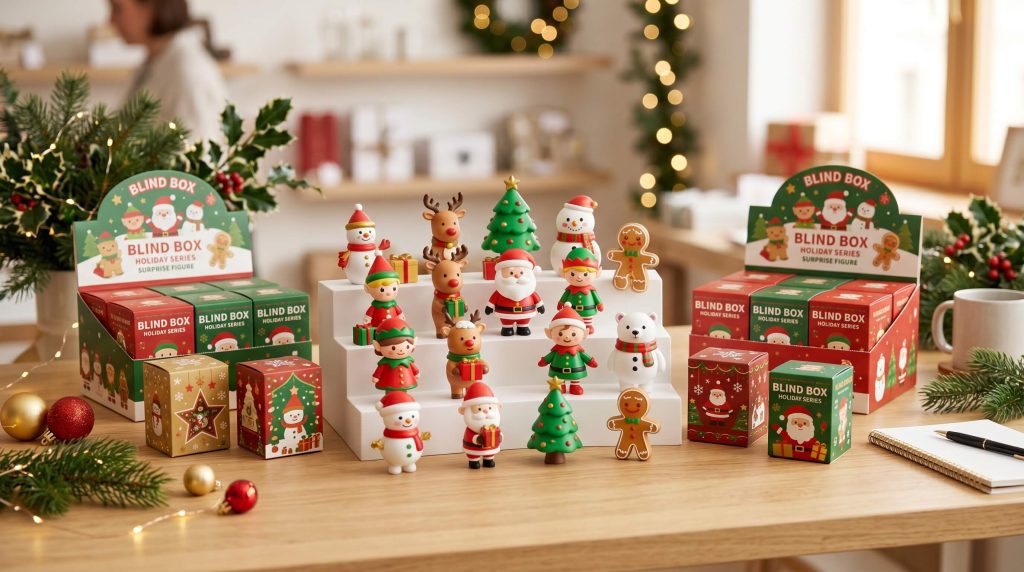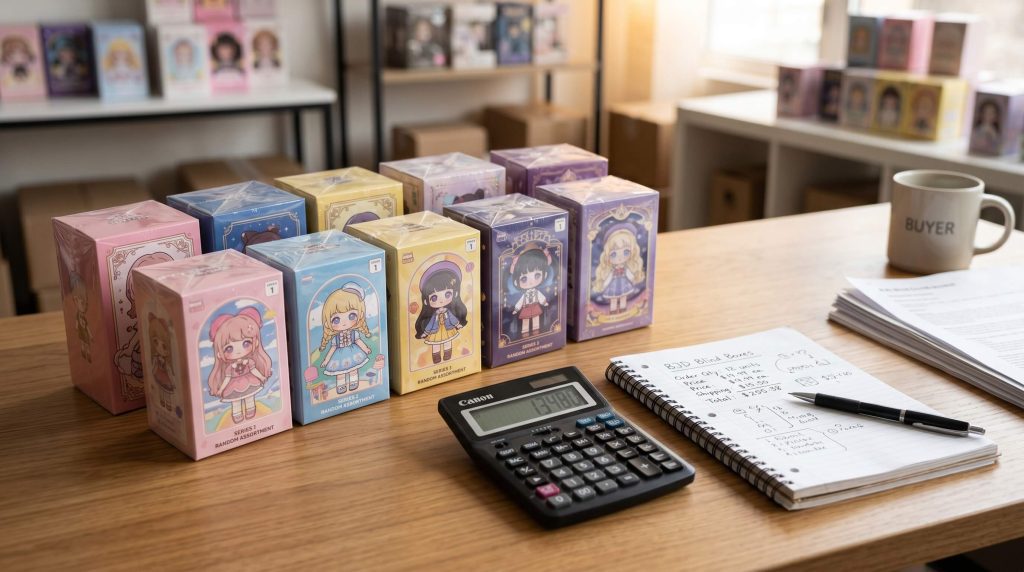





Limited shelf space, a fixed purchasing budget, and no room for slow-moving novelty stock shape most gift-buying decisions. When the choice narrows to a PVC plush keychain or a PVC figure blind box, comparing character designs is not enough. The format affects display flexibility, perceived gift value, shipping volume, damage risk, and how a customer uses the item after opening.
This guide helps gift shops, collectible retailers, lifestyle stores, online sellers, and event-merchandise buyers evaluate both formats without assuming one is universally better. The right decision depends on the customer, the selling channel, the packaging specification, and the complete landed cost.
Match the Format to the Customer’s Gift-Shopping Mission
Start with the reason customers enter the store or browse the category. A shopper seeking a small add-on gift may judge the formats differently from a collector looking for a display piece.
- Gift and stationery shops: Keychains can complement bags, pencil cases, pouches, and other accessories. Ask whether customers typically buy small functional gifts or shelf collectibles.
- Collectible specialty stores: Figures may fit customers who value character poses, display arrangements, and complete series. Review whether existing figure releases already occupy most available shelf space.
- Fashion and lifestyle retailers: A plush keychain may connect more naturally with bag-accessory merchandising. Check whether the attachment style suits the bags sold nearby.
- Vendedores online: Both formats can work, but packaging dimensions influence fulfillment cost and storage density. Request packed dimensions rather than estimating from the product image.
- Pop-ups and event booths: Compact products simplify transport, but the outer box must still be easy to stack and recognize from a distance.
A practical decision rule is to identify the primary use after unboxing. Choose a keychain-led assortment when attachment and portability are central to the purchase. Favor figures when display, collecting, and character detail are the stronger reasons to buy.
PVC Plush Keychain vs PVC Figure Blind Boxes at a Glance
The term “PVC plush keychain” can describe different constructions, including a plush body with a molded PVC or vinyl face, a plush charm with PVC components, or a soft character supplied with a PVC accessory. Confirm the construction rather than relying on the listing name.
| Buying criterion | PVC plush keychain | PVC figure blind box | Buyer action |
|---|---|---|---|
| Primary use | Bag, pouch, or key attachment | Desk, shelf, or cabinet display | Match the format to the main customer use case |
| Customer handling | Frequent touching and movement | Usually handled less after display | Check seams and hardware for keychains; check balance and joints for figures |
| Display footprint | May hang from hooks or stand in boxes | Usually needs stable shelf or counter space | Measure usable retail fixtures before ordering |
| Shipping profile | Soft portions may compress, but boxes still create volume | Rigid product may need protective internal packaging | Compare master-carton dimensions and gross weight |
| Typical damage concerns | Loose hardware, uneven stitching, surface marks, deformed plush | Paint variation, bent parts, loose pieces, unstable bases | Define inspection points for the actual construction |
| Gift presentation | Tactile and accessory-oriented | Display-oriented and sculptural | Review a packed sample, not only loose-product photos |
| Assortment behavior | Color and character may affect attachment appeal | Pose and rarity structure may drive collecting | Request the series lineup and assortment policy |
| Repeat purchase logic | Customers may use multiple charms on different items | Customers may pursue a complete display set | Choose a series with a clear reason to buy again |
Retailers comparing hybrid formats can also review how vinyl-face plush differs from standard plush. For a small-gift comparison focused on attachment use, the guide to ímãs de geladeira x enfeites para bolsas provides another useful merchandising perspective.
Confirm What the PVC and Plush Construction Actually Includes
A quote is not fully usable until the construction is documented. Product photos may not reveal whether the face is molded, whether clothing is removable, or how the hanging component connects to the body.
Ask the supplier to identify:
- Which components are PVC, vinyl, fabric, metal, or another material.
- The approximate product dimensions and packed dimensions, with the measurement method stated.
- The attachment type, connection point, and whether hardware color varies by character.
- Whether accessories are fixed or removable.
- Whether figures require assembly, include a base, or contain separate small components.
- How the blind packaging prevents customers from identifying variants before purchase.
- Whether the quoted series is supplied as sealed cases, individual boxes, or another assortment format.
For plush hybrids, check face alignment, fabric pile, embroidery placement, seam finish, and the security of attached decoration. For figures, inspect paint boundaries, visible molding marks, fit between components, and standing stability. These are inspection categories, not assumptions about any particular series.
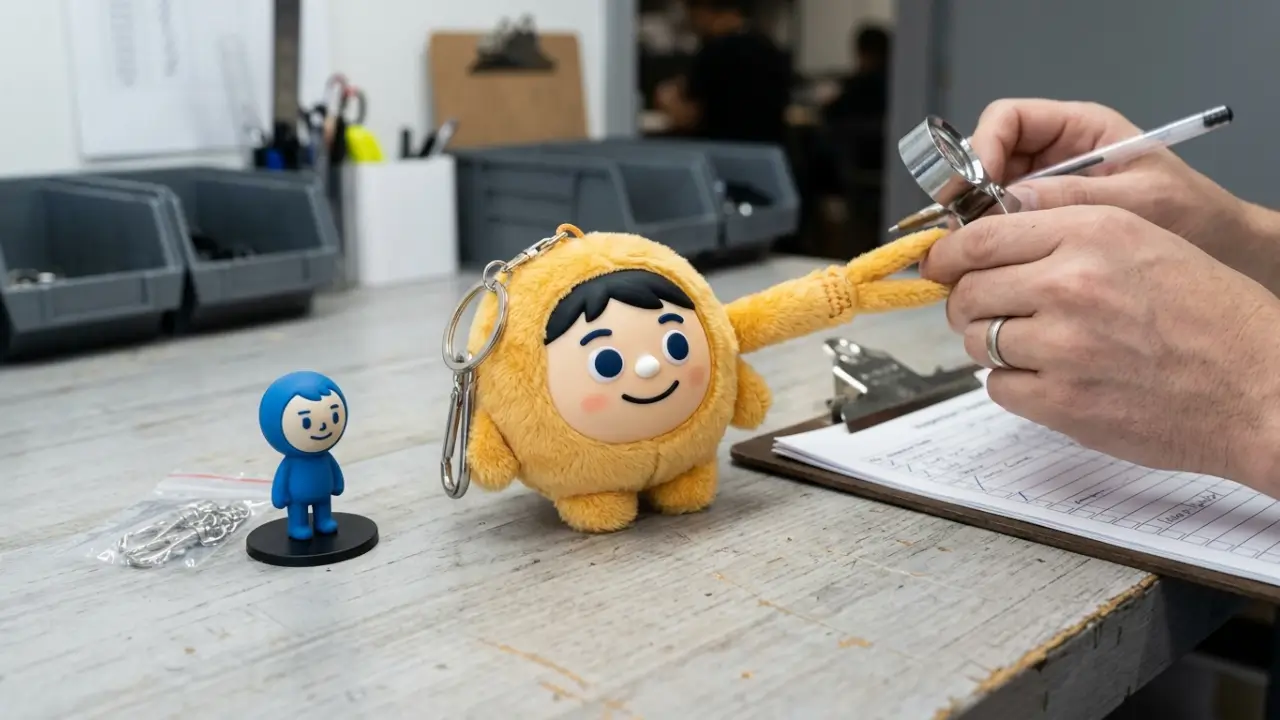
If a hybrid plush line is under consideration, a product-specific sourcing guide such as the Siinono plush blind box buyer’s guide can help buyers develop more detailed questions for samples and quotations.
Why Case Packs Shift Retail Risk More Than Unit Size
Do not compare only the quoted unit amount. Buyers should confirm MOQ, units per inner box, blind boxes per display case, master-carton quantity, and whether the minimum applies per series or across an order. These details determine how much inventory must be committed before demand is proven.
As a planning example, a retailer testing 120 units might allocate 60 units to each format, or use a 72/48 split if one format already matches proven customer behavior. These numbers are not supplier pack sizes; they simply illustrate how a buyer can avoid committing the full test budget to one unproven format.
Ask whether sealed cases follow a defined assortment and how hidden or rare variants affect case composition. Do not assume every case guarantees a complete standard set. Buyers deciding between intact series cases and flexible stock should review the operational differences between sealed sets and mixed blind box assortments.
Build a landed-cost comparison
Calculate each format at the sellable-unit level:
- Quoted product amount
- Export or protective packaging charges, if applicable
- Freight allocation based on packed volume and weight
- Customs, duties, taxes, brokerage, and destination handling where applicable
- Expected allowance for damaged packaging, defects, or unsellable units
- Domestic fulfillment and storage costs
A lighter item is not automatically cheaper to import if its retail box produces poor carton utilization. Conversely, a rigid figure may have a smaller box but require stronger internal protection. Request the same cost fields from every supplier so the comparisons are equivalent.
Before selecting a format, ask for packed dimensions, case configuration, gross carton weight, and clear product specifications. Those details are more useful than an attractive unit quote without shipping context.
Protect Gift-Ready Packaging Before It Reaches the Shelf
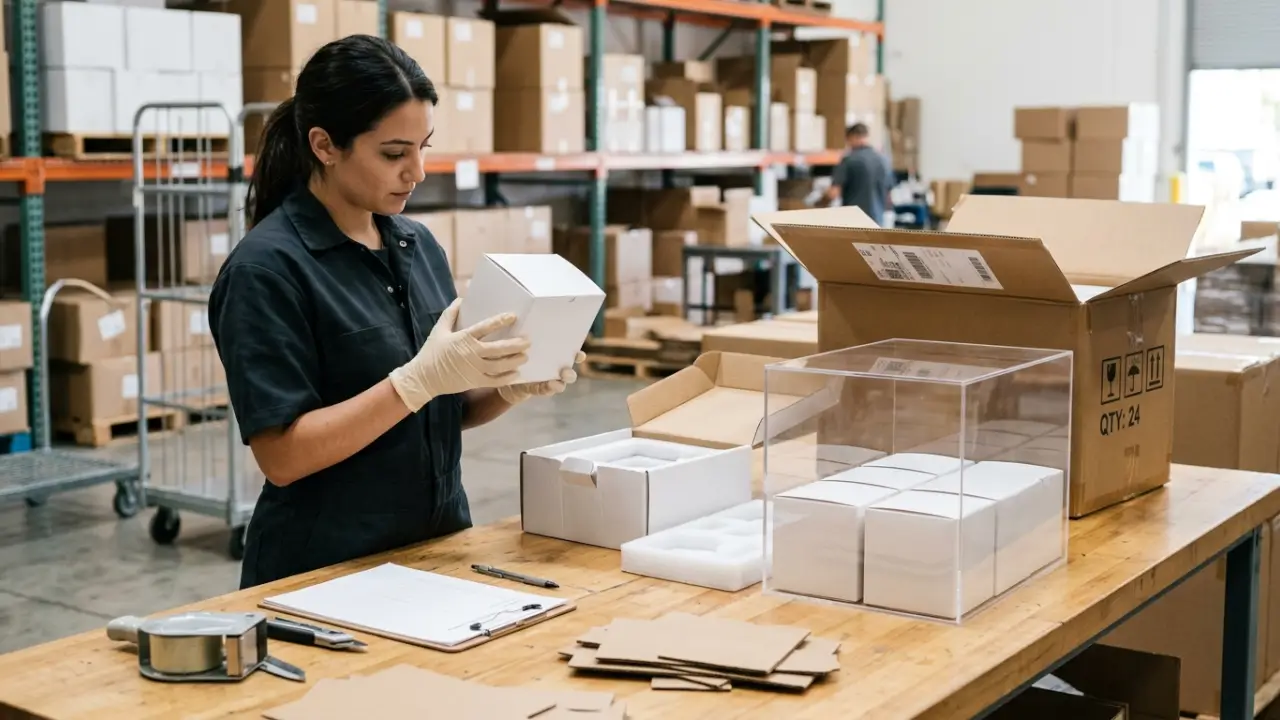
Blind boxes serve two functions: they conceal the variant and act as retail packaging. Crushed corners, torn seals, fading, or inconsistent labeling can reduce gift appeal even when the product inside remains usable.
Request photos or samples showing the individual box, internal protection, display case, and master carton. Then establish a simple receiving check:
- Count cartons and compare them with the packing list.
- Photograph external carton damage before opening.
- Check a buyer-defined sample across multiple carton locations rather than taking every sample from the top layer.
- Inspect box seals, print consistency, barcodes or required labels, and visible crushing.
- Open selected units according to the agreed inspection plan and record product defects by category.
- Keep evidence linked to carton numbers when reporting a problem.
For keychains, test the attachment through normal opening and closing motions without presenting the result as a formal safety test. Inspect sharp edges, loose decorative pieces, seam openings, and surface transfer. For figures, check loose components, sharp points, paint condition, assembly fit, and whether the item stands as intended.
Age grading, small-parts warnings, chemical requirements, labeling, intellectual-property permissions, and import rules vary by destination and sales channel. Buyers should obtain relevant product and packaging information, then verify applicable requirements with qualified local professionals or authorities. A supplier statement should not be treated as a substitute for destination-market review.
Plan Reorders Around Carton Data, Not Visual Popularity
Lead time should be separated into production or order preparation, inspection, export handling, international transit, customs clearance, and domestic delivery. Ask suppliers which stages are included in their estimate and what event starts the clock. Avoid treating an informal shipping estimate as a delivery commitment.
Keychains and figures can also require different storage layouts. Hanging products may perform well on retail hooks but still arrive in rectangular blind boxes. Record both the retail display requirement and warehouse carton footprint.
As a planning reference, a retailer may set a reorder review when approximately 40% of sellable stock remains, then adjust the threshold using actual weekly sales and the confirmed replenishment cycle. A slower or less predictable supply route requires an earlier review than readily replenished inventory. Keep variants closed when measuring blind-box sales; opened display samples and damaged units should be tracked separately.
For online channels, compare parcel dimensions after protective packing. The original blind box may require an outer mailer or cushioning, so fulfillment cost should be tested with a packed shipment rather than calculated from the product dimensions alone.
When PVC Keychain and Figure Quotes Are Not Comparable
Low quotations can hide missing packaging, different assortment structures, or vague specifications. Pause the comparison if one offer lacks carton data, material details, series composition, or commercial terms.
Watch for these practical warning signs:
- The supplier uses “PVC plush” without identifying which components are molded and which are textile.
- Product dimensions are supplied, but individual-box and master-carton dimensions are omitted.
- The quotation does not state whether units come in sealed cases or loose assortments.
- Sample construction differs from the specification attached to the quote.
- Claims about compliance are made without identifying the product, market, document, or test scope.
- Defect reporting procedures and remedies are not documented before payment.
- Images, character rights, or branding permissions are unclear.
- Lead-time wording does not distinguish preparation from transit.
Inquiry template for both formats
Use this checklist in a quote request so each response covers the same scope:
Please quote the PVC plush keychain and/or PVC figure blind box series and confirm: product materials by component; loose and packed dimensions; product weight and packed weight; available series lineup; assortment method; MOQ basis; units per display case and master carton; carton dimensions and gross weight; packaging structure; removable or small components; attachment or figure-base details; sample options; order-preparation basis; shipping terms; available product and packaging documentation; and the procedure for reporting quantity, packaging, or quality discrepancies. Please identify any items not included in the quotation.
Attach the intended destination market, sales channel, forecast quantity range, preferred delivery window, and any retailer-specific labeling needs. This allows the supplier to flag gaps instead of making assumptions.
Before committing purchasing funds, request written specifications and comparable quotations for both formats. Evaluate them by landed cost, carton commitment, display fit, quality-control complexity, and customer use case rather than unit price alone.
PERGUNTAS FREQUENTES
Is a PVC plush keychain better for impulse purchases?
It can be when customers already buy bag accessories or compact gifts, but placement, packaging visibility, character appeal, and price positioning still matter. Test it near relevant accessories and track sell-through separately from figures.
Are PVC figures cheaper to ship than plush keychains?
Not necessarily. Freight depends on packed carton volume, gross weight, protection requirements, and shipping method. Compare master-carton data and landed cost per sellable unit.
Should retailers buy sealed cases or mixed blind boxes?
Sealed cases may preserve the intended series assortment, while mixed stock can reduce commitment or support replenishment flexibility. Confirm whether a sealed case guarantees any particular assortment before ordering.
What samples should a buyer request before a bulk order?
Request representative finished products with retail packaging where possible. Check construction, attachment hardware or figure stability, dimensions, box condition, labeling, and consistency with the written specification.
How should retailers compare MOQ between the two formats?
Translate each MOQ into total units, display cases, master cartons, storage space, and purchasing exposure. Also confirm whether the minimum applies per design, per series, or across the combined order.
Choose the Format That Fits the Retail System
A PVC plush keychain is often a logical candidate for accessory-led merchandising, tactile gifts, and hanging displays. A PVC figure blind box may suit display-focused collectors and stores built around series completion. Neither advantage is automatic.
The final choice should survive five checks: customers understand the use, packaging fits the fixture, case quantities fit the test budget, landed cost supports the retail plan, and specifications allow meaningful receiving inspection. If both formats pass, a controlled split test can produce better evidence than choosing solely from product photography.