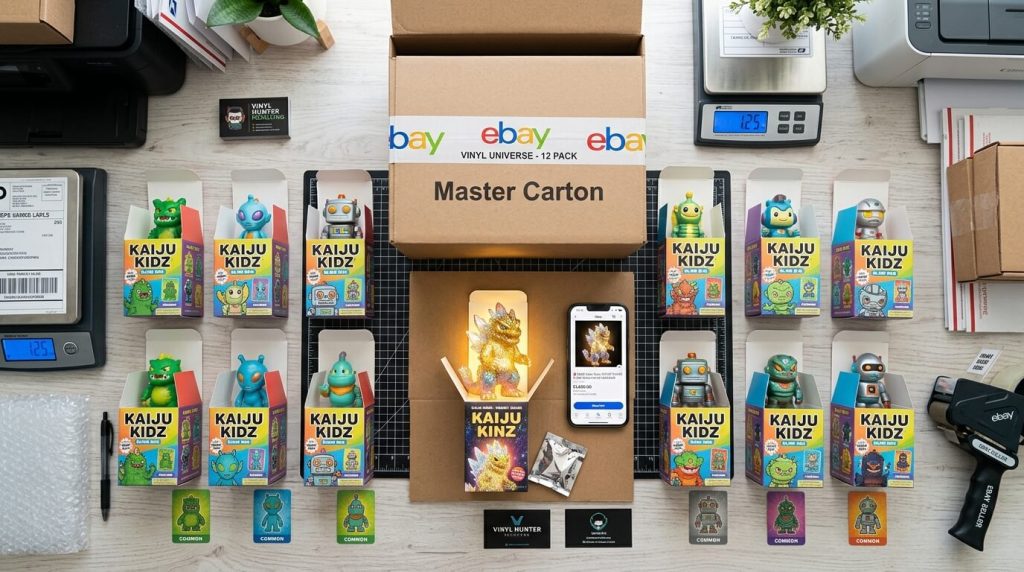




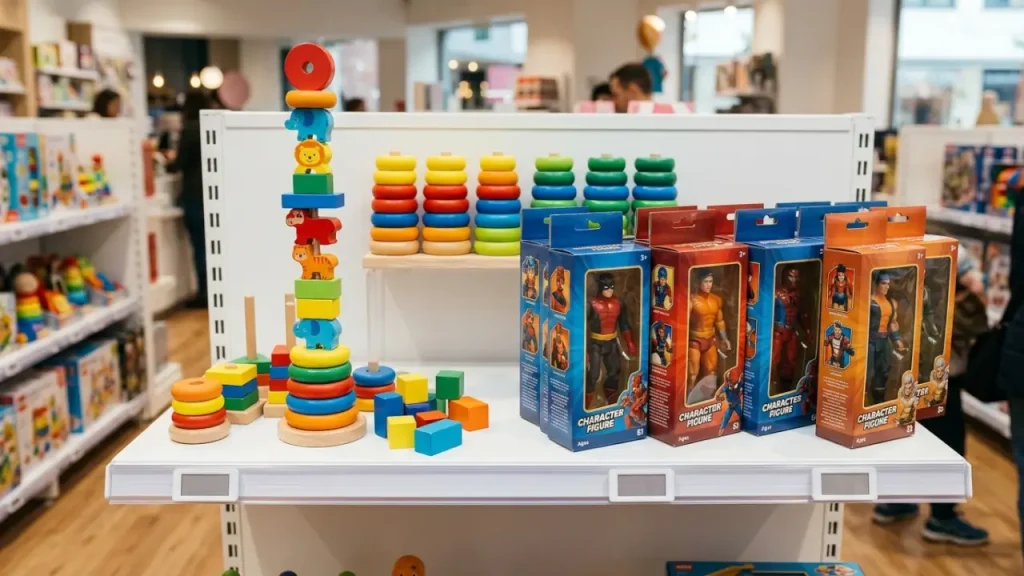
Every new collectible has to earn its shelf space through display appeal, repeat purchases, interactive play, or some mix of the three. That decision gets harder when two formats look similar in photos but behave very differently in a store. Character stacking toys introduce a balance-and-build element, while traditional blind box figures usually rely more heavily on character design, surprise, and series completion.
The difference affects more than customer preference. It changes how a retailer evaluates packaging, case quantities, demonstrations, damage risk, landed cost, and reorder potential. Before requesting a quote, buyers should decide exactly which experience they want the product to deliver.
Where Character Stacking Toys Earn Their Shelf Space
Stacking formats can suit stores that want customers to interact with collectibles rather than only display them. Their appeal may come from arranging, balancing, combining, photographing, or rebuilding a group of small characters.
Traditional blind box figures can be a stronger fit when the store already serves collectors who follow character series, search for particular designs, or return to complete an assortment. Neither format is automatically better; the right choice depends on the selling environment.
- Gift and lifestyle stores: Ask whether the product communicates its play concept without a lengthy explanation.
- Toy stores: Compare the suggested age positioning, component size, play pattern, and durability expectations.
- Collectible shops: Review character differentiation, series size, hidden-edition structure, and display value.
- Varejistas online: Confirm whether photos or short demonstrations clearly show the stacking function.
- Pop-up and event sellers: Check whether an assembled sample can attract attention without obstructing checkout space.
A useful decision rule is to choose stacking toys when interaction is central to the purchase reason, and choose conventional figures when character collecting and individual sculpt appeal matter more than play mechanics.
Character Stacking Toys and Blind Box Figures Compared
Do not compare the formats using product photos alone. Request specifications and evaluate how each difference affects store operations.
| Ponto de avaliação | Character stacking format | Traditional figure format | Buyer action |
|---|---|---|---|
| Primary appeal | Arrangement, balance, interaction, and display | Character discovery, collection, and display | Match the format to the reason customers visit the category |
| Demonstration need | May benefit from an assembled display | Usually understood from character and series artwork | Ask whether a display sample or open set is available to order |
| Component consistency | Contact points and weight distribution matter | Sculpt, finish, and stability matter | Inspect samples on a level surface |
| Repeat-purchase driver | Building larger arrangements or finding new shapes | Completing a series or finding preferred characters | Review how the assortment encourages a second purchase |
| Packaging explanation | Should make the stacking concept visible | Should communicate the series and blind format | Request all package-panel images before approval |
| Missing-part risk | May involve bases, connectors, or multiple components | Often centers on one figure and any listed accessory | Confirm the complete contents of every unit |
| In-store footprint | Demonstration may require horizontal space | Individual figures often occupy separate display positions | Measure the planned shelf or counter area |
| Customer explanation | Staff may need to demonstrate stable combinations | Staff may need to explain assortment and secret odds | Prepare a short sales explanation for each format |
For a closer look at how buyers assess a conventional character series, the Little Monster Cupa buyer guide shows the kind of series-level sourcing questions worth asking. Retailers comparing completely different small-gift formats may also borrow the decision logic in this fridge magnet versus bag charm comparison.
How Case Packs Can Change the Assortment Decision
A visually attractive series can still create inventory problems if the quote does not explain the packing structure. Ask whether the offer covers individual blind units, a sealed inner case, a master carton, an open-box stacking set, or another configuration. Do not treat “one case” as a complete quantity specification.
Confirm the number of sellable units per inner case, inner cases per master carton, designs in the regular assortment, and whether assortment distribution is fixed or variable. If secret designs exist, request the stated selection mechanism or published odds without assuming every case contains one.
As a planning example, a retailer testing 48 units across two locations may allocate 24 units to each store, then review sell-through by location before reordering. That calculation only works when the buyer knows whether 48 units preserve sealed-case integrity or require a mixed assortment. The guide to sealed series sets versus mixed blind box assortments explains why that distinction matters.
- Ask for MOQ by SKU, design, inner case, and total order.
- Confirm whether different series can be combined toward an order threshold.
- Document whether samples, display pieces, or opened demonstration units are separate from sellable stock.
- Check whether replenishment must follow the same case configuration as the first order.
Why a Live Stacking Demonstration Must Support the Packaging
Stacking functionality is difficult to communicate when the package shows only individual characters. Buyers should review whether the front, back, or side panels demonstrate an achievable arrangement without making unsupported performance assumptions.
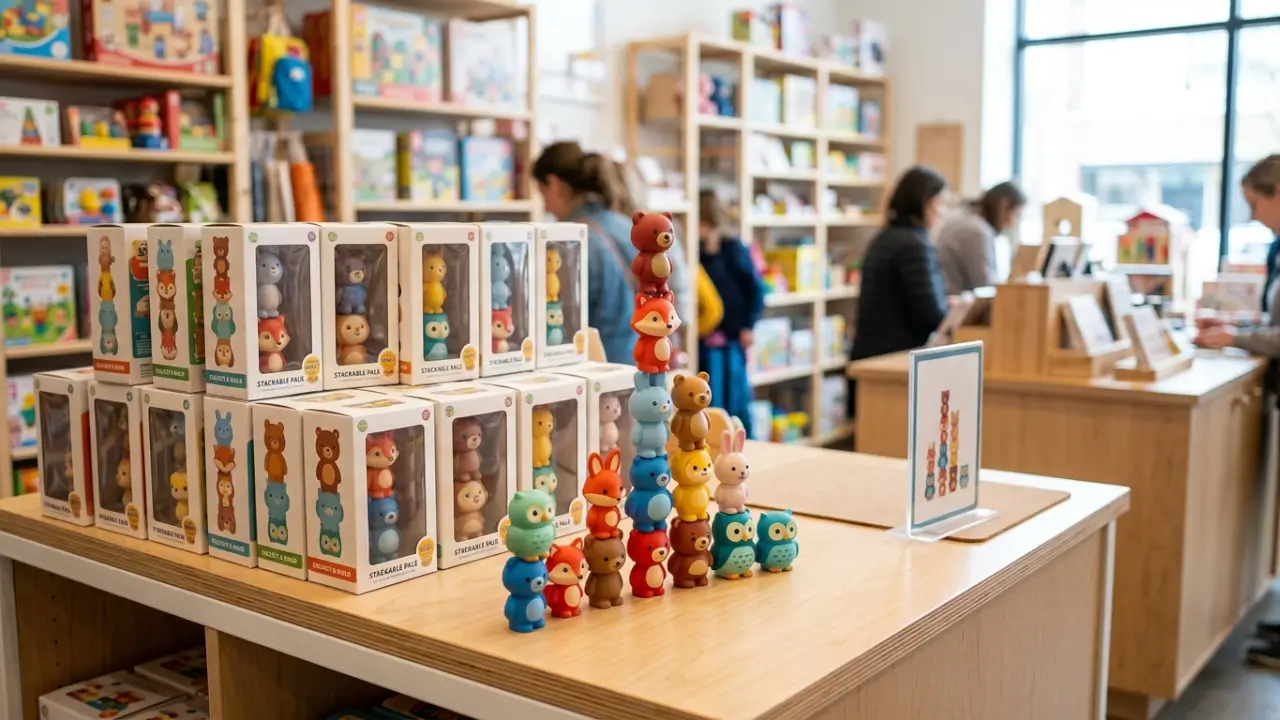
For store presentation, test one opened sample on the actual counter or shelf. Check how easily it tips when the fixture is touched, whether customers can understand the contact points, and how many pieces are needed to create a convincing arrangement. Keep demonstration stock separate from sealed inventory.
Packaging also needs to protect projecting parts and finished surfaces. Ask about the internal tray, bag, wrap, or divider arrangement rather than relying on the outer box image. If packaging condition affects resale value, define acceptable standards for crushed corners, torn seals, heavy scuffing, and loose components before ordering.
Why Small Figures Still Need Landed-Cost Math
Unit price is only one part of the retail decision. Small collectible boxes can consume substantial carton volume relative to their product weight, while stacking designs with unusual shapes may require protective packaging. Compare quotes using the same delivery point and packing configuration.
A practical landed-cost worksheet should include product cost, sample cost if applicable, payment charges, freight, insurance where used, customs-related charges, local delivery, inspection expense, and an allowance for unsellable damage. Buyers should verify tariff classification, taxes, and import requirements for their own destination market.
Calculate cost per sellable unit, not merely cost per shipped unit. If a carton contains demonstration pieces, damaged packaging, or units that cannot be sold individually, those items affect the effective cost of the remaining inventory.
Before you commit: request comparable packing data and delivered-cost inputs for both stacking toys and standard figures. A slightly higher product quote may still win if it reduces display, packaging, or damage-related costs.
How to Check Balance Points, Finish, and Box Condition Together
A stacking toy can look acceptable in isolation but perform poorly as part of a group. Sample review should therefore include both cosmetic inspection and functional assembly.
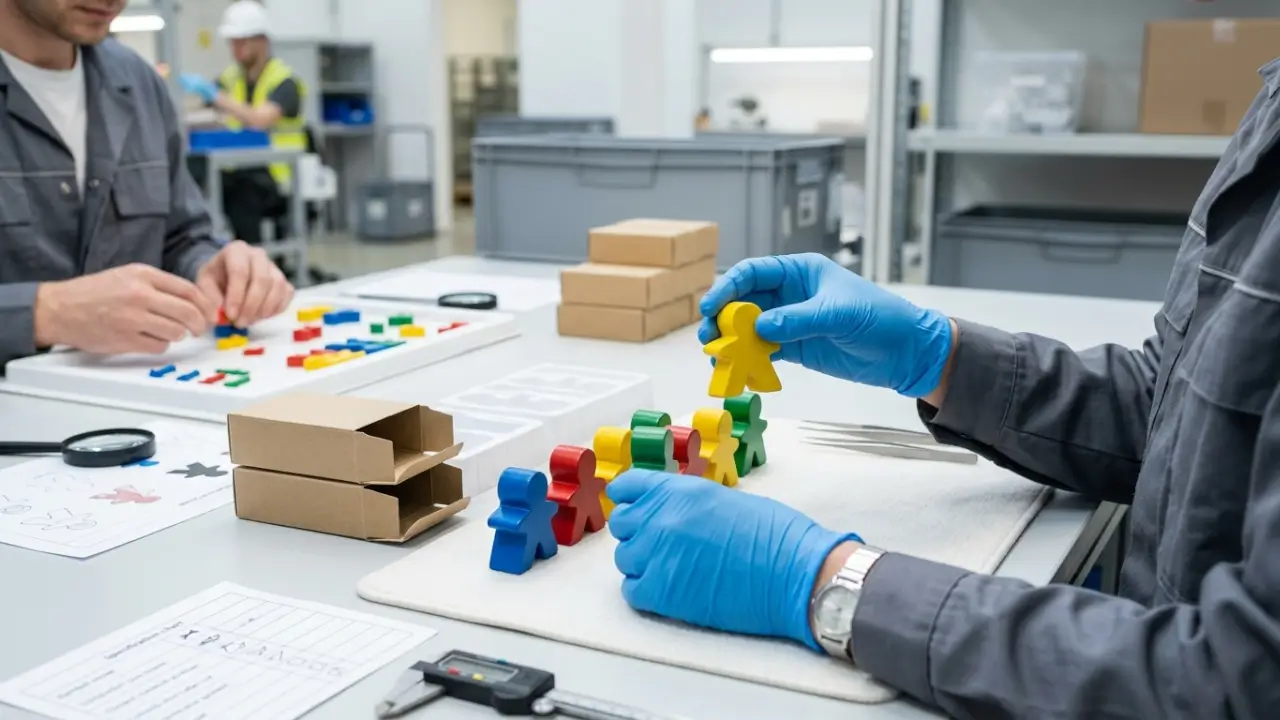
- Compare each sample with the approved product images and component list.
- Place pieces on a flat, stable surface and try the arrangements shown by the supplier.
- Check contact areas for warping, excessive molding residue, or uneven surfaces.
- Inspect paint boundaries, scratches, loose parts, odors, and visible material defects.
- Verify that every listed base, connector, accessory, insert, and instruction item is present.
- Review the retail box, seal, inner protection, barcode area, and carton labeling.
Traditional blind box figures also require stability and finish checks, but stacking designs add interaction between pieces. Ask how defects are defined and documented, what evidence is required for a claim, and whether the same acceptance criteria can be applied to the production order.
Age grading, warnings, labeling, material restrictions, and toy-safety obligations vary by product and destination. Buyers should request available documentation and independently confirm which requirements apply in the intended sales market. Product appearance or supplier statements alone should not be treated as proof of compliance.
When a Stacking-Toy Quote Is Not Ready for Approval
A usable quote should connect the product specification to the commercial terms. Pause the comparison if a supplier cannot identify the exact series, unit contents, case quantity, packaging version, quotation validity, or shipping basis.
Other warning signs include dimensions without units, photos that do not show scale, unclear treatment of substitutions, an MOQ that changes without explanation, or a production timeline that does not state when counting begins. Buyers should also distinguish production time from freight transit and customs clearance. Ask for each stage separately, while recognizing that estimates can change.
For reorders, work backward from the date inventory is needed. Include internal approval, payment, preparation or production, inspection, dispatch, international transport, clearance, and local delivery. As a planning reference, a retailer might set a review point when enough stock remains to cover the estimated replenishment cycle plus a buffer; base that threshold on actual weekly sales rather than a generic percentage.
Details to Include in the Inquiry
- Product or series name, version, and reference image
- Requested quantity and acceptable case configuration
- Number of regular designs and any secret-design information
- Figure dimensions, materials, components, and stacking method
- Individual box, inner case, and master-carton quantities and dimensions
- Sample options and the process for approving specifications
- Quality criteria, packaging requirements, and defect-claim process
- Required compliance documents for buyer review, where applicable
- Trade term, dispatch location, destination, and preferred transport method
- Estimated preparation timeline and quote validity
Inquiry template: “Please quote the specified character stacking series for the quantity and destination listed below. Include the sellable units per inner case and master carton, product and packed dimensions, complete unit contents, assortment method, packaging details, sample options, estimated preparation timeline, trade term, and available compliance documentation. Please identify any items excluded from the quotation.”
For another perspective on how construction changes collectible positioning, review the comparison of vinyl-face plush and standard plush blind boxes.
Ready to compare stock options? Send a structured inquiry with the same quantity, destination, case requirements, and quality questions to each potential supplier. Request clarification before paying whenever a quote omits packing, timing, assortment, or product-version details.
PERGUNTAS FREQUENTES
Are character stacking toys always sold in blind boxes?
No. A stacking format describes how the pieces interact, not necessarily how they are packaged. Buyers should confirm whether units are blind-packed, sold as visible designs, or supplied as complete sets.
Which format is better for repeat purchases?
It depends on the series. Traditional figures may encourage collection completion, while stacking toys may encourage customers to build larger arrangements. Review the assortment structure and the reason a customer would buy another unit.
What should retailers test on a stacking-toy sample?
Test balance, contact points, surface stability, component completeness, finish consistency, and the arrangements shown in product materials. Inspect the retail packaging at the same time.
Should buyers order sealed cases or mixed assortments?
Sealed cases can preserve the supplier’s stated assortment structure, while mixed assortments may allow broader testing. Confirm distribution, case quantities, and secret-design handling before choosing.
Como os varejistas devem comparar as cotações de atacado?
Use the same product version, quantity, case configuration, trade term, destination, and packaging requirements. Then compare estimated landed cost per sellable unit rather than unit price alone.
Choose the Customer Experience Before the Product Format
Character stacking toys are most compelling when the interactive arrangement is easy to understand, demonstrate, and repeat. Traditional blind box figures may be more suitable when character collecting is the primary sales driver. Define the desired customer experience first, then confirm case structure, landed cost, packaging, quality criteria, compliance information, and replenishment conditions before placing an order.