


A cute character can pull a customer across the shop, but weak hardware, bulky packaging, or an unsuitable case assortment can turn that same small collectible into a slow seller. When comparing keychain blind boxes, anime and gift-store buyers need to judge both collectible appeal and everyday usability before they commit a single carton.
The right choice depends on whether your customers want pocket-friendly accessories, decorative bag charms, or recognizable licensed characters. This guide compares buying formats rather than ranking unverified series. Use it to shortlist products, check samples, and request comparable wholesale quotes.
Which keychain blind boxes fit your store’s customers?
Anime specialty stores: Start with characters and franchises your customers already request, then confirm licensing and distribution details. An anime-inspired design is not evidence of an official franchise connection. Check character names, series identification, and packaging before promoting an item as licensed merchandise.
Gift and lifestyle stores: Compare designs that make sense without franchise knowledge. Expressive animals, simple character silhouettes, and tactile materials may suit casual gifting, but test whether the package clearly communicates the item inside and its approximate size.
Online stores and convention sellers: Prioritize presentation, transport volume, and clear product descriptions. A small charm in an oversized box can be inefficient to store and ship. Compare dimensions in your shortlist, and use this guide to blind box selection for online anime stores when planning the wider assortment.
Before requesting quotes, choose the primary use: keys, handbag decoration, backpack accessory, or collectible display. Do not assume a decorative bag charm is suitable for frequent contact with keys.
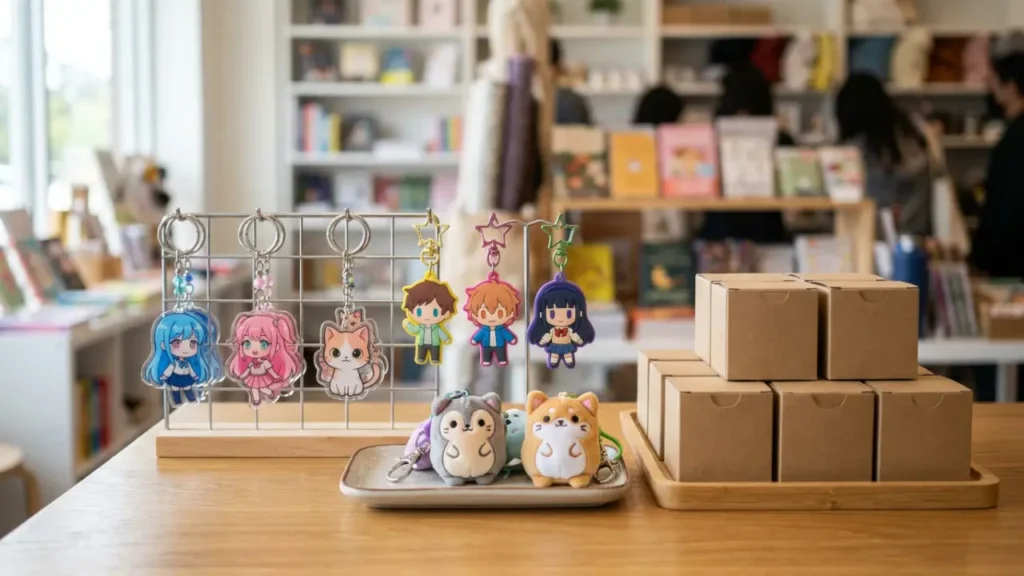
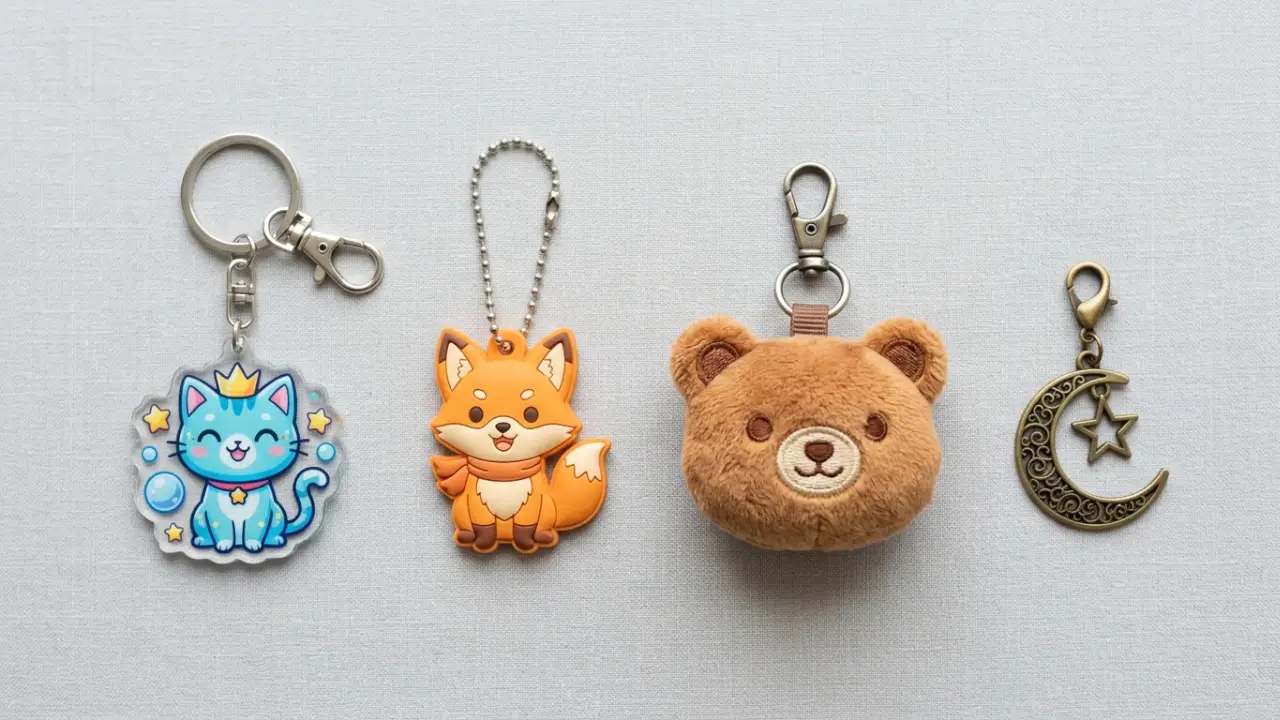
Compare acrylic, molded, and plush formats before picking a series
Ask suppliers which formats they can quote; the options below are evaluation categories, not confirmed inventory. Material alone does not determine quality. Thickness, construction, attachment design, and protective packaging can change the result.
| Format or feature | Potential retail fit | O que verificar | Sample check |
|---|---|---|---|
| Flat acrylic charm | Illustration-led anime ranges | Dimensions, edge finish, print location, protective film | Look for scratches, sharp edges, and image wear |
| Molded PVC or similar flexible charm | Compact character accessories | Actual material, thickness, weight, attachment construction | Inspect paint edges, deformation, and the attachment point |
| Plush keychain | Tactile gifts and decorative bag charms | Fabric, stuffing, size, loop construction, care guidance | Check seams, shedding, loose details, and loop security |
| Metal charm | Gift assortments where weight and finish matter | Base material, finish, dimensions, total weight | Inspect edges, surface defects, and hardware action |
| Three-dimensional miniature | Character-led collectible accessories | Material, protruding details, attachment placement | Check fragile parts and how the charm hangs |
| Mixed-material or multi-charm design | Visually detailed bag accessories | Component list, overall length, connectors | Look for tangling and contact between decorative parts |
| Ring, clasp, or ball-chain attachment | Different carrying and display uses | Exact hardware supplied on the quoted version | Check opening, closure, connector gaps, and usability |
As a starting hypothesis, an illustration-led anime store might test acrylic charms, while a tactile gift assortment might test plush. Neither is automatically the better seller. Reject formats that conflict with customers’ intended use before choosing artwork.
For a coordinated accessory range, compare the shortlist with functional anime collectibles for gift shops. Keep the distinction clear between usable accessories and display-only figures.
Test the attachment and protect the gift-ready box
Request a sample of the quoted version, including its retail box and internal packaging. A promotional photograph may not show the connector, rear print, seam finish, or protective insert. Ask whether the sample represents the proposed production batch and document any differences.
- Attachment: Open and close the clasp repeatedly, inspect connector gaps, and check the loop or anchor for looseness.
- Contact surfaces: Look for rough edges, exposed wire, snagging seams, or protrusions that could catch on fabric.
- Decoration: Examine print alignment, paint coverage, embroidery, and securely attached details.
- Retail protection: Check whether internal movement allows the hardware to scratch the charm or press into the box.
- Apresentação do presente: Inspect corners, seals, barcode placement, and room for required labels without covering key artwork.
These are screening checks, not substitutes for applicable safety testing. Avoid destructive sample checks on stock intended for sale. Agree on documented acceptance criteria and a process for reporting missing hardware, damaged boxes, or finish defects.
Once two or three formats fit your customers, ask for sample photos, packaged dimensions, and case details before committing to a full quote comparison.
Build the first order around sealed-case rules
Ask whether the minimum order applies per series, per design, per sealed display, or across the entire purchase. Confirm units per display, displays per master carton, and whether mixed-series cartons are permitted. Do not treat a shipping carton as a complete collection unless the supplier explicitly confirms that arrangement.
Blind assortment rules affect customer expectations. Ask whether a sealed display has a defined assortment, whether duplicates can occur, and whether any special design replaces a regular design. Do not infer distribution rules from promotional images or transfer them from another series.
Exemplo de planejamento: A retailer testing 48 units could compare one series with 48 units against two series with 24 units each, only if the quoted case packs permit those quantities. The split tests broader appeal; the concentrated order creates more depth in one series. Neither structure is a supplier MOQ claim.
Allow separately for any authorized display sample, expected inspection needs, and non-saleable packaging damage. Buyers protecting a small opening budget can also review blind box assortment planning for limited budgets.
Why a small keychain can carry a large delivered cost
Compare quotes on the same delivery basis. A lower unit quote may exclude transport legs, clearance charges, or packaging included elsewhere. Request the named delivery term, destination, carton dimensions, gross weight, and a written list of included charges.
Fórmula de planejamento: Landed cost per saleable unit equals product cost plus freight, insurance where applicable, duties, nonrecoverable taxes, clearance, and inbound handling, divided by expected saleable units. Keep recoverable taxes separate and verify their treatment with an appropriate adviser.
Retail boxes and master-carton volume can matter more than the charm’s size. Compare the freight effect of larger plush packaging against compact flat charms using actual packed measurements, not product dimensions alone.
Ask for separate estimates for stock confirmation or production, inspection, dispatch, transit, and clearance. Work backward from your merchandising date and allow a destination-specific buffer rather than treating dispatch as arrival.
Track sales by series and reorder against expected demand during the confirmed replenishment window. Ask whether replenishment would be the same version and packaging; a changed case assortment or unavailable series may require a substitute rather than a direct reorder.
Reject unclear licensing and vague blind-box claims
Pause a purchase when the supplier cannot identify the exact series, material, hardware, or case configuration. Other warning signs include inconsistent product photographs, unexplained packaging changes, undocumented claims of guaranteed rare designs, and refusal to put defect-resolution terms in writing.
For branded characters, request evidence supporting authenticity and authorized distribution, then assess whether it covers the proposed product and territory. A logo in a photograph is not sufficient evidence. Avoid advertising character names or official status you cannot substantiate.
Confirm the intended age group and destination-market classification. Keychains may raise small-parts, material, labeling, or other requirements depending on their design and presentation. A collectible label alone may not settle the classification. Verify applicable obligations with a qualified testing provider, customs broker, or local adviser.
Also check applicable rules and sales-channel policies for randomized products. Product listings should explain that designs are hidden, identify what one purchase contains, and avoid unverified odds or promises of completing a set.
Send a keychain-specific brief for comparable quotes
Photograph the approved sample from the front, back, and attachment point. Include its retail packaging so both parties can identify the version under discussion. Keep that reference alongside the written specification and quote.
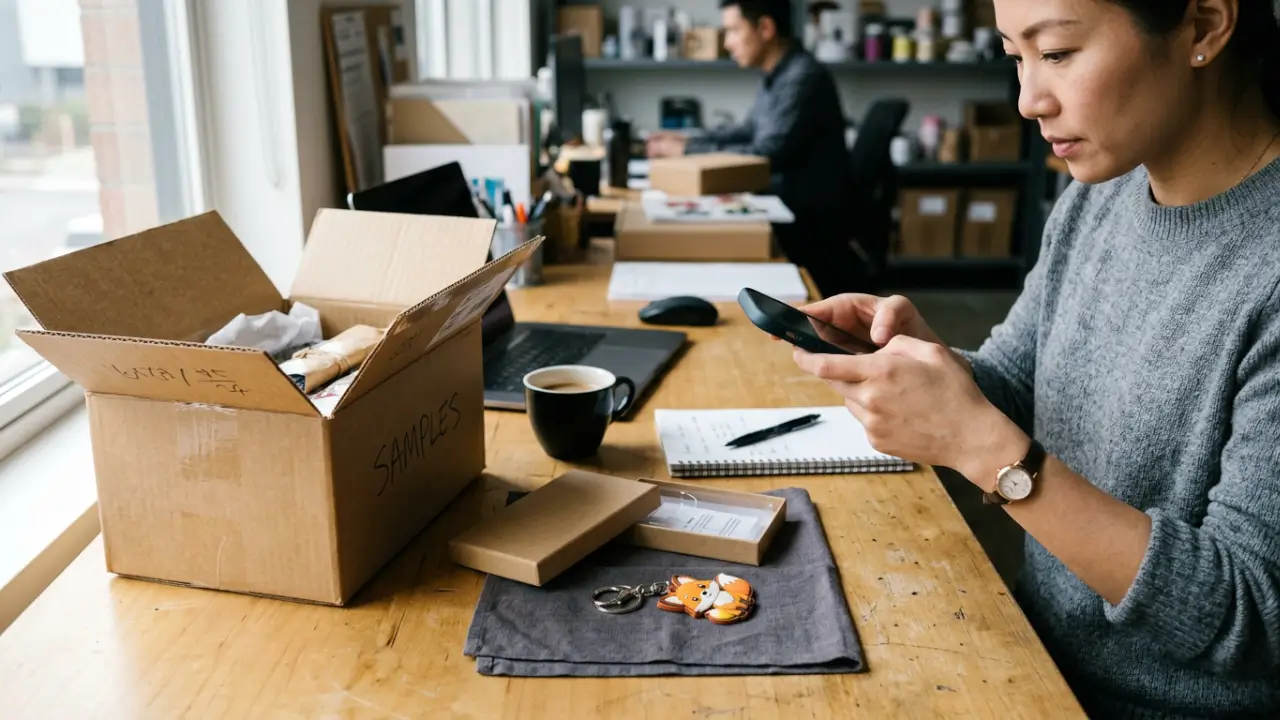
Use this inquiry template to reduce clarification rounds:
Please quote the following blind-box keychain series for delivery to [destination/postcode]. Our sales channel is [anime store/gift shop/online/convention], and the intended use is [keys/bag decoration/collectible]. Our proposed test quantity is [quantity], subject to your case requirements. Please confirm:
- Exact series, version, material, dimensions, weight, and supplied attachment hardware.
- MOQ, units per sealed display, master-carton quantity, and mixed-order options.
- Written assortment rules, duplicate policy, and any special-design replacement rules.
- Sample availability, retail packaging, carton measurements, and gross weight.
- Unit quote, currency, delivery term, included charges, and quote validity.
- Availability confirmation, dispatch estimate, transport options, and replenishment conditions.
- Applicable product documentation, licensing evidence, labeling, and batch identification.
- Inspection arrangements, defect-reporting deadline, required evidence, and proposed remedies.
Request a written quote for your shortlisted series with this brief before placing an order. Resolve any mismatch in hardware, packaging, assortment, or delivery scope first; only then compare the delivered cost.
PERGUNTAS FREQUENTES
Which keychain blind box material is best for an anime store?
There is no universal winner. Acrylic may suit illustration-led ranges, while molded and plush formats offer different tactile appeal. Choose by customer preference, intended use, sample construction, and delivered cost.
Does a sealed display guarantee every regular design?
Do not assume it does. Request written assortment rules for the exact series, including duplicates and whether a special design replaces a regular design.
What should buyers confirm before ordering wholesale?
Confirm the exact version, attachment hardware, MOQ, case pack, assortment rules, packaging, delivery basis, relevant documentation, and defect-resolution terms.
Are plush blind-box charms suitable for everyday keys?
Suitability depends on size, loop construction, fabric, and intended use. Inspect a sample and ask for care guidance; a decorative bag charm should not automatically be described as a durable everyday keychain.
Before you commit to a keychain series
Choose a format your customers understand, approve the attachment and packaging, and document the case rules. Start with a manageable test order, measure sell-through by series, and base reorders on confirmed availability rather than collectible hype.