






Selling a sealed display case in one transaction can reduce per-unit handling and raise Average Order Value compared with selling the same units separately. For illustration only, twelve boxes at a hypothetical $15 retail price would total $180; these figures are not a KidultsBox quote or a sales forecast.
The target demographic for these high-ticket transactions is the “Completionist”—a dedicated collector who desires the entire base set of a specific IP and actively hunts for the rare secret chase figure. In this B2B guide, we will break down the psychology of the completionist, outline the exact POS script your retail staff should use to upsell full cases, and explain how to leverage these sales to eliminate dead stock liability.
The Psychology of the Completionist Collector
To sell a full display case, your retail staff must understand the two primary pain points of the hardcore collector: Duplicates and Tampering.
When a customer buys 6 or 7 loose boxes from an open tray, they are mathematically exposed to a high probability of pulling duplicate figures, especially if your staff makes the critical error of mixing different cases on the shelf (a practice we strongly advise against in our guide on handling duplicate complaints).
The “Completionist” buys full cases because it is a risk-mitigation strategy. Compared with picking loose boxes from a searched, mixed tray, a factory-sealed display case offers two things:
- The Product-Specific Factory Assortment: A sealed case preserves the case configuration supplied for that release. Confirm the documented base-design lineup, duplicates, Secret odds, and replacement rules for the exact series before describing it as a complete set.
- Tamper Evidence: Intact factory shrink-wrap can show the visible packaging has not been opened since that wrap was applied. It does not prove the full upstream chain of custody was unsearched, unweighed, or free from substitution.
The “Whole Case Pitch”: A POS Upselling SOP
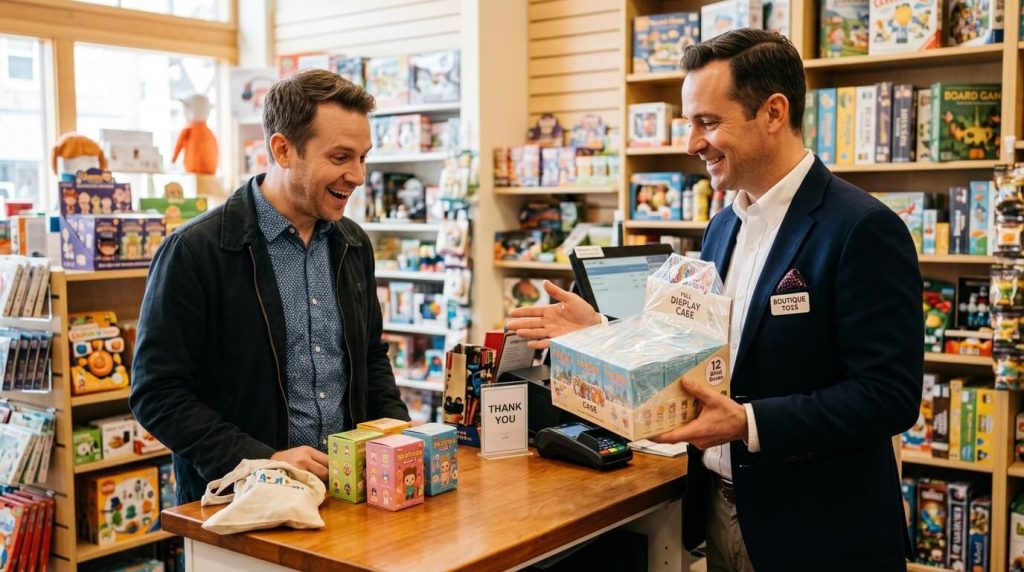
Full cases rarely sell themselves if they are kept hidden in the stockroom. Your cashiers must be trained to proactively pitch the full case upgrade to any customer exhibiting high-intent buying behavior.
The Trigger: If a customer places 4 or more loose boxes of the same series on the checkout counter, the cashier must intervene before scanning them.
The Script: “I see you’re going deep on the new Nanci series. A sealed case keeps the product’s original case configuration intact. For this release, the manufacturer lists [verified base-set configuration] and [published Secret odds, if any]. Would you like me to show you the sealed-case option?”
This product-specific explanation can help a customer compare loose boxes with a sealed case without promising a result. Any transaction values or conversion rate should come from your own documented prices and store data.
Inventory Strategy: Eliminating the “Orphaned” Box
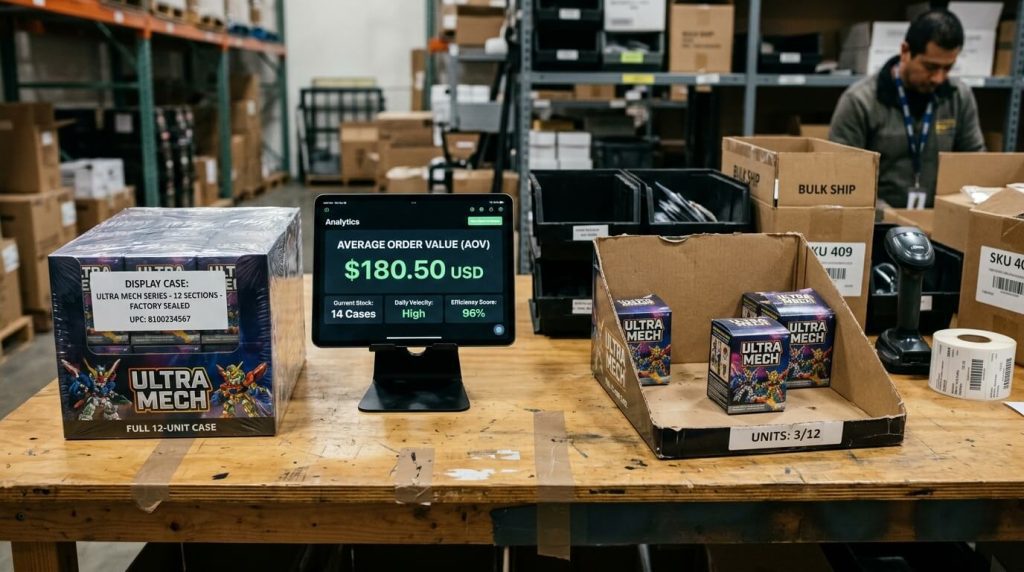
Selling full cases provides a massive operational advantage: it eliminates the risk of “orphaned” dead stock.
When you sell loose boxes from a display tray, the most popular or easily identifiable figures (if box searchers manage to squeeze them) sell first. You are inevitably left with 2 or 3 “unpopular” character boxes sitting in the tray that no one wants to buy. These leftover boxes tie up your working capital and eventually require aggressive dead stock liquidation discounting.
When you sell a full case, you force the customer to buy the unpopular figures alongside the highly desired ones. You liquidate 100% of the display tray in a single transaction, ensuring your gross margin is fully realized without any stranded capital.
Pre-Selling Cases to the VIP Database
The most advanced application of the completionist strategy is executing the sale before your wholesale shipment even arrives. This requires leveraging your art toy CRM and VIP database.
Understanding how master cartons are packed is key here. A master carton typically contains multiple display cases (commonly 12, though this varies by series and supplier). When a highly hyped IP is announced by your B2B supplier, send an email to your top collectors: “We are receiving a Master Carton of [Series Name]. We are offering a limited number of full display cases for exclusive VIP pre-order. Secure your sealed case now.”
By pre-selling most of the cases to completionists, you can effectively pay for the entire master carton using your customers’ capital (OPM – Other People’s Money). The remaining cases can then be opened for loose-box retail sales, representing largely unencumbered profit.
Retail Action Matrix: Loose Boxes vs. Full Cases
Use this matrix to train your management team on the differing financial impacts of loose versus full-case merchandising.
| Sales Factor | Selling Loose Boxes | Selling Full Display Cases |
|---|---|---|
| Order value | Usually fewer units per transaction. | More units in one transaction; actual value depends on the store price. |
| Inventory effect | Can leave partial trays. | Moves one full case, but does not eliminate overall inventory risk. |
| Customer expectation | Explain random selection and duplicate possibility. | Explain only the verified, product-specific base-set configuration and Secret odds. |
| Likely audience | Casual shoppers, walk-ins, and impulse buyers. | Collectors seeking the original sealed-case configuration. |
Frequently Asked Questions (FAQ)
What if a customer buys a full sealed case and still gets a duplicate?
This is extremely rare, but factory packing errors do occur. If a customer buys a sealed display case and it is missing a base figure due to a factory packing error, this is a legitimate defect. You must exchange the duplicate for the missing figure (if you have it) and file a defect claim with your wholesale supplier. However, the customer must provide video proof of the unboxing to verify the case was factory sealed.
Should I offer a discount if a customer buys a full case?
In the highly competitive art toy market, offering a minor incentive for full-case purchases is standard practice. Instead of a deep cash discount that hurts your margin, offer a 5% to 10% discount, or better yet, include a free premium acrylic display case or exclusive promotional item. This adds perceived value without stripping your profitability.
How can I prevent “box searchers” from ruining my loose box sales?
If you have completionists who refuse to buy full cases but insist on weighing or shaking loose boxes to find the chase, you must implement strict loss prevention rules. Review our comprehensive guide on handling box searchers in a retail environment to protect the integrity of your open trays.
What should I verify when sourcing factory-sealed master cartons?
Ask the supplier for the exact SKU, case quantity, visible seal condition, invoice, product identifiers, available traceability records, and the manufacturer’s published case and Secret rules. Visible seals are tamper evidence, not proof of a completely unsearched upstream chain, and no Secret result should be promised unless the manufacturer documents a fixed allocation for that exact product.
Targeting the completionist demographic is the fastest method to scale your store’s cash flow and minimize dead stock. If you are preparing to implement a full-case pre-order strategy for your VIPs, securing authentic, highly-anticipated master cartons is your first operational requirement.

