






Baby Three has become one of the most searched designer plush blind box lines among collectors — and that demand has also attracted counterfeits, resealed boxes, and swapped items. For a collector, a fake means a poorly made figure and zero resale value. For a retailer, selling fakes — even by accident — means chargebacks, bad reviews, and lost trust. If you are running a quick Baby Three real vs fake check, work through the security code, packaging, plush and face details, tags, and seller source below — and never trust a single signal on its own.
The checks below are based on common seller inspection steps and collector-reported warning signs. Use them together, not in isolation.
Baby Three real vs fake: the 60-second authenticity check
When you just need a fast read, run these five checks in order:
- Scan the security/QR code. A genuine code should scan cleanly and open a brand verification or anti-counterfeit page. Missing, unscannable, reused, or off-looking codes are red flags — but a code that does scan is not proof on its own (see the QR section below).
- Check the box printing. Authentic boxes use crisp fonts, sharp full-color art, and a cleanly aligned logo. Fakes show fuzzy or two-font text, dull or uneven colors, and slightly crooked logos.
- Look at the face finish. This is the most reliable physical tell. A genuine Baby Three face is matte, powder-smooth PVC with clean, symmetrical printing. Fakes look glossy or “oily,” with smudged or off-center eyes.
- Feel the weight. Real figures use denser materials and feel substantial. A noticeably light, hollow feel points to a fake.
- Inspect the tag/base. Check the foot/base mark, sewn-in fabric tag, or care label your series carries. Genuine marks are sharp and consistent; blurry, missing, or wrong-font marks are warnings.
If the price is far below the going rate for that series, treat the item as a fake until you have proven otherwise — underpricing is the most common bait.
Real vs fake Baby Three: side-by-side signs
| What to check | ✅ Authentic | ❌ Counterfeit |
|---|---|---|
| Security / QR code | Scans to a brand verification or anti-counterfeit page | Missing, won’t scan, reused, or leads somewhere off |
| Face finish | Matte, powder-smooth; clean, symmetrical print | Glossy/”oily”; smudged or off-center eyes |
| Eyes | Set firmly, aligned | Loose, uneven, or crooked |
| Hands / feet | Even color, clean seams | Yellowish tint, visible plastic seam line |
| น้ำหนัก | Dense, substantial | Light, hollow |
| Box print & logo | Crisp single font, aligned logo, true colors | Blurry/two-font text, crooked logo, dull colors |
| Tag / foot mark / label | Sharp, consistent, series-matched | Missing, blurry, wrong font, or inconsistent |
How to use the QR/security code without relying on it alone
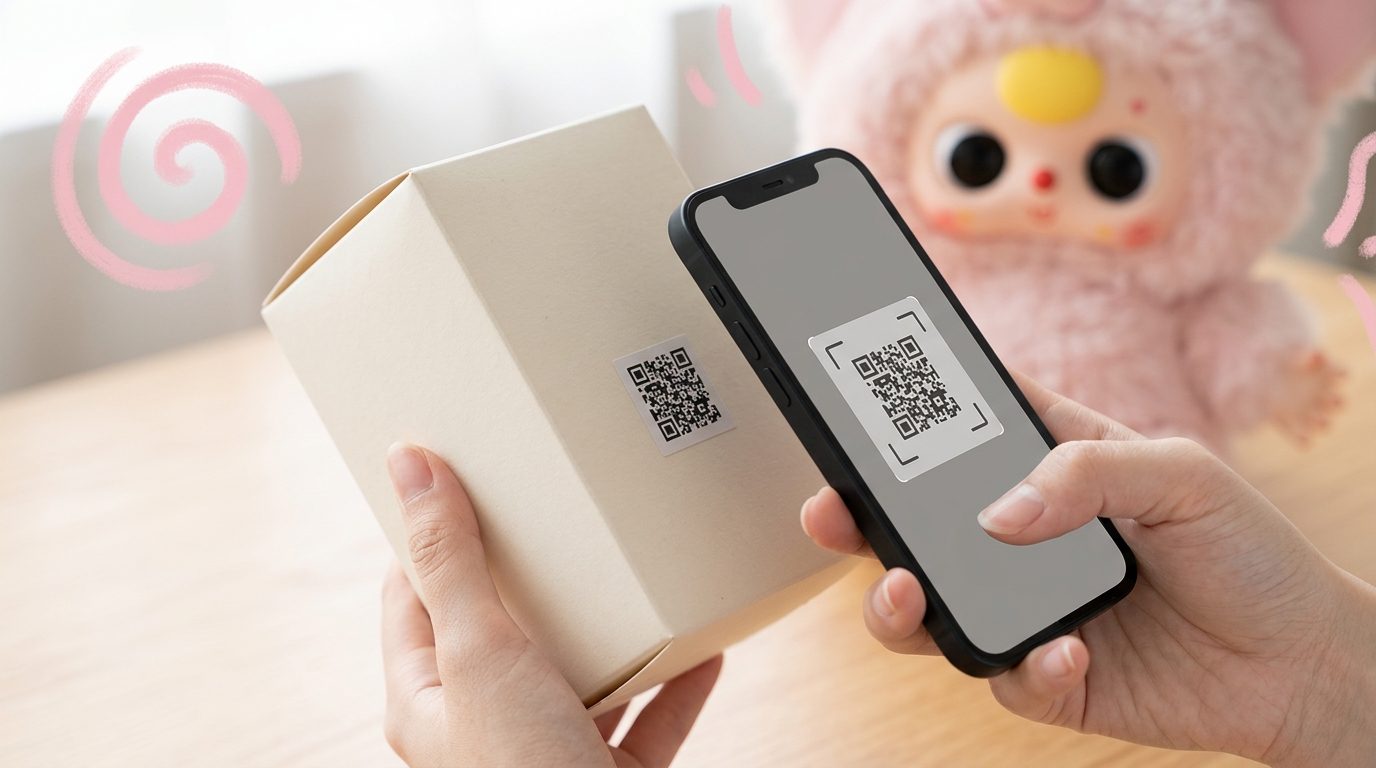
The security code is your fastest first screen, but treat it as a starting point, not a verdict. Scan it: a genuine code should open a brand verification or anti-counterfeit page. Be suspicious of a code that is missing, won’t scan, redirects somewhere unexpected, or shows it has already been scanned many times.
Here is the catch every careful buyer should know: a scannable code is not proof. Counterfeiters copy genuine codes and stand up look-alike verification pages, so a “clean” scan can still be faked. Always pair the scan with the physical checks above and a trusted seller — and scan before you break any seal, because a peeled or re-applied security sticker is itself a warning.
Two tricks fakers use that the box won’t reveal
Most guides stop at “check the box.” These two situations are why that is not enough — and why you should judge the figure, not just the packaging:
- The box-swap. A genuine, sealed-looking box can be carefully opened from the bottom, the valuable figure removed and replaced, then resealed. Always inspect the box bottom for prior opening, and verify the figure inside on its own merits.
- A different face is not always a fake. Some Baby Three releases have randomized face variations, so the face may differ from the product photo or card you expected. A different face is not automatically fake — judge authenticity by build quality, finish, tags, and markings.
Watch for resealed and refilled boxes
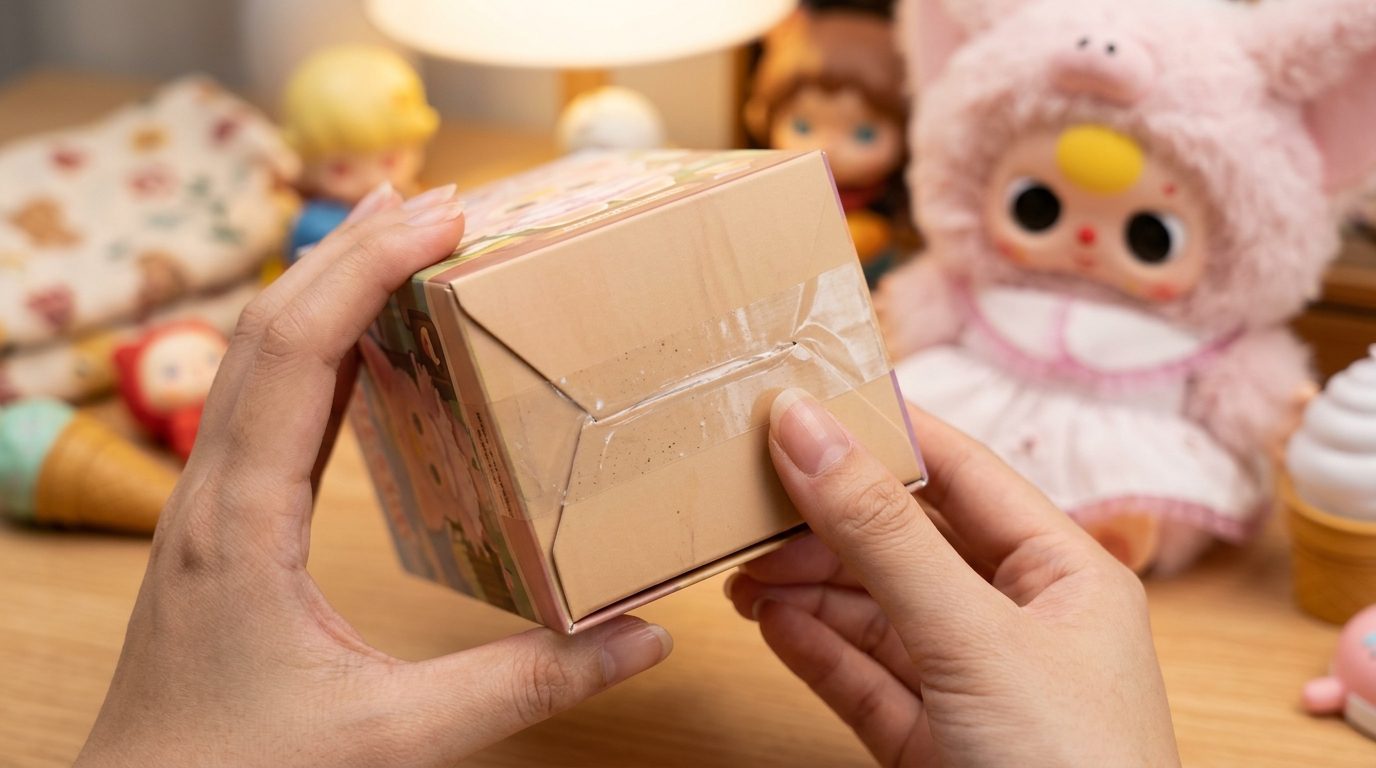
Closely related to the box-swap is the resealed box: genuine packaging that has been opened and re-closed to hide tampering. Tell-tale signs are mismatched tape, glue residue, double seals, and worn flap edges. If a “sealed” box rattles oddly or feels off, slow down and inspect it. For a full breakdown, see our guide on how to identify resealed blind boxes before accepting a shipment.
Verifying authenticity before you buy wholesale
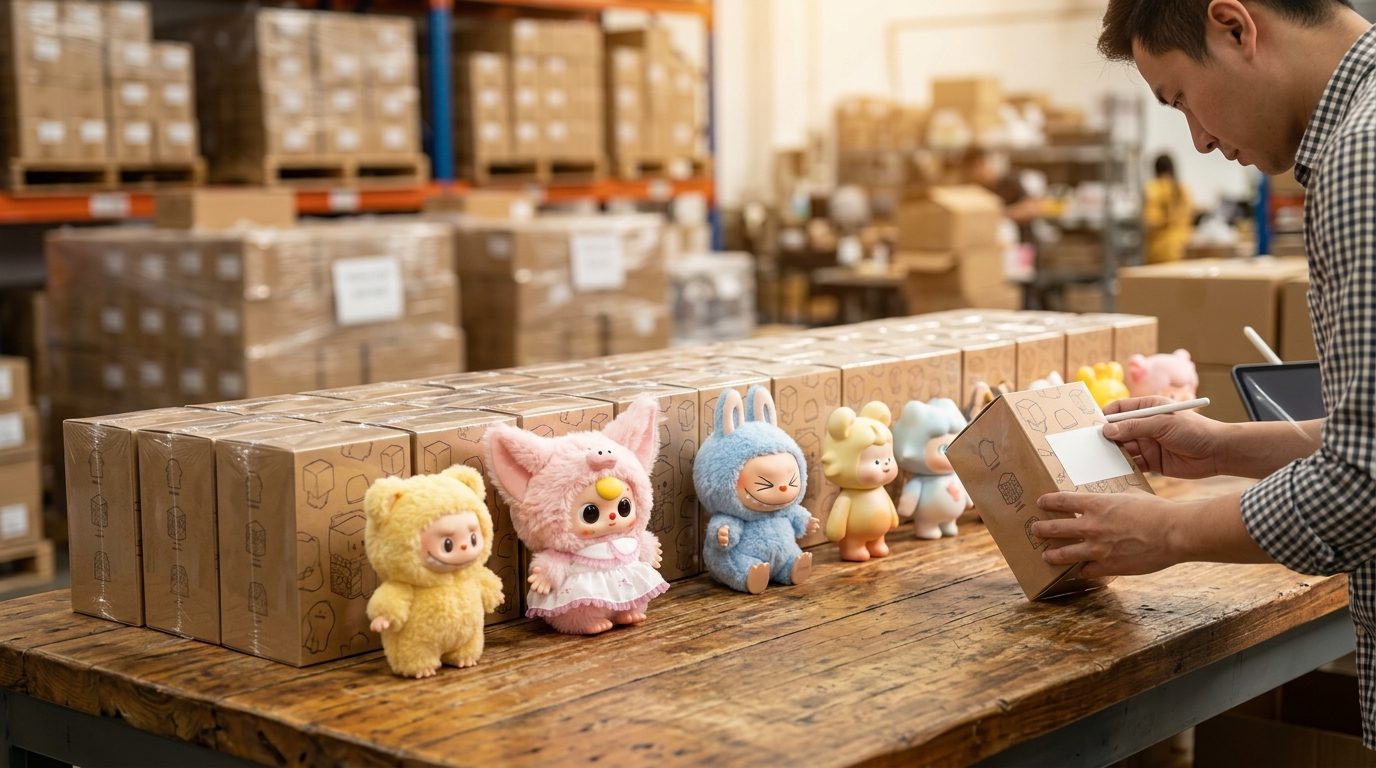
Spotting one fake is easy; clearing a 200-piece carton is the real job. Before you pay a balance, ask the supplier to name the exact series and release version, request sample boxes, and check carton labels and batch consistency. Reject “almost the same” gray-market lookalikes. Our step-by-step process is here: verify authentic blind boxes before buying wholesale. Authenticity tells also vary by release — see the Baby Three V1/V2/V3 comparison for version-specific differences.
What to do if you think you bought a fake
Set the item aside and compare it against a known-genuine piece. Document everything with clear photos — box, tag/base mark, face finish, and the code result. Then contact the seller or platform to request a refund and report the listing. The surest way to avoid the problem entirely is to buy from a verified wholesale supplier of authentic Baby Three blind boxes.
คำถามที่พบบ่อย
How can I tell if a Baby Three is real?
Scan the security code, then check the face finish (matte, not glossy), box printing, weight, and the tag/foot mark. Any failed check is a red flag — confirm several together, not just one.
Are there fake Baby Three figures?
Yes — fake Baby Three figures, swapped items, and resealed/refilled boxes can appear on unverified marketplaces. Buying from a trusted seller and checking the figure (not just the box) is the best protection.
What does the Baby Three QR code do?
It opens a brand verification or anti-counterfeit page. A missing, dead, reused, or off-looking code is a strong warning — but because codes can be copied, a clean scan alone does not guarantee authenticity.
Why is my real box’s figure face different from the photo?
Some Baby Three releases have randomized face variations, so a face that differs from the product photo is not automatically fake. Judge it by build quality, finish, tags, and markings instead.
Is a cheap Baby Three always fake?
Not always, but a price far below market for that series is the most common lure for counterfeits — verify carefully before buying.
Stock supplier-checked Baby Three blind boxes from KidultsBox → View Authentic Collection

