


Product photos can look exciting, but the real buying decision for a character blind box depends on assortment risk, carton economics, packaging condition, and how quickly a series can be reordered. The Kimmon Twinkle Twins Series may attract shoppers who like paired character concepts, but you still need to check the commercial details before adding it to a shelf, online bundle, or gift display.
This guide is written for toy stores, anime and lifestyle shops, gift retailers, live sellers, and online collectible sellers comparing whether the Twinkle Twins line fits their buying plan. It does not assume specific pricing, MOQ, stock, certifications, or delivery times. Instead, it gives you a practical way to prepare a quote request, compare supplier responses, and reduce avoidable order mistakes.
Where a twin-character line fits in your assortment
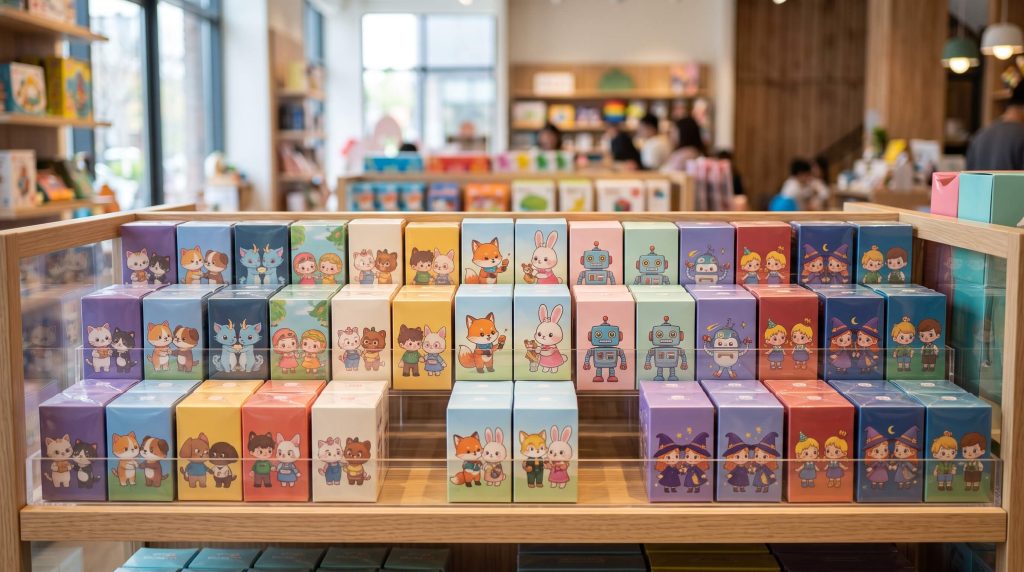
A twin-character blind box works differently from a single mascot series. Shoppers may be buying for pairing, matching gifts, desk decoration, friend sets, or display symmetry. That can help a retailer build stories around the product, but it also affects how many units to test and where to display them.
Before requesting a quote, identify the main sales use case:
- Collectible toy shops: compare the series with other character figure lines and check whether customers already respond to Kimmon-style products.
- ร้านขายของของขวัญและสินค้าไลฟ์สไตล์: evaluate whether the twin concept can be merchandised as friendship, couple, sibling, or desk-pair gifting.
- Anime and pop-culture retailers: check whether the aesthetic matches your existing cute, fantasy, dark-cute, or designer toy sections.
- Online sellers and live sellers: plan content around sealed-box suspense, case openings, and repeat buyer engagement.
- Event sellers: consider whether the price point and size will work for impulse purchases without relying on fragile display packaging.
If you already stock other Kimmon items, compare customer response before expanding. The Kimmon 200% Spring New Growth sourcing guide can help you think about how a different Kimmon figure format may sit beside the Twinkle Twins line.
How the twin format changes display and case planning
With twin-themed characters, customers may want to complete a pair, compare variants, or buy multiple boxes at once. That can improve basket size, but it may also create dissatisfaction if the assortment feels difficult to complete or if you cannot explain the buying format clearly.
Ask these questions before ordering:
- Is the product sold as individual blind boxes, full cases, or both?
- Is there any published case assortment information, or should you treat pulls as random?
- Does the supplier separate sealed retail boxes from display cartons?
- Are there visible identifiers, barcodes, or labels that affect inventory management?
- Will customers expect to buy two boxes at a time because of the twin concept?
As a planning reference, a small store may test one display quantity for counter placement, while a live seller may need enough units for several opening sessions. Those example quantities should be based on your own traffic and sell-through history, not on a supplier claim alone.
Build a Twinkle Twins spec sheet before asking for quotes
A quote is only useful when every supplier is quoting the same product scope. Product photos are not enough. Build a simple specification sheet first, then send it with your inquiry.
| Specification to confirm | Why it matters to buyers | Question to ask the supplier |
|---|---|---|
| Series name and version | Avoids confusion between similar Kimmon releases or restocks. | Can you confirm the exact Kimmon Twinkle Twins Series version being quoted? |
| Unit format | Clarifies whether the quote is for single blind boxes, cases, or mixed cartons. | Is the price for one sealed blind box, one inner case, or one master carton? |
| Case quantity | Changes display planning, inventory count, and landed cost per unit. | How many retail boxes are in each case and master carton? |
| Box dimensions and carton size | Needed for freight estimates, shelf planning, and storage. | Can you provide unit box size, carton dimensions, and gross weight? |
| Packaging condition standard | Collectors often reject crushed retail boxes, even when the figure is fine. | How is retail packaging protected during packing and transit? |
| Labeling and barcode details | Affects marketplace listings, POS scanning, and import records. | Are barcodes, warning labels, or product labels present on each unit? |
| เอกสารการปฏิบัติตามข้อกำหนด | Requirements vary by destination market and product category. | What documents are available, and should we verify additional requirements locally? |
| Replacement or shortage process | Helps manage damaged cartons, missing units, or wrong items. | What evidence is needed if there is a shortage, wrong series, or damaged packaging? |
This table also makes supplier comparison easier. If one quote omits carton weight, case quantity, or product version, it is not yet comparable with another quote.
Why carton math decides your real margin
Blind box buyers often focus on unit price first, but carton math can change the actual commercial result. A lower quoted unit cost may become less attractive if cartons are bulky, packaging needs extra protection, or the case quantity does not match your selling plan.
Use this simple comparison logic:
- Unit quote: what is included in the quoted price?
- Case count: how many saleable retail boxes are inside each case?
- Carton measurements: how much freight space does the order require?
- Damage allowance: what happens if retail boxes arrive crushed?
- Payment and service fees: what additional costs apply to the transaction?
- Local costs: check duties, taxes, labeling, warehousing, marketplace fees, and domestic delivery where applicable.
For example, two suppliers may quote the same unit cost, but one provides clearer carton dimensions and packaging protection details. The better quote may be the one that helps you estimate landed cost more accurately, not the one that looks cheapest in a message thread.
If you are building a broader blind box wall, compare scale and shelf footprint across product types. Larger-format collectible references, such as the คู่มือรูปทรง Baby Three Sweet Dream 400%, show why size and display impact should be considered before committing shelf space.
Protect the twin-character surprise in packaging
Blind box packaging is part of the product. Customers expect a sealed, clean, giftable box. If corners are crushed, seals look disturbed, or inner packaging is loose, you may face returns, discounting, or customer doubt about authenticity and fairness.
Packaging checks to request or perform include:
- Retail boxes should be sealed and not visibly opened before resale.
- Cartons should protect corners, not only the front face of the boxes.
- Inner cases should not shift excessively inside master cartons.
- Photos before shipment can help document carton condition, but they do not replace inspection after arrival.
- Confirm whether any destination-market warning labels, age markings, or importer details are required.
Compliance and labeling requirements vary by country and product classification. Verify requirements for your own market rather than assuming a supplier document is sufficient for every destination.
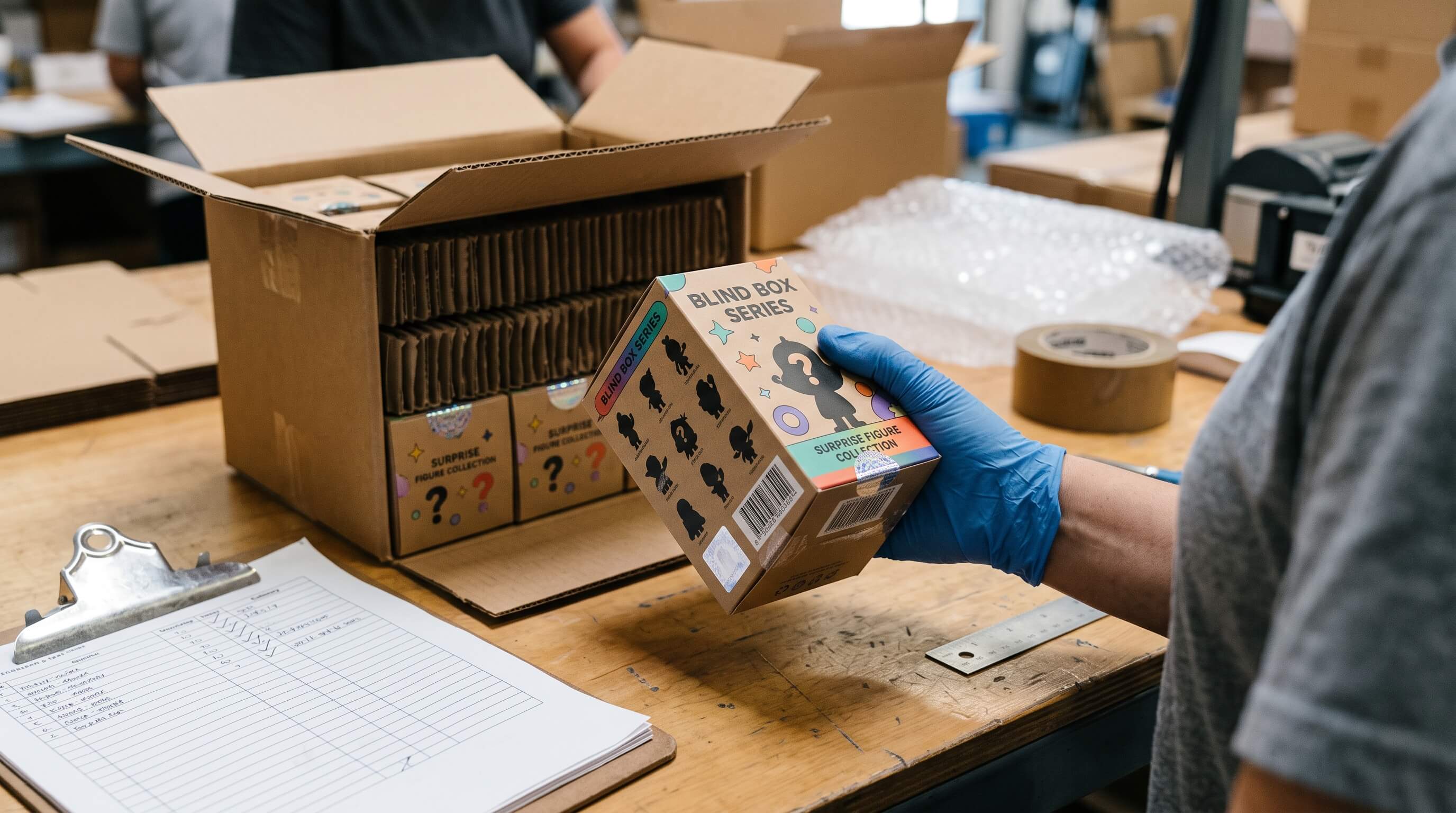
A mid-order check can save time: before paying for a larger quantity, ask for clear photos of the retail box, inner tray or protection method if available, shipping carton, and carton label. If the supplier cannot explain how the packaging is protected, treat that as a risk to gift-ready resale.
Why freight timing can make or break reorders
Even when a blind box line sells well, late replenishment can cause missed sales. Reorder planning should start before the first shipment arrives. The goal is not to guess exact lead times; it is to understand every step that affects availability.
Create a reorder timeline with these checkpoints:
- Quote confirmation: final product version, quantity, carton data, and payment terms.
- Order preparation: supplier packing, carton labeling, and documentation.
- International movement: freight method, customs process, and possible delays.
- Local receiving: warehouse check, damage count, and inventory entry.
- Selling threshold: reorder trigger based on remaining units and sales velocity.
As a planning reference, you might set a reorder trigger when a test batch has sold through a meaningful share and demand is still active. The exact threshold depends on your cash flow, freight method, and how quickly replacement stock can be confirmed.
For assortment comparison, some retailers place brighter or softer character lines near nature or fantasy-themed collectibles. The Echo Forest Whisper blind box guide is a useful contrast when deciding whether Twinkle Twins should sit in a cute-character section or a broader collectible display.
Warning signs when comparing Twinkle Twins quotes
Not every incomplete quote is a bad quote, but unclear answers should slow down the purchase decision. Blind box retailers need traceable details because the product is small, carton-based, and often bought in repeat quantities.
Watch for these red flags:
- The supplier cannot confirm the exact series name or shows mixed product photos from different releases.
- The quote gives a unit price but no case quantity, carton dimensions, or gross weight.
- Packaging condition is described only as “good” without photos or a packing explanation.
- The supplier pressures fast payment before confirming product format and shipment scope.
- Compliance questions are answered with vague statements instead of available documents or cautious guidance.
- Damage, shortage, or wrong-item procedures are not discussed before shipment.
Retailers carrying twin or contrast-themed products may also compare Twinkle Twins with darker paired concepts. For a different aesthetic direction, review the Light Nightmare Twins blind box guide before deciding how many twin-themed series your customers can absorb at once.
A ready-to-send inquiry template for Twinkle Twins stock
Use a structured message instead of asking only, “How much?” It helps suppliers respond with comparable information and makes your buying records cleaner.
Hello, I am sourcing the Kimmon Twinkle Twins Series for retail resale. Please confirm the exact series/version, whether units are sold as individual blind boxes or full cases, case quantity, master carton quantity, carton dimensions, gross weight, available packaging photos, labeling details, and any available compliance documents. Please also quote based on the quantity below and state what is included in the price, the estimated preparation process, shipment options, and the procedure for a shortage, wrong item, or damaged retail packaging.
Add your own order planning details below the message:
- Target quantity or test order range.
- Destination country and delivery preference.
- Whether you need sealed cases for live selling or individual retail units for store display.
- Any barcode, label, or marketplace listing requirements.
- Required invoice or documentation details for your internal receiving process.
If you are comparing multiple suppliers, paste their answers into one spreadsheet. Do not compare Supplier A’s unit price against Supplier B’s delivered estimate unless freight scope, carton count, and included services are the same.
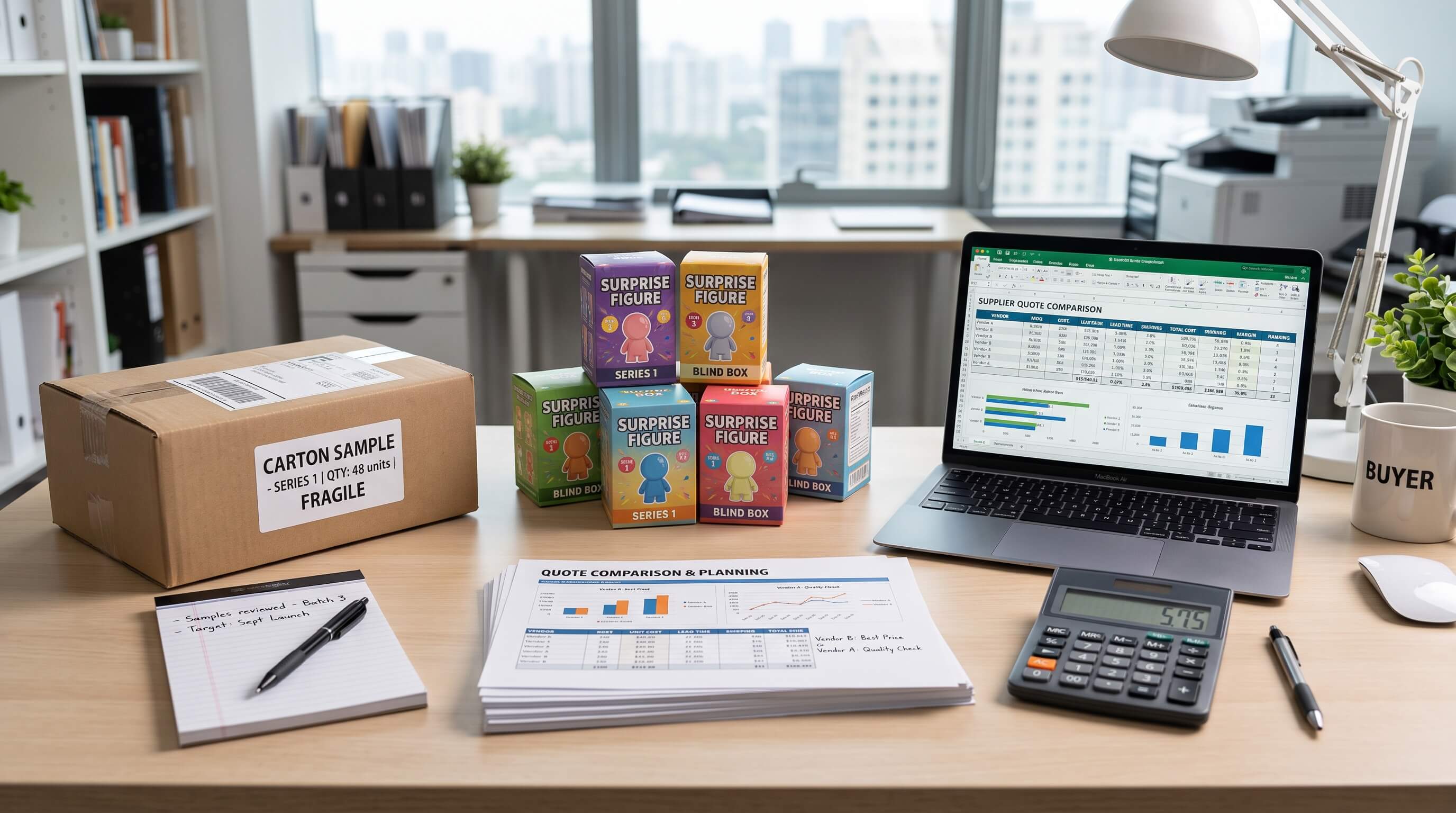
Ready to move from interest to a quote? Prepare your target quantity, destination, preferred unit format, and packaging expectations before contacting a supplier. A clear inquiry usually leads to a clearer quote and fewer problems at receiving.
คำถามที่พบบ่อย
What should retailers confirm before buying the Kimmon Twinkle Twins Series?
Retailers should confirm the exact series version, unit format, case quantity, carton dimensions, packaging condition standard, labeling details, available documents, and the process for shortages or damaged retail boxes.
Is a lower unit price always better for a Kimmon blind box order?
No. A lower unit price may not be better if freight, carton size, packaging risk, payment fees, or local import costs make the landed cost higher or harder to predict.
How many Kimmon Twinkle Twins blind boxes should a store test first?
There is no universal test quantity. Buyers should base the first order on store traffic, online demand, cash flow, case quantity, and how quickly the supplier can support a reorder if the line sells well.
Why is packaging condition important for twin-character blind boxes?
Blind boxes are often bought as gifts or collectibles, so crushed corners, opened seals, or damaged retail boxes can reduce customer trust and may lead to returns or discounting.
Can retailers rely on supplier compliance claims for every market?
Retailers should be cautious. Compliance, labeling, customs, and safety requirements vary by destination, so buyers should verify what applies in their own market before importing or reselling.
ก่อนที่คุณจะตัดสินใจสั่งซื้อครั้งแรก
Treat the Twinkle Twins Series as more than a cute product photo. It is a carton-based retail decision: confirm the exact version, understand case math, protect packaging, estimate landed cost, and set a reorder trigger before the first batch sells out.
The strongest buying position comes from specific questions. Ask for carton data, packaging photos, quote scope, and document availability in writing. Then compare responses side by side. If the numbers, format, and risk controls make sense for your store, you can move toward a cleaner first order with fewer surprises.