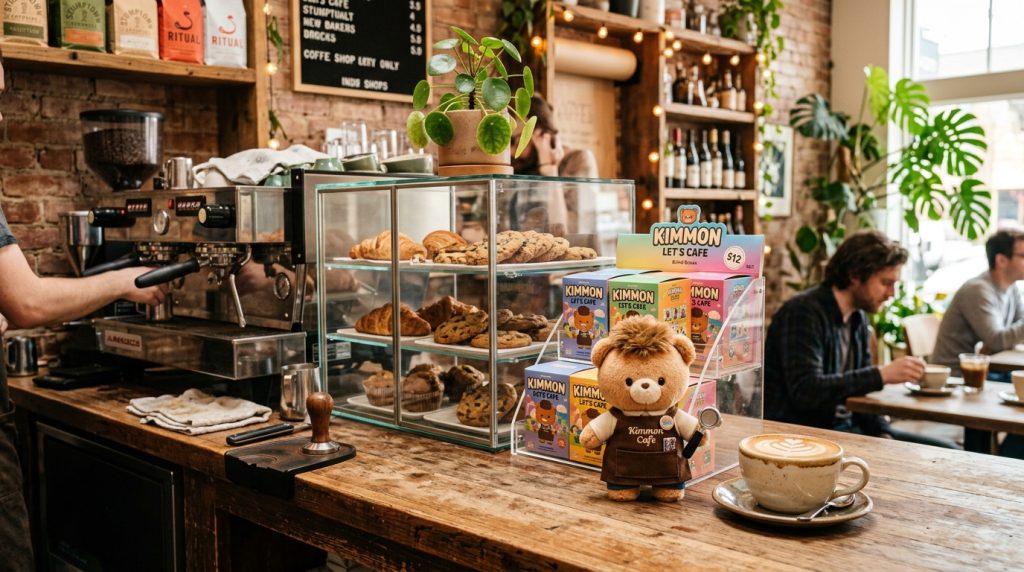



In modern physical retail, driving daily foot traffic is arguably the hardest metric to maintain. Art toy stores often experience a “weekend boom” followed by stagnant weekday sales. To flatten out this revenue curve, many operators are turning to the hybrid retail model: The Toy Cafe. By merging a specialty coffee bar with a curated blind box boutique, retailers monetize both daily habit and high-margin impulse buying.
Based on hybrid retail data, coffee generates high-frequency, low-margin foot traffic, while art toys generate low-frequency, high-margin revenue. Combining the two creates an ecosystem that weaponizes customer “dwell time.” In this guide, we will break down the economics of the Toy Cafe, establish strict Standard Operating Procedures (SOPs) to protect your inventory from liquid damage, and outline how to curate a wholesale assortment that perfectly matches a cafe aesthetic.
The Economics of the Unboxing Ritual

The core commercial advantage of a Toy Cafe is extending the customer’s in-store dwell time. In a traditional toy store, a customer buys a box and leaves. In a Toy Cafe, the retail journey is fundamentally altered.
As detailed in our guide on upgrading the in-store unboxing experience, when a customer purchases a $6 latte and a $15 blind box, they sit down at your tables to open it. If they pull a duplicate or fail to get their desired “chase” figure, they are still physically inside your store, comfortably seated. The friction to walk back to the register and buy a second box is almost zero. The cafe seating acts as a catalyst for immediate repeat purchases, drastically increasing the Average Order Value (AOV) per visitor.
Operational Hazard: Liquids vs. Premium Inventory
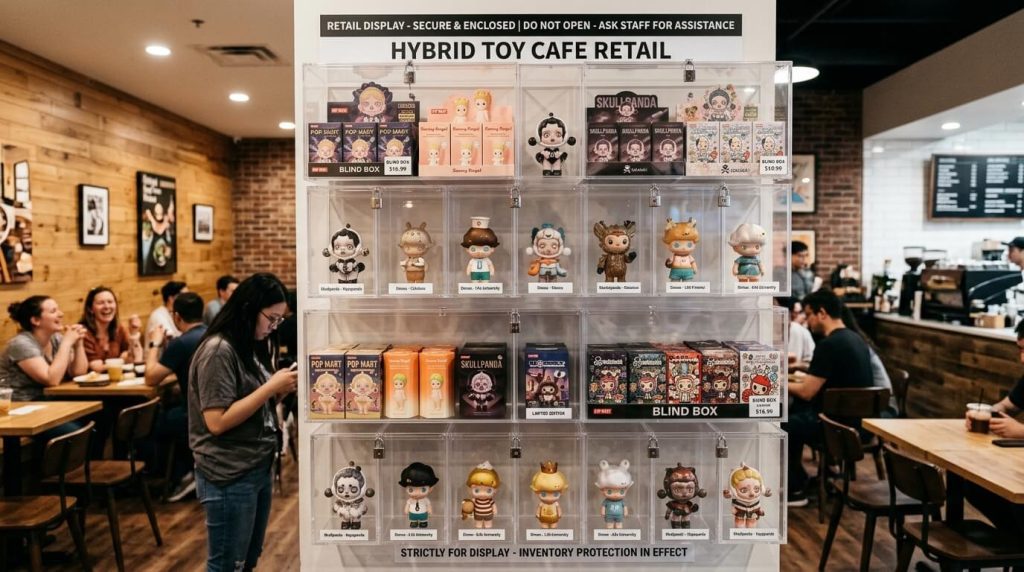
Running a food and beverage (F&B) operation alongside delicate retail inventory introduces severe shrinkage risks. A single spilled iced coffee can destroy the cardboard packaging of a $150 master carton, rendering it unsellable.
Store managers must enforce strict spatial merchandising rules:
- The Espresso Machine Threat: Espresso machines generate ambient moisture and heat. Never place open shelving of solid PVC blind boxes near the coffee prep area. Chronic exposure to steam causes the plasticizers in PVC to degrade, leading to sticky figures and warped joints.
- Physical Segregation: Implement a “No Open Drinks” policy within the primary toy display aisles. All display models must be housed inside sealed acrylic cases to protect against accidental spills from customers carrying beverages.
- Unified but Split POS: While you want a unified hybrid retail POS system to track overall AOV, physically separate the coffee ordering line from the toy checkout line to prevent bottlenecks during morning rushes.
Curating the Cafe Wholesale Assortment
A Toy Cafe should not attempt to stock everything. Heavy, mechanical 1/12 scale BJD dolls or massive 1000% vinyl anchors often clash with the relaxed cafe vibe. Instead, the inventory should organically integrate with the setting.
1. Food-Themed and Bakery Aesthetics
Capitalize on the environment. Series featuring dessert, coffee, or bakery themes perform exceptionally well in this setting. Displaying a fully assembled miniature cafe diorama room box on the pastry counter serves as a perfect, high-conversion visual magnet.
2. High-Turnover Plush Keychains
Customers waiting 3 to 5 minutes for a pour-over coffee will browse the immediate register area. Stocking foil-bagged plush keychains in small countertop spinner racks directly next to the POS triggers impulsive add-ons. They are lightweight, affordable ($10 – $15 MSRP), and safe from shattering if dropped.
The “Rent-a-Shelf” Cafe Partnership Model
If you own an existing cafe and want to introduce blind boxes but lack the capital for a massive wholesale master carton purchase, you can execute a reverse Rent-a-Shelf micro-retail agreement.
Instead of buying the inventory yourself, lease an empty wall in your cafe to an established local art toy vendor. Charge them a flat monthly rent of $200 for the acrylic shelving space. Your cafe gains the aesthetic benefit and unboxing dwell time without taking on the inventory liability, while the toy vendor gains access to your daily high-income foot traffic.
Hybrid Retail Performance Matrix
Use this matrix to align your operational goals across the two distinct business models under your roof.
| Revenue Stream | Primary Metric | Customer Mindset | Retail Synergy Goal |
|---|---|---|---|
| Specialty Coffee / Pastries | Daily Foot Traffic Volume | Habitual / Need-driven | Draws customers into the store during slow weekday mornings. |
| Blind Boxes & Keychains | Average Order Value (AOV) | Impulsive / Reward-driven | Converts a $6 transaction into a $25+ transaction. |
| The Cafe Seating Area | Dwell Time (Minutes spent) | Social / Experiential | Acts as an “Unboxing Station,” driving immediate repeat blind box purchases. |
Frequently Asked Questions (FAQ)
Should I offer a discount if a customer buys both a coffee and a toy?
Avoid discounting the toy to protect your retail margins. Instead, “bundle” the perceived value by discounting the high-margin beverage. Offer a promotion like: “Buy any blind box and get your coffee 50% off.” The coffee costs you cents on the dollar to make, but protecting the full $15 MSRP of the blind box maintains your critical retail profitability.
How do I handle the cardboard waste from unboxings?
Because your seating area will function as a de facto unboxing zone, you will generate significant cardboard and foil waste. You must install sleek, high-capacity recycling bins near the tables. Furthermore, keep the pristine empty blind boxes behind the counter; they can be used to repackage inventory if you encounter factory shipping damage on other outer boxes.
Do health departments allow toy retail inside cafes?
Generally, yes, as long as the toys are pre-packaged (sealed) and kept physically separate from food preparation surfaces. Always consult your local municipal health codes regarding the segregation of non-food retail items and commercial food prep zones.
Where can a cafe source food-themed wholesale blind boxes?
Cafe owners should partner with B2B suppliers that allow for curated, mixed-case ordering rather than forcing massive single-IP commitments. Platforms like Kidults Box provide diverse assortments, including dessert and coffee-themed series, with the added benefit of US warehouse fulfillment to keep your shelves stocked quickly without dealing with international freight headaches.
Merging specialty coffee with blind box retail transforms a standard transaction into a highly profitable, experiential event. If you are preparing to redesign your cafe’s floor plan and need to source high-margin impulse toys, exploring a curated wholesale catalog is your first operational step.