





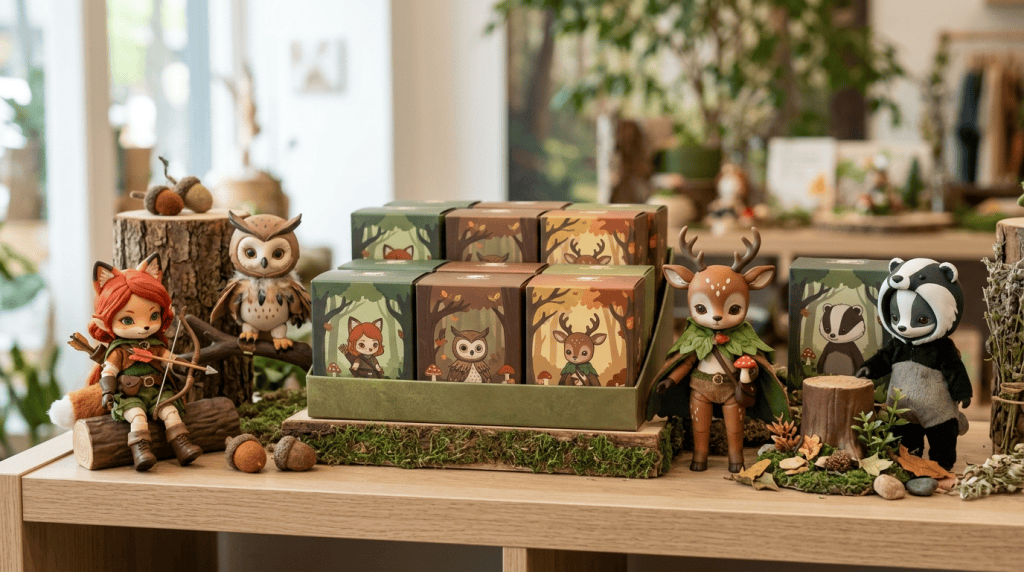
Before an attractive doll series earns shelf space, a retail buyer has to answer a harder question: can it drive repeat sales without leaving you stuck with unbalanced variants, crushed packaging, or a reorder gap that costs you the momentum? Photos of the characters won’t tell you that. A Nommi Forest Kingdom purchase needs confirmation of the product structure, assortment format, case quantity, packaging condition, and full landed cost before any quotation gets compared.
This guide gives collectible retailers, gift shops, online sellers, pop-culture stores, and distributors a practical framework for evaluating the Nommi Forest Kingdom series without assuming specifications that no one has confirmed in writing. It is built for a first order or a supplier comparison, not for taking a listing at face value.
Which Retailers Can Make the Forest Kingdom Theme Work?
The theme may fit several selling environments, but each buyer needs a different inventory plan. A specialist collectible store can explain articulation and character differences at the counter, while a general gift retailer leans more on shelf presentation and an accessible impulse-buy format.
- Collectible and hobby stores: Ask whether your customers already buy articulated dolls, doll clothing, or character blind boxes.
- Online retailers: Confirm which product images and variant details you may use in listings. Avoid implying that customers can select a specific hidden design unless that option genuinely exists.
- Gift and lifestyle shops: Review package dimensions, display method, and how clearly the box reads from normal shelf distance.
- Convention and pop-up sellers: Check whether individual boxes survive repeated transport without corner crushing or seal damage.
- Distributors: Determine whether downstream accounts require full sealed cases, smaller allocations, or mixed collectible categories.
A useful decision rule is to compare the series with products that serve the same customer occasion, not merely other dolls. If you are choosing between multiple articulated lines, the Luluya Cloud Feather Pavilion buying guide and the Sakura 1/12 BJD sourcing guide offer additional comparison frameworks.
What to Verify Before You Order a Nommi Forest Kingdom Box
“BJD” gets used loosely in marketplace listings, so don’t infer a particular joint system, scale, material, or level of poseability from the label alone. Request a current specification sheet or written confirmation tied to the exact Forest Kingdom listing and quotation.
| Point to verify | Question for the supplier | Why it affects retail |
|---|---|---|
| Figure dimensions | What are the approximate assembled height and package dimensions? | Determines shelf space, photography setup, and shipping volume. |
| Joint construction | Which areas are articulated, and are any parts designed to be removed? | Helps staff describe the item accurately and flag handling concerns. |
| Materials | What materials are used for the body, hair, clothing, and accessories? | Supports accurate listings and market-specific compliance review. |
| Series assortment | How many regular designs are in the quoted series, and is there a hidden design? | Affects display planning and the likelihood of customer duplicates. |
| Case configuration | How many individual blind boxes are packed in an inner case and master carton? | Lets you compare quantities and freight on the same basis. |
| Assortment status | Is the case factory sealed, supplier re-packed, or assembled from loose boxes? | Changes assortment confidence and customer trust. |
| Included components | Which clothing, stands, cards, or accessories come with each design? | Prevents incomplete product descriptions and customer disputes. |
| Retail packaging | Are individual boxes sealed, and can current packaging photos be provided? | Helps detect version differences and set condition standards. |
Ask the supplier to identify the product version in writing. Similar names, updated packaging, and reused listing photos create confusion fast, especially when quotations arrive from several sources at once.

Build the Opening Order Around Cases, Not Loose Boxes
An MOQ tells you the minimum a supplier will accept, but it says nothing about whether that quantity lines up with sealed cases. Request three separate figures: supplier MOQ, individual boxes per case, and cases per master carton. Then ask whether ordering outside the standard case quantity changes the assortment or packaging.
For example, a retailer might split a test allocation across three sales channels rather than pushing every unit into one store — one portion for an in-store display, one for online sales, and one for a weekend event. That is planning logic only; the actual quantities should follow the confirmed case configuration and your expected sales rate.
When variant balance matters, compare sealed cases with mixed inventory deliberately. The guide to sealed series sets versus mixed blind box assortments explains why a lower loose-box quotation may not deliver the same purchasing value as an intact case.
Questions that clarify order structure
- Does the MOQ apply to individual boxes, inner cases, or master cartons?
- Can a trial order stay in original sealed-case configuration?
- If loose boxes are supplied, how were they selected and packed?
- Are sample units taken from the same product version as the bulk quotation?
- How will the packing list describe cases, units, and gross carton quantities?
If the format fits your customer base, send the supplier a provisional channel allocation and ask for a quotation in both sealed-case and master-carton quantities. That makes your first comparison genuinely useful without committing to a volume the data doesn’t yet support.
Why Unit Price Alone Misreads Forest Kingdom Inventory Cost
The commercially useful figure is landed cost per sellable unit, not the quoted unit price. Model product cost, freight, payment charges, customs-related costs, local delivery, and a reasonable allowance for damaged or unsellable packaging. Duties, taxes, and customs treatment vary by destination, so confirm them with an appropriate local professional or service provider.
A simple comparison formula is:
Estimated landed cost per sellable unit = total product and logistics cost divided by the number of units expected to remain saleable.
Use the same assumptions for every quotation. One quote may include stronger export cartons or delivery to a different logistics point, while another covers only the goods. Ask each supplier to state the trade terms, currency, quotation validity, carton measurements, gross weight, and cost inclusions.
Shipping mode should reflect inventory risk as well as freight cost. Faster transport can shrink a stockout window but weaken margin; slower transport can be economical for planned replenishment, yet it requires earlier ordering and ties up more cash in transit.
A practical reorder trigger
As a planning example, track average weekly unit sales and compare remaining stock against the complete replenishment cycle: quote confirmation, payment processing, order preparation, international transit, customs handling, and local receipt. Reorder before available stock falls below expected demand across that full cycle, with an added buffer for variability. Get current timing estimates for each order rather than treating an earlier estimate as a standing promise.
Protect Doll Parts and Gift-Ready Boxes at Receipt
BJD-style collectibles need checks at both the product and packaging level. A figure can be complete while its retail box is too crushed for full-price sale; conversely, a clean outer box does not confirm that small accessories or clothing components are present.
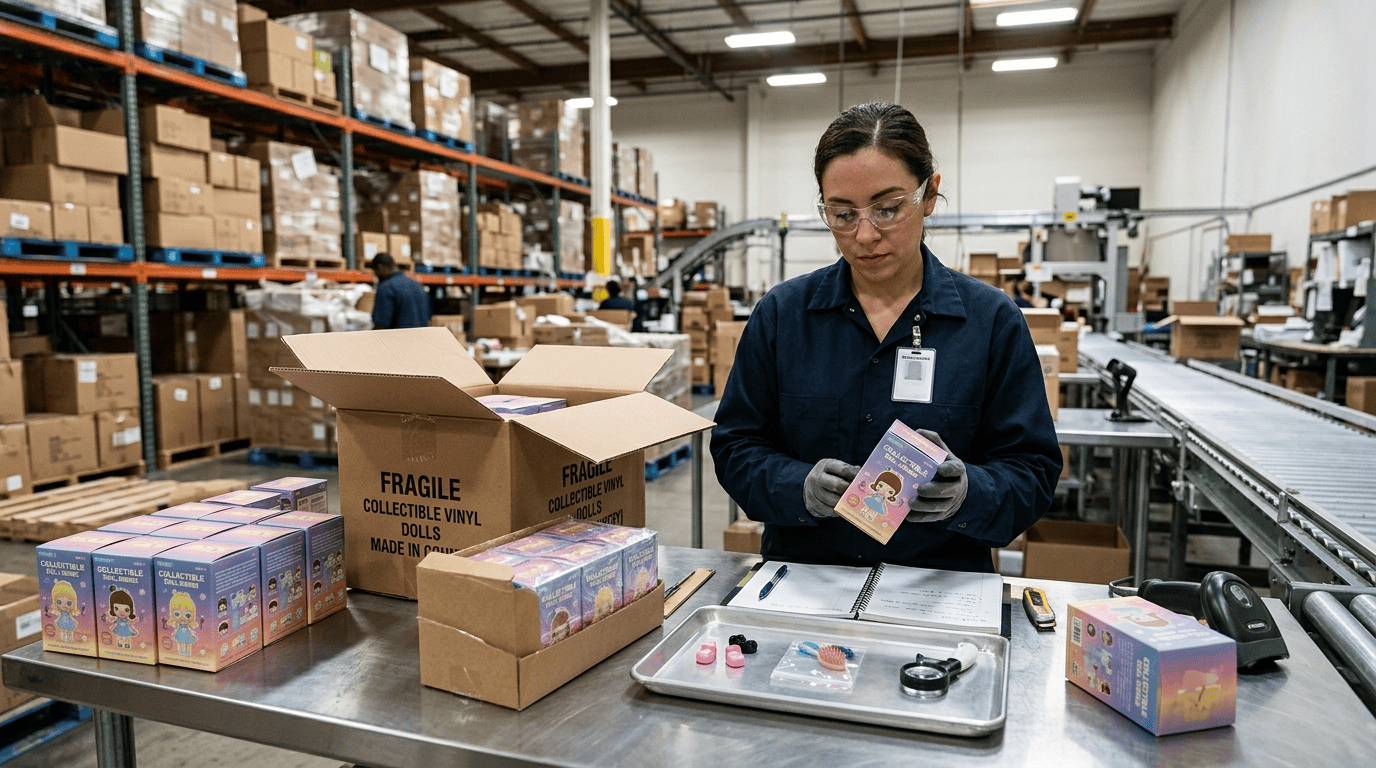
Before approving a larger purchase, agree on how condition issues will be documented and reviewed. A buyer-side receiving check can include:
- Photograph unopened master cartons and shipping labels before unpacking.
- Count inner cases and individual boxes against the packing list.
- Record crushed corners, water exposure, broken seals, or excessive movement inside cartons.
- Open a clearly defined inspection sample and compare contents with the confirmed component list.
- Check visible paint application, joint assembly, clothing placement, and accessory completeness without applying excessive force.
- Keep carton labels and batch or version identifiers tied to any reported issue.
Ask how individual boxes are separated inside the master carton and whether extra protection is available when needed. Don’t assume thicker packaging automatically prevents damage; internal movement and carton loading matter just as much.
Independently verify destination-market rules for consumer product labeling, age grading, warnings, material restrictions, importer information, and testing documentation. Request applicable documents before payment and confirm they correspond to the exact product version and market. A supplier statement alone may not satisfy local legal or marketplace requirements.
When Two Nommi Quotations Aren’t Really Comparable
A quotation can look complete while omitting the details that carry most of the purchasing risk. Treat unexplained differences in product name, packaging, case quantity, or included accessories as questions to resolve rather than automatic bargains.
Warning signs to investigate
- The seller won’t provide current photos of individual packaging and carton labels.
- The quotation uses “set,” “case,” and “carton” without defining the unit count.
- A claimed sealed assortment is also described as mixed or randomly re-packed.
- Product dimensions or included components change across messages.
- The payment request names a different company or recipient with no documented explanation.
- Compliance claims are broad, but the seller won’t identify which product version or destination they cover.
- Damage handling, shortage reporting, or inspection expectations are missing from the order record.
Another common mistake is comparing Forest Kingdom only with products of a similar look. Shelf price potential, package size, articulation, customer age profile, and case commitment can differ materially. If you are weighing a larger doll format, the Bonnie 1/6 BJD retail sourcing guide helps structure a format-based comparison.
Copyable inquiry template
Hello, please quote the current Nommi Forest Kingdom blind box version. Confirm the figure and package dimensions, materials, articulated areas, included components, number of regular designs, and whether a hidden design is part of the series. Please state the MOQ, boxes per sealed case, cases per master carton, carton dimensions and gross weight, quotation terms, and estimated order-preparation window. Also provide current packaging photos, explain whether the cases remain sealed, identify available product or labeling documents, and describe the process for reporting shortages or transit damage. The destination market and delivery location are: [insert details].
Before paying, request a revised quotation or pro forma document that resolves every material point in one place. Compare suppliers on the same quantity, case format, shipping basis, and destination. When you are ready to source the series, set your target order structure and delivery location, then request a documented Nommi quotation rather than relying on a product-page price alone.
FAQ
What should I confirm first when buying a Nommi BJD blind box?
Confirm the exact Forest Kingdom product version, figure dimensions, joint structure, included components, series assortment, and whether the quotation covers sealed cases or loose boxes.
Does a sealed case guarantee every regular design?
Do not assume it does. Ask the supplier to confirm the official case configuration and assortment rules in writing, including how any hidden design may affect the regular assortment.
How should retailers compare two Nommi quotations?
Normalize both quotes by product version, number of units, sealed-case status, trade terms, freight basis, carton specifications, and estimated sellable units. Then compare estimated landed cost rather than unit price alone.
What quality checks matter for a BJD-style blind box?
Check seals, package condition, component completeness, visible paint application, joint assembly, clothing, accessories, and consistency with the confirmed specification. Document issues with photos and carton identifiers.
When should a retailer reorder Forest Kingdom stock?
Use actual weekly sales and the complete replenishment cycle to set a trigger. Include order preparation, transit, customs handling, local delivery, and a buffer for variability.
Before You Place the First Forest Kingdom Order
Treat the purchase as a combination of product selection, assortment control, packaging protection, and cash-flow planning. Confirm the exact version, define every packaging unit, calculate landed cost on sellable inventory, and document quality and compliance questions before payment. A carefully structured test order then gives you real sales and condition data for a more confident reorder decision.

