



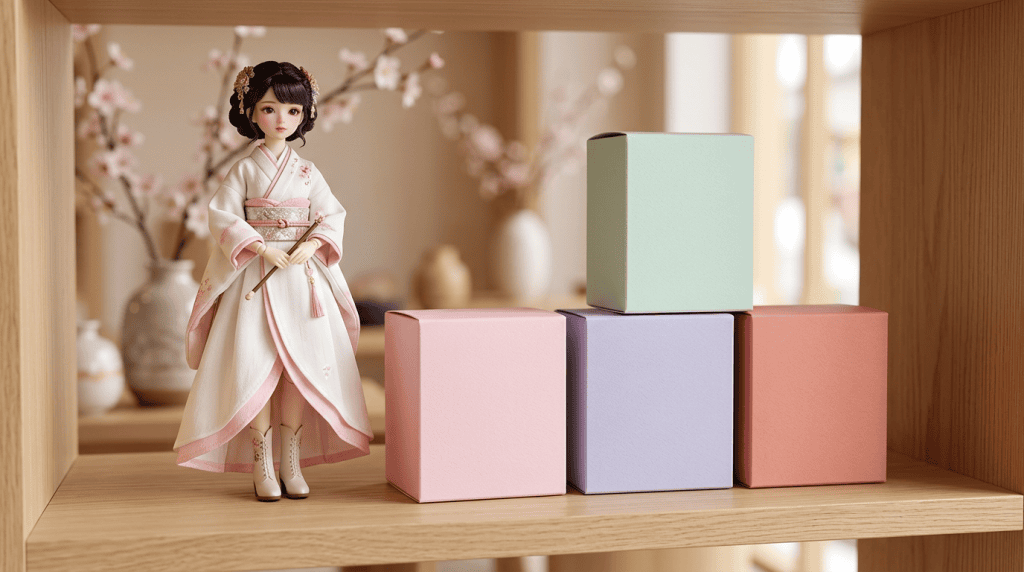
Product photos alone cannot tell a buyer whether a miniature doll series will fit existing displays, meet customer expectations, or remain profitable after freight. When evaluating the Sakura BJD blind box, retailers need to confirm the meaning of the 1/12 format, the assortment structure, included components, packaging condition, and full landed cost before committing to inventory.
This guide treats Sakura Art Collection Vision Reconstruction 1/12 as a sourcing decision rather than an unboxing review. Because detailed specifications were not provided, buyers should use the questions and checks below to obtain documented answers from the seller instead of assuming that every box, doll, or case has the same configuration.
Which Retailers Can Use a Sakura BJD Blind Box Series?
A 1/12 BJD blind box may interest several buyer groups, but the same inventory plan will not work for all of them. Hobby shops may prioritize articulation and compatibility with miniature scenes. Designer-toy stores may focus more on sealed-box presentation and series collectability. Gift retailers may need a product that can be understood without extensive staff explanation.
- Anime and collectible retailers: Ask whether the design language matches the customers already buying character figures and blind boxes.
- Doll and miniature specialists: Confirm scale measurements, joint construction, clothing removability, and accessory compatibility rather than relying only on the 1/12 label.
- Online sellers: Request accurate packaged dimensions and weights for fulfillment planning, and clarify which product images may be used.
- Gift and lifestyle stores: Review whether the packaging communicates the assortment clearly and whether small components need additional customer guidance.
- Convention and pop-up sellers: Consider display security, portable case quantities, and whether sealed units are easy to sell without opening samples.
Retailers comparing doll formats can also review this 1/6 BJD blind box sourcing guide. It provides a useful contrast when deciding whether a smaller 1/12 format or a larger display-oriented doll better suits available shelf space and buyer expectations.
What to Confirm About Vision Reconstruction 1/12
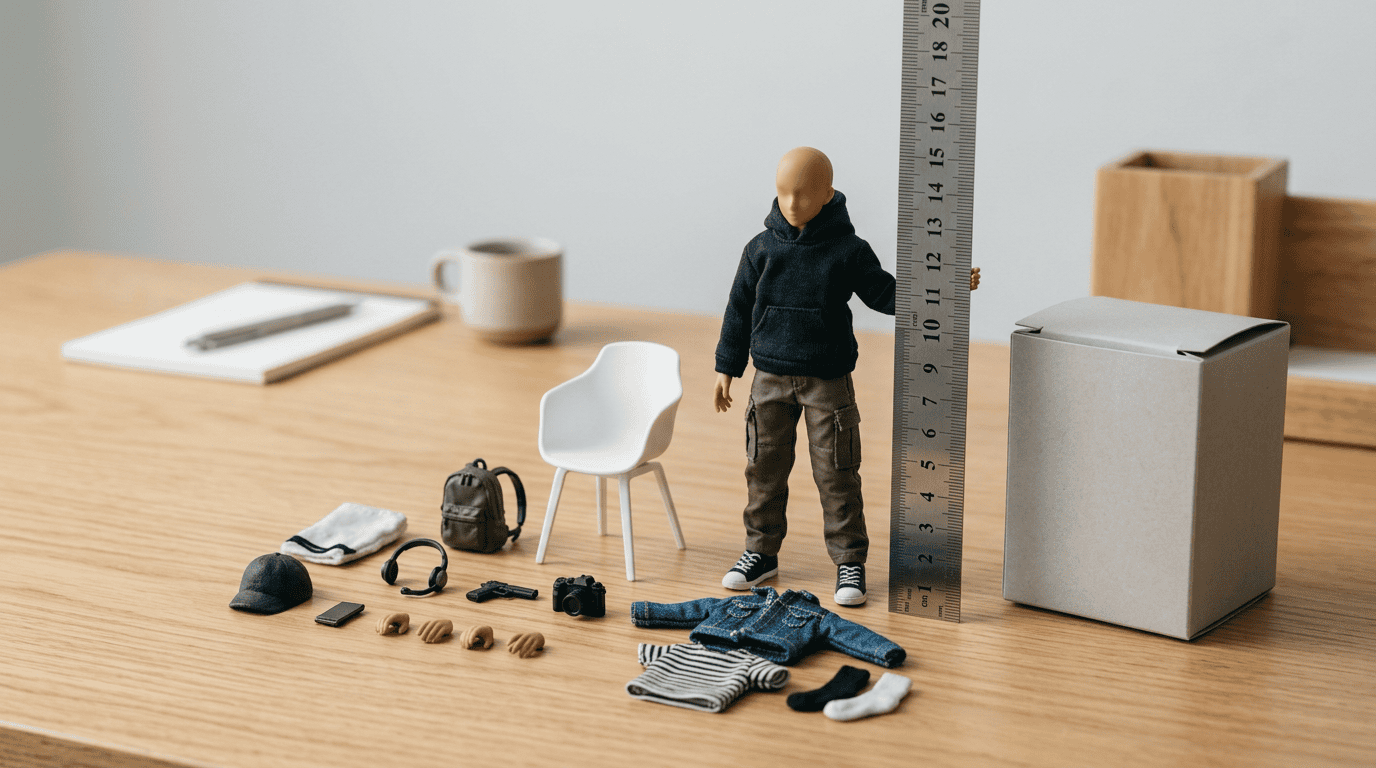
“1/12” should be treated as a starting point, not a complete specification. Scale labels do not automatically establish exact height, body proportions, clothing compatibility, or the dimensions of included accessories. Ask for measurements in millimeters or centimeters and clarify whether the listed height includes hair, headwear, shoes, or a stand.
| Evaluation point | Question for the seller | Why it affects the order |
|---|---|---|
| Doll dimensions | What is the assembled height of each design, and where is it measured? | Determines shelf fit, photography setup, and scale expectations. |
| Articulation | Which joints move, and does movement vary by character? | Helps staff describe the product without overstating poseability. |
| Materials | What materials are used for the body, hair, clothing, and accessories? | Supports care instructions, quality review, and destination-market checks. |
| Box contents | What is included in every box, and which items vary by design? | Prevents ambiguity about outfits, stands, hands, or decorative parts. |
| Series structure | How many regular designs and possible special designs are listed? | Affects collection difficulty and customer communication. |
| Case configuration | Is a case sealed, and how many individual boxes does it contain? | Controls unit economics and assortment planning. |
| Duplication policy | Does a sealed case have a stated assortment pattern? | Buyers should not promise a non-duplicate case without written confirmation. |
| Retail packaging | Are boxes individually sealed, coded, or protected inside the master carton? | Influences tamper risk and gift-ready condition. |
| Product identifiers | What names, item codes, or carton markings identify this exact release? | Reduces the risk of mixing versions or similarly named products. |
Request current photos of the retail box, inner packaging, case label, and representative assembled doll. A polished promotional image is useful for visual assessment, but it does not replace measurements or a contents list.
How 1/12 Scale Changes Assortment and Order Planning
Compact dolls may use less display space than larger BJD formats, but a retailer still needs to plan by sellable unit, sealed case, and complete series. First establish whether the supplier accepts orders by individual blind box, sealed case, or master carton. Then ask whether different order formats have different quantity requirements.
As a planning example, a retailer considering 48 individual units could compare three scenarios: all units supplied as sealed cases, a mixed assortment assembled by the seller, or a combination of sealed cases and loose boxes. The number 48 is only an internal planning reference; the actual case quantity and minimum order must come from the quote.
- Use sealed cases when collectors value a documented series configuration and the supplier can explain the case pattern.
- Use smaller test quantities when demand for articulated miniature dolls is uncertain, if the seller permits that order format.
- Avoid splitting cases casually if customers expect an untouched case or if a possible special design changes the remaining-box appeal.
- Record sales by design or customer request, not only by total series revenue, to improve reorder decisions.
The distinction between untouched cases and seller-created mixes can materially change customer expectations. See the guide to sealed series sets versus mixed blind box assortments before deciding which configuration to request.
If the Sakura BJD blind box appears suitable for your customer base, send the seller your preferred order format and target unit range now. This allows the quotation to reflect the correct case structure instead of an undefined bulk quantity.
Why Sakura BJD Blind Box Quotes Need a Unit-Level Cost Check
A low quoted unit price may not be the lowest usable cost. Compare offers using the same product version, order format, quantity, packaging level, and trade terms. If one quote covers loose boxes and another covers sealed cases, the totals are not yet comparable.
Build an estimated landed-cost worksheet using:
- product subtotal;
- sample or pre-order inspection expense, if applicable;
- export packaging or carton reinforcement charges;
- freight and insurance;
- payment and currency-conversion costs;
- customs duties, import taxes, brokerage, and local handling;
- domestic delivery to the warehouse; and
- an internal allowance for damaged or unsellable packaging.
Divide the estimated total by the number of saleable individual boxes, not merely the number shipped. For example, if a carton contains units that cannot be sold as new because of crushed packaging, those units should not be counted at full retail value in margin planning. This is a calculation method, not a prediction of damage rates.
Ask suppliers to state the currency, quotation validity, included services, shipment basis, and any charges excluded from the total. Buyers should also confirm who handles export documentation and which party carries freight risk at each stage.
Protecting Miniature Dolls and Retail Boxes in Transit
For blind boxes, the retail package is part of the sellable product. Bent corners, opened seals, moisture exposure, or heavily marked labels can reduce customer confidence even when the doll inside remains usable. Request photos or a description of the retail box, inner tray or bag, sealed case, and outer shipping carton.

Before approving a larger order, consider a sample-based check covering:
- Match the product and carton identifiers to the purchase order.
- Inspect seals, box corners, print consistency, and signs of handling.
- Verify the stated contents against the supplied packing or specification list.
- Check representative dolls for visible surface issues, secure joints, clothing condition, and accessory completeness.
- Photograph findings and agree on a process for reporting discrepancies.
Do not assume that the terms “BJD,” “art toy,” or “collectible” determine the legal classification in every destination. Buyers should verify applicable age grading, small-parts warnings, material restrictions, labeling, language, importer information, intellectual-property authorization, and other rules for the intended market. Ask for available documentation, but independently assess whether it is current, relevant to the exact item, and accepted by local authorities or sales channels.
Reorder Timing for a Collectible Doll Series
Lead time should be separated into order confirmation, supplier preparation, inspection, export handling, international transit, customs clearance, and local delivery. A single broad estimate can hide the stage most likely to disrupt a launch. Ask which dates are estimates and what event starts the clock, such as payment, order approval, or inventory confirmation.
For reorder planning, track weekly unit sales and remaining saleable stock. As an example method, if replenishment may consume several sales cycles, set an internal review point before stock reaches the amount normally sold during that period. Add a buffer for customs variability and any launch event, but do not treat historical timing as a guarantee.
Also ask whether a reorder is expected to have the same packaging, assortment, item code, and case configuration. Product revisions can affect listings and customer expectations. Online retailers should archive approved images and specifications for each shipment rather than assuming that every batch is identical.
When a Vision Reconstruction Quote Is Not Yet Comparable
Warning signs are often omissions rather than dramatic claims. Pause the comparison when a seller will not identify the exact release, cannot explain whether cartons are sealed, supplies only promotional images, or changes the case quantity without clarifying why. Be cautious when a quote combines several versions under one description or treats “1/12” as a substitute for actual measurements.
Common buyer mistakes include comparing only the per-box price, promising customers a complete non-duplicate assortment without confirmation, overlooking retail-box condition, and requesting “one carton” without defining carton level. Another mistake is assuming a miniature doll includes every prop shown in styled photography.
Inquiry template for a usable quote
Please quote Sakura Art Collection Vision Reconstruction 1/12 for resale in [destination market]. Our initial planning range is [quantity or range] individual boxes. Please confirm the exact product identifier, regular and special-design structure, individual-box quantity per sealed case, cases per master carton, available order formats, and applicable minimum quantity.
Please also provide assembled doll measurements, materials, articulation details, included contents, retail-box and carton dimensions, gross weights, current packaging photos, quotation currency and validity, trade terms, preparation estimate, and available product or compliance documentation. State any charges not included and whether the quoted cases are unopened.
Use the response to build a side-by-side comparison sheet. A supplier who answers some questions later may still be viable, but unresolved specifications should remain visibly marked rather than filled with assumptions. For another example of how retailers can organize questions around a character collectible, consult the Cupa blind box buyer guide.
Before paying for inventory, request a written quotation tied to the exact Vision Reconstruction 1/12 item, case configuration, destination, and packaging requirements. Confirm every material difference in writing and retain the approved specification with the purchase order.
FAQ
What should buyers confirm about the 1/12 scale?
Buyers should request the assembled doll height, measurement method, body proportions, and dimensions of key accessories. The 1/12 label alone does not guarantee compatibility with every miniature scene, outfit, or furniture line.
Does a sealed case guarantee no duplicate Sakura BJD designs?
Not unless the seller documents the case assortment and duplication policy for this exact release. Buyers should avoid advertising a complete or non-duplicate set based only on the phrase “sealed case.”
How should retailers compare wholesale quotes?
Compare the same release, quantity, case format, currency, trade terms, packaging level, and included services. Then estimate landed cost per saleable individual box, including freight, import charges, local delivery, and a reasonable internal allowance for packaging loss.
Which quality checks matter for a 1/12 BJD blind box?
Check product identifiers, seals, retail-box condition, stated contents, visible finish, joint security, clothing condition, and accessory completeness on an agreed sample. Document findings with photos and confirm how discrepancies will be handled.
What compliance documents should an importer request?
Request documentation relevant to the exact product, materials, age grading, labeling, and destination market. Requirements vary, so buyers should independently verify that documents are current and acceptable to local authorities and sales channels.
Before Placing the First Sakura Order
The strongest buying decision combines product fit with documented specifications. Confirm actual dimensions, box contents, case structure, minimum order basis, packaging protection, cost exclusions, and timing before comparing offers. A smaller, clearly defined test order may provide better planning data than a larger purchase based on attractive images and incomplete assumptions.