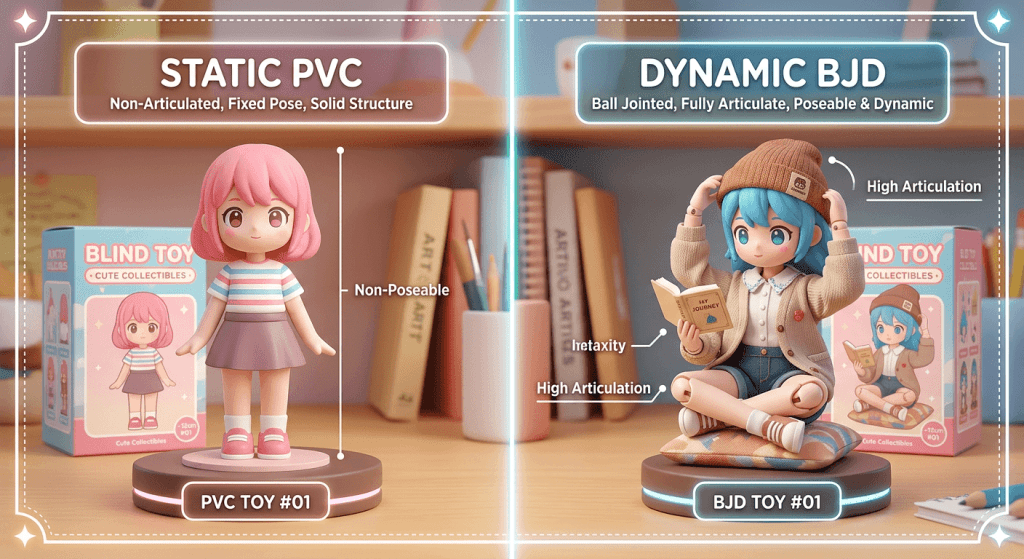




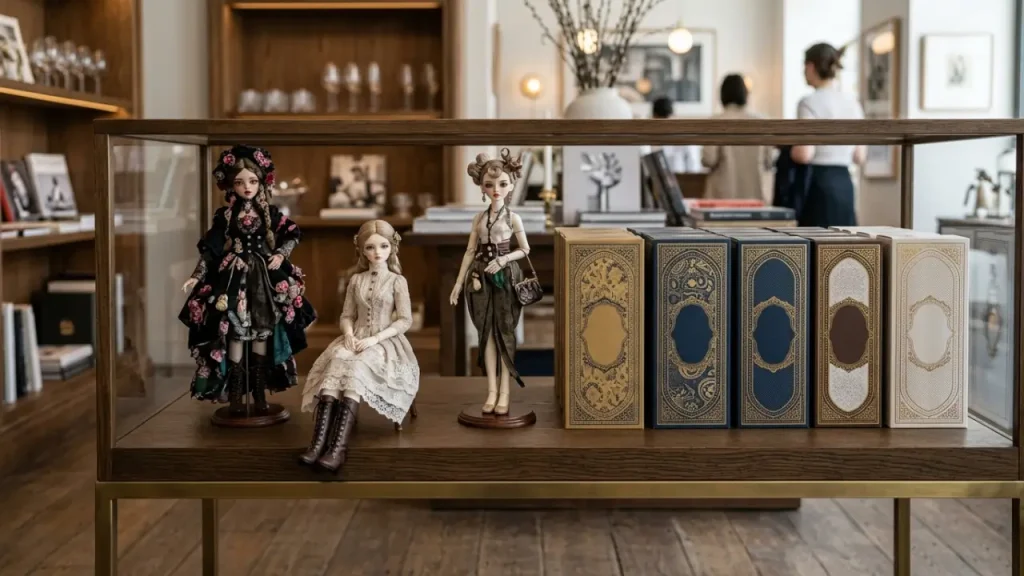
A premium doll-format blind box asks more of a retail buyer than a $3 impulse figure does, and the decision fails quietly if you only look at character artwork and unit price. The harder questions are whether the scale, display footprint, assortment structure, packaging condition, and landed cost fit your actual customers and channels. With the Bonnie Dream of Toy Box series, the 1/6 format adds practical concerns around shelf space, shipping volume, articulation, loose accessories, and what buyers expect when they open the box.
This guide does not assume a particular case quantity, material, hidden-edition ratio, or wholesale price. Confirm those in the current supplier quotation and product specification sheet. What follows is a framework for comparing offers and preparing an order you can judge on commercial terms rather than first impressions.
Where the Bonnie BJD Blind Box Fits in a Retail Assortment
A 1/6 BJD-style series appeals to a different shopper than a small desk figure or a cheap impulse collectible. Identify the role the series will play before ordering, instead of treating every blind box as interchangeable.
- Designer toy and collectible stores: Position the series as a visually prominent doll-format product, subject to confirming its dimensions and presentation quality.
- Anime and kawaii retailers: Compare the character styling with the themes already selling for you, such as fashion, fantasy, or doll customization.
- Gift shops: Check whether the sealed retail box looks gift-ready as-is and whether the price band suits the occasions you sell into.
- Online sellers: Write listings that clearly separate a random single box from a sealed series set, without implying a specific character is guaranteed.
- Live-selling businesses: Confirm character count, duplicate rules, and packaging identifiers before you build reveal-based streams around it.
A useful decision rule: compare the series against products serving the same spending occasion, not merely other blind boxes. A larger doll may compete with fashion dolls, display collectibles, or premium gifts rather than with pocket-money figures. Retailers weighing a broader character mix can also read the Cupa blind box buyer guide as a separate example of how theme and audience shape assortment decisions.
What to Confirm About the 1/6 BJD Format
The label “1/6” is not a substitute for a complete specification sheet. Ask for the assembled height and the dimensions of the retail box and master carton. Scale labels get interpreted differently across product categories, so physical measurements are far more useful for shelf plans, product photography, and freight estimates.
| Item to verify | Question for the supplier | Why the answer matters |
|---|---|---|
| Assembled size | What is the measured height and width of each doll? | Determines display footprint and helps prevent misleading listings. |
| Articulation | Which joints move, and are there handling limitations? | Affects posing expectations, in-store demos, and return risk. |
| Main materials | What materials are used for the body, hair, clothing, and accessories? | Supports product descriptions, care guidance, and compliance review. |
| Included components | What is included with every regular design? | Prevents confusion about stands, outfits, shoes, or handheld pieces. |
| Series structure | How many regular designs and hidden designs are in the series? | Supports assortment planning without promising an unconfirmed character. |
| Sealed-case logic | Does an unopened case follow a stated assortment rule? | Helps you assess duplicate exposure and full-set selling options. |
| Package measurements | What are the retail-box and master-carton dimensions and weights? | Needed for shelving, storage, parcel rates, and freight comparison. |
| Product identification | What batch, barcode, or authenticity details should be visible? | Helps receiving teams match delivered goods to the purchase order. |
Request current product photos showing the doll beside a ruler or another neutral size reference. Also ask for clear views of the joints, clothing closures, accessories, the sealed box, and the carton label. Promotional artwork alone is not enough evidence for a purchasing decision.
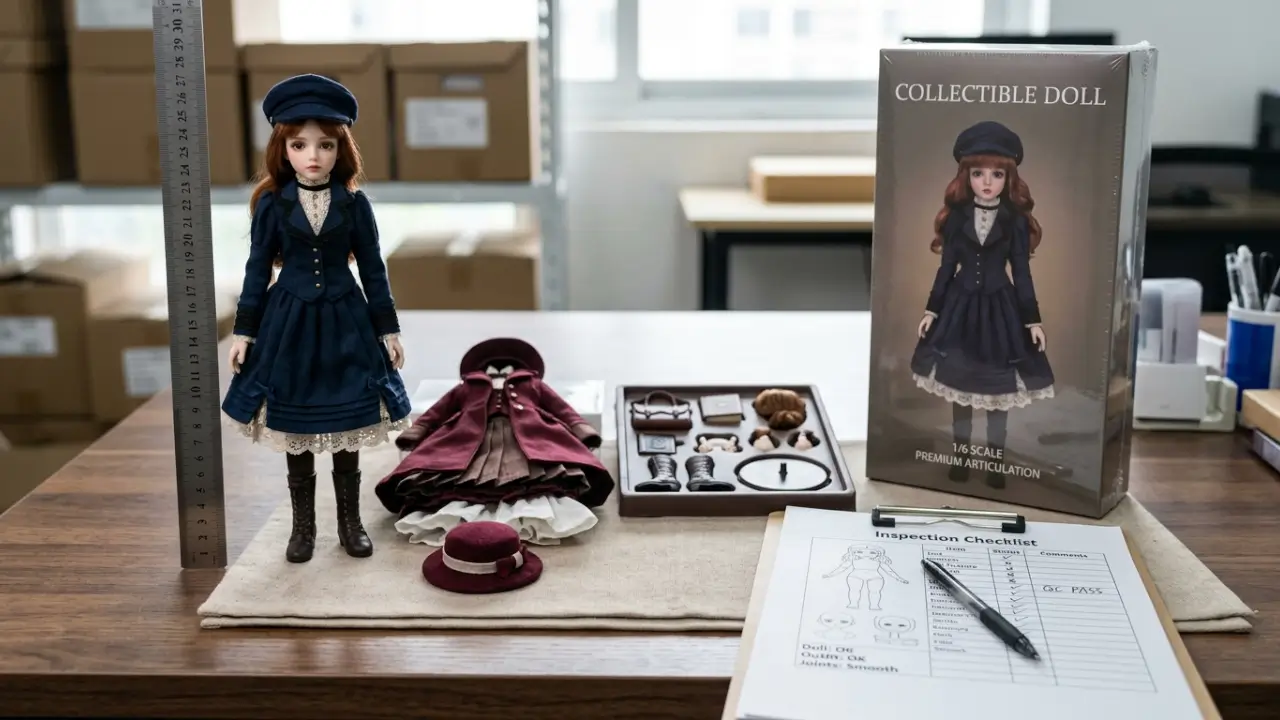
If staff will demonstrate a sample, document how the clothing and accessories should be handled. A display unit can reduce customer uncertainty, but do not open one from sellable stock unless that cost is built into the launch plan.
Build the Order Around Cases, Singles, and Display Needs
Before you ask only for MOQ, separate four quantities: supplier minimum order, units per sealed inner or display case, master-carton quantity, and the units each sales channel actually needs. These figures are often not identical.
For example, a retailer planning for two stores and an online channel might allocate 12 units to each store, 12 units online, and one extra unit for photography or display. Treat that as a planning example, not the real case pack for the Bonnie series — adjust once you have the confirmed packing configuration.
- Ask whether the MOQ is counted in individual boxes, sealed cases, or master cartons.
- Confirm whether breaking a case changes the unit price or assortment condition.
- Decide whether customers will buy random singles, sealed cases, or identified opened figures.
- Reserve any photography, inspection, or display samples separately from sellable inventory.
- Record allocation by store or channel before stock arrives.
The distinction between intact cases and loose stock is commercially important. The guide to sealed series sets versus mixed blind box assortments explains how each format changes customer expectations and inventory control.
When you request a preliminary quote, state the intended sales format and estimated order range up front. That gives the supplier a better basis for explaining case options than a bare request for the lowest unit price.
Why the Cheapest Bonnie Quote May Cost More After Arrival
Compare offers on landed cost per sellable unit, not the quoted product price in isolation. A basic planning formula: product cost plus packaging or preparation charges, freight, insurance where applicable, import duties and taxes, customs or brokerage costs, payment fees, and domestic delivery, plus an allowance for non-sellable units, all divided by the expected number of sellable units.
Verify which costs the quoted trade terms include and who is responsible for each transport stage. Import duties, taxes, labeling rules, and customs procedures vary by destination, so get advice suited to your destination market rather than relying on a general supplier statement.
- Compare quotes at the same quantity and packing configuration.
- Use the same destination, shipping method, currency, and trade terms.
- Ask whether carton dimensions and gross weight are measured or estimated.
- Check whether payment, inspection, consolidation, or local delivery charges are excluded.
- Model a conservative sellable-unit count instead of assuming every unit arrives retail-ready.
A lower unit quote loses its appeal if it forces an inefficient carton quantity, offers thin packaging protection, or leaves major logistics costs undefined. Keep the original quotation, any revised quotation, and the final purchase order together so changes stay visible.
Protect Doll Joints, Clothing, and Retail Boxes in Transit
For a doll-format collectible, quality review has to cover more than face paint. You may need to inspect joint fit, clothing assembly, loose accessories, surface marks, odor, missing components, and box condition. Match the exact checks to the confirmed construction and materials.
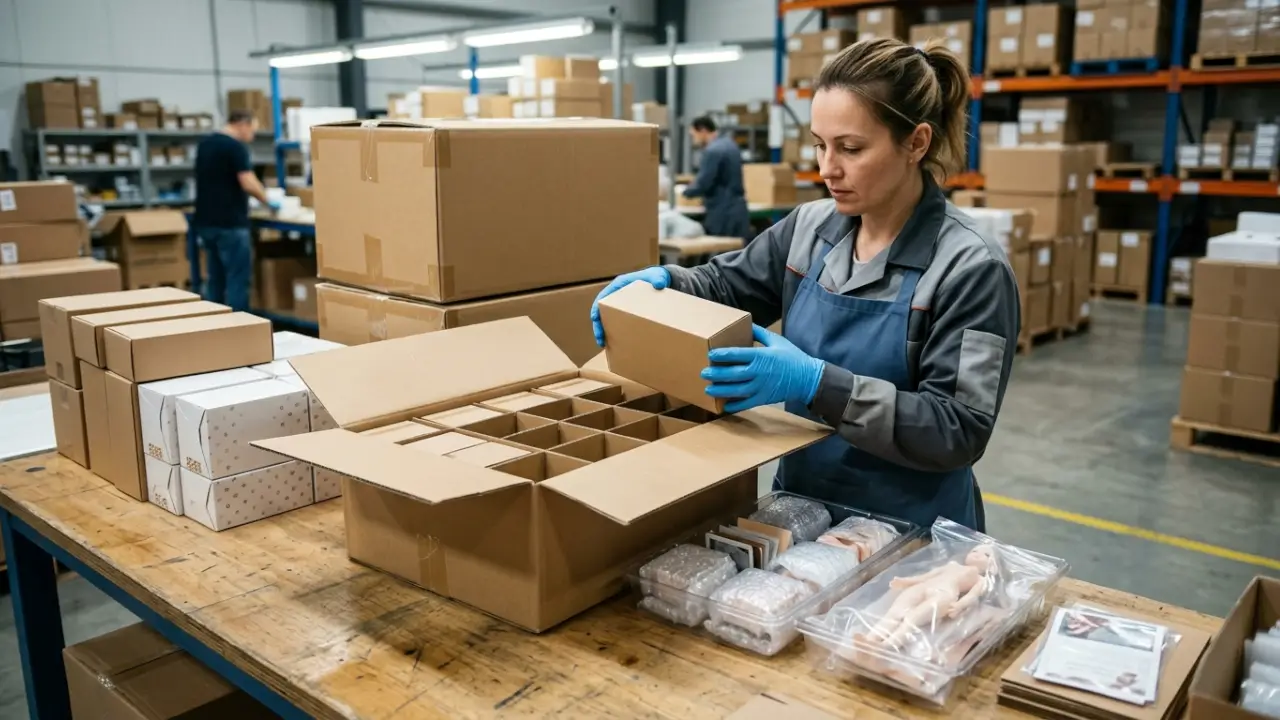
Ask how the doll is restrained inside its retail packaging and how the retail boxes are protected inside the master carton. Request photos of internal trays or bags, carton dividers, carton sealing, and external carton markings. If pristine packaging matters to your collectors, define acceptable dents, tears, crushed corners, moisture exposure, and broken seals before shipment.
A practical receiving sequence
- Photograph unopened cartons and shipping labels on arrival.
- Count cartons, sealed cases, and individual units against the packing list.
- Check a documented sample drawn from different carton positions.
- Record packaging damage separately from product defects.
- Keep affected units, labels, and photos until any claim process is complete.
Also request the applicable product, material, labeling, and test documentation for your destination and customer age positioning. Do not infer compliance from appearance, a marketplace listing, or a general statement that an item is collectible. Requirements can differ by country and by whether authorities classify the item as a toy, collectible, or another product type. Verify your obligations with a qualified local adviser when necessary.
Set the Reorder Trigger Before the First Shipment Lands
Blind box demand tends to be uneven: early collectors may buy quickly, while later sales depend on character appeal, duplicates, and ongoing visibility. Build the reorder calculation around your actual weekly sales and the supplier’s confirmed replenishment timeline.
As a planning example, if a store sells eight units per week and the documented replenishment cycle runs several weeks, the reorder point should cover expected sales across that cycle plus a chosen safety quantity. That is not a claim about Bonnie stock availability or lead time — obtain current production and dispatch information for each order.
- Ask when lead time starts: deposit, full payment, artwork approval, or order confirmation.
- Separate production or preparation time from international transit and customs clearance.
- Confirm whether the quote covers available inventory, a future batch, or an unconfirmed restock.
- Track sales by location and format, including singles, cases, and opened identified figures.
- Set a review date rather than automatically repeating the initial quantity.
If the series is one part of a wider doll or character assortment, compare its sales role with another sourcing format. The UpSetDuck retail sourcing guide offers additional questions for weighing audience fit and purchasing terms across character series.
When a Bonnie BJD Blind Box Quote Is Not Yet Comparable
A quote is incomplete if it gives a unit price but omits the product version, case pack, trade terms, packaging, or shipment basis. Pause before paying when photographs and documents do not consistently identify the same series, when the seller avoids saying whether cartons are sealed, or when key answers change without a written revision.
Other warning signs: pressure to accept substitutes, refusal to provide carton data, unsupported authenticity claims, vague defect procedures, and payment details that do not match the contracting party. None of these automatically proves a problem, but each one needs clarification and documentation before funds move.
Quote request checklist
- Exact series name and requested product version
- Quantity range and whether sealed cases are required
- Units per case and cases per master carton
- Number of regular and hidden designs, with any stated assortment rule
- Doll, retail-box, and master-carton measurements
- Materials, articulation points, and included components
- Unit price, currency, price validity, and trade terms
- Current order status and separate preparation and dispatch estimates
- Available product, packaging, and compliance documentation
- Inspection, shortage, damage, and defect procedures
Inquiry template
Please quote the Bonnie Dream of Toy Box 1/6 BJD blind box for an estimated order of [quantity or range] to [destination]. Please confirm the exact version, MOQ basis, units per sealed case, master-carton configuration, assortment rules, product and carton dimensions, gross weight, materials, included components, price terms, payment terms, and current preparation estimate. Please also provide current photos of the product, sealed retail box, inner packaging, and carton label, along with the documents available for destination-market review.
Retailers comparing adjacent collectible categories may also use the audience and merchandising questions in the Ninita buying guide for anime retailers.
Before committing funds, request a written quotation that answers the checklist above, then compare it with at least one alternative on the same quantity, shipping basis, and case configuration. Resolve any discrepancies in writing and transfer the final specifications into the purchase order.
FAQ
What should retailers confirm before ordering the Bonnie BJD blind box?
Confirm the exact version, assembled dimensions, articulation, materials, included accessories, case quantity, assortment rules, retail packaging, carton data, price terms, lead-time basis, and available compliance documents.
Does a sealed case guarantee a complete Bonnie set?
Do not assume it does. Ask the supplier to state the sealed-case assortment rule in writing, including how regular designs, duplicates, and any hidden design are handled.
How should buyers calculate landed cost for a 1/6 BJD blind box?
Add product cost, freight, insurance where applicable, duties and taxes, customs or brokerage charges, payment fees, domestic delivery, and a reasonable allowance for non-sellable units. Divide the total by expected sellable units.
Which quality checks matter for a BJD-style blind box?
Checks may include joint fit, surface finish, clothing assembly, accessory count, component security, package seals, retail-box condition, and consistency with the approved product specification.
Should a retailer begin with singles or sealed cases?
The choice depends on customer demand, assortment rules, shelf capacity, and sales format. Sealed cases may simplify inventory handling, while singles may support a smaller test, provided the supplier permits broken-case ordering.
Before You Place the First Bonnie Order
Treat the first purchase as a documented retail test, not a bet placed on character appeal alone. Confirm the physical specifications, case logic, delivered-cost assumptions, packaging standard, destination requirements, and reorder conditions. A detailed written quote makes it easier to compare suppliers, receive the correct goods, and decide whether the Bonnie series earns a larger place in your assortment.