



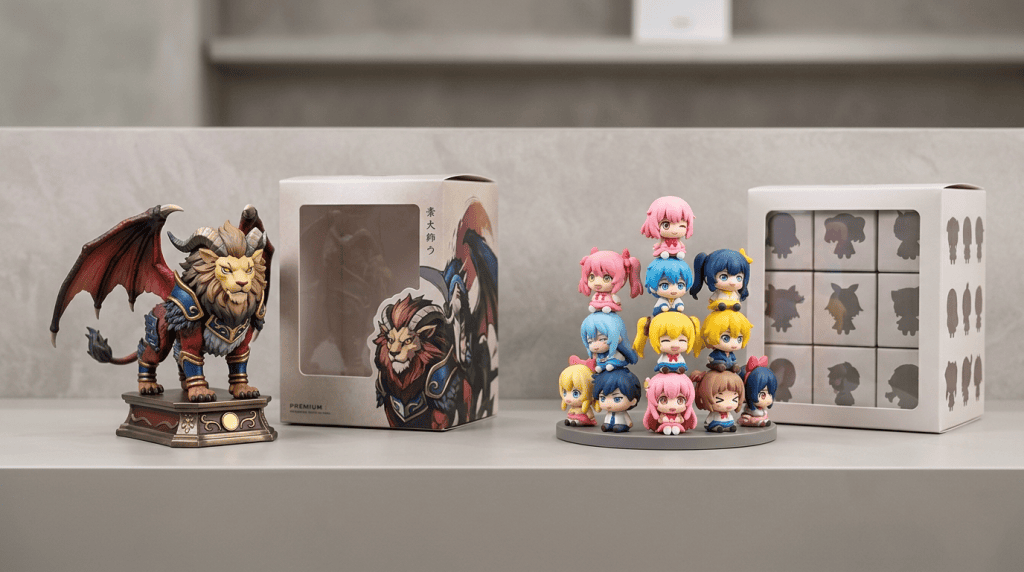
Two visually appealing formats can land in front of a buyer at the same price point, and the harder question is which one is easier to display, explain to a shopper, ship without damage, and reorder in the right mix. With Honkai Star Rail toys, the decision is rarely about which design looks better. It is whether a Chimera-format item or a character stacking assortment fits your customers, your shelf space, your selling method, and how much unsold or mismatched stock you can absorb.
Format names alone do not establish dimensions, materials, assortment ratios, licensing status, or stacking mechanics. Treat the labels as a starting point and obtain a complete specification sheet for each SKU before approving an order.
Which Honkai Star Rail Toys Fit Your Selling Environment?
A display-led collectible and a stacking toy can appeal to overlapping customers, but they create different retail experiences. Start by identifying how shoppers encounter and use the product.
- Anime and collectible stores: A Chimera-format product may suit shoppers seeking a recognizable display piece, the way a large-format figure such as the Mega Space Molly display collectible earns shelf attention on its own. Ask whether it is sold as an individual design, a random assortment, or a complete set.
- Gift shops: Character stacking toys may be easier to demonstrate as a playful desk gift, provided the packaging clearly shows how the pieces interact without opening a unit.
- Online retailers: Either format can work, but product pages need verified dimensions, contents, materials, and assortment information. Do not build the listing from a single promotional render.
- Pop-up and event sellers: Compact products with a clear visual concept reduce explanation time at a busy table. Compare how much table space each packaged unit and display carton takes.
- Bookstores and lifestyle shops: A format with an obvious desk-display use may fit customers who do not identify as dedicated figure collectors.
Use your own sales data where possible. If poseable, blind-box, or interactive desk items already outperform static figures in your store, that pattern may favor stacking toys. If named characters and display presence drive purchases, the Chimera option may deserve more shelf space.
Chimera and Character Stacking Formats Side by Side
The following table is a buyer evaluation framework, not a statement of confirmed specifications. Ask the supplier to fill in the missing product-specific details for both formats.
| Decision point | Chimera format: what to confirm | Character stacking format: what to confirm |
|---|---|---|
| Primary customer use | Is it mainly a standalone display collectible? | Can pieces be balanced, connected, or arranged in multiple ways? |
| Unit contents | Confirm figure, base, accessories, and inserts. | Confirm the number of pieces and whether a base or support is included. |
| Assortment structure | Ask whether cartons contain one design, mixed characters, or randomized boxes. | Ask whether each unit is character-specific or part of a mixed assortment. |
| Shelf presentation | Compare packaged dimensions and front-facing artwork area. | Check whether the stacking concept reads clearly without an open sample. |
| Demonstration needs | A display sample may communicate scale and finish. | An assembled sample may be needed to show balance and combinations. |
| Damage exposure | Review thin accessories, protruding parts, and base fit. | Review connection points, small components, and surface contact between pieces. |
| Repeat-purchase logic | Determine whether customers are likely to collect multiple designs. | Determine whether additional characters expand the stacking possibilities. |
| Fulfilment complexity | Confirm whether irregular shapes increase protective packaging volume. | Confirm that all small pieces stay separated and counted during packing. |
| IP documentation | Request documentation relevant to the branded product and your sales channel. | Request the same documentation; format does not remove IP-related risk. |
Do not choose from renderings alone. Request images of the retail box, inner tray, shipping carton, product underside, included components, and any labels intended for the destination market.
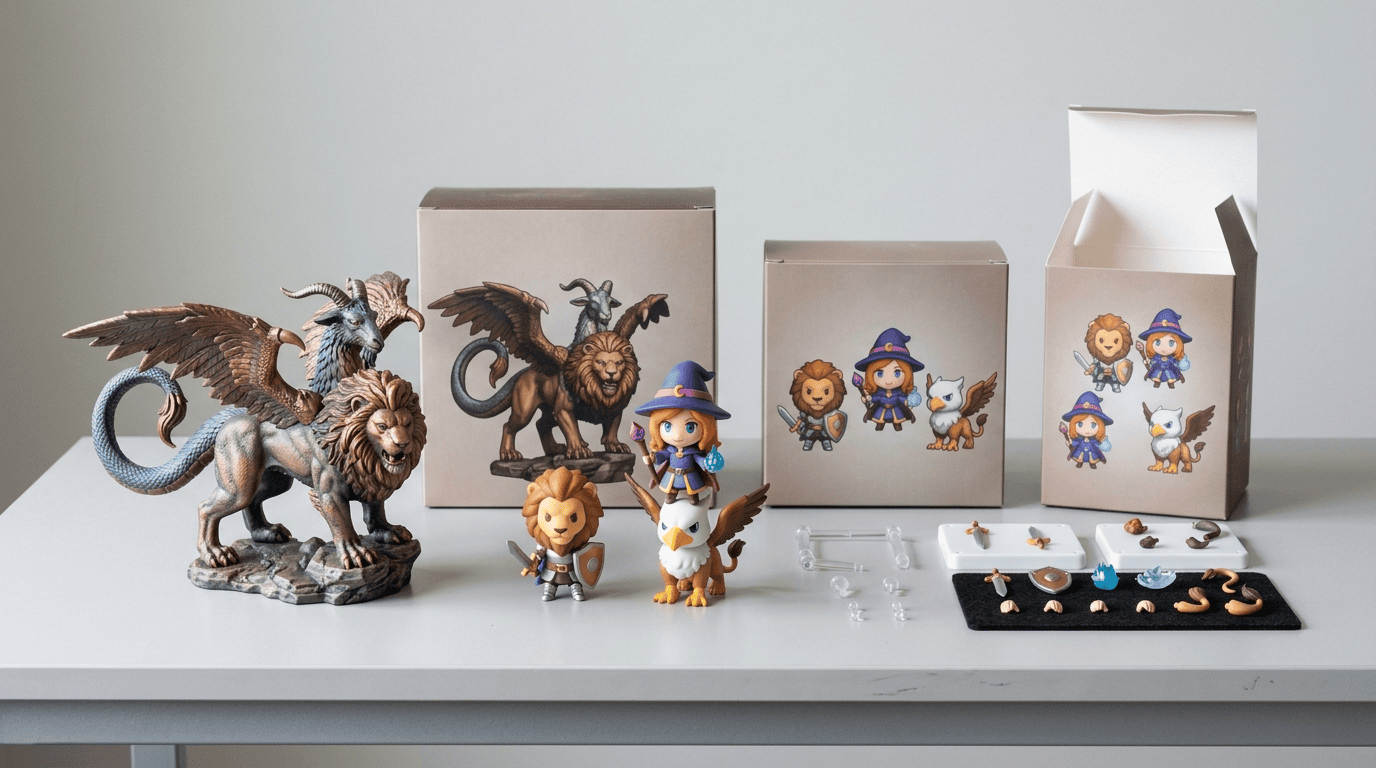
How to Verify What “Chimera” and “Stacking” Mean in the Quote
Suppliers and marketplaces use format labels loosely. A quote is not comparable until both products are described with the same fields.
- Record dimensions in the same order. Ask for product, retail box, display box, and master-carton measurements, with units clearly stated.
- Confirm the sales unit. Establish whether the quoted unit is one character, one blind box, one set, one display carton, or one master carton.
- List every component. Include bases, connectors, supports, accessories, cards, bags, and instructions.
- Clarify selection rights. Ask whether buyers can choose characters or must take a fixed or randomized case.
- Request material identification. Do not assume two similarly photographed toys use the same material or surface treatment.
- Document the stacking mechanism. Ask whether pieces interlock, balance freely, attach magnetically, or rely on a separate support. Do not infer this from the word “stacking.”
This verification process mirrors comparing other hybrid collectible formats. The guide to vinyl-face plush versus standard plush blind boxes shows why material and construction differences can change the retail decision even when the audience looks similar.
Before you narrow the assortment, send the same specification worksheet to each supplier. A standardized response makes visual appeal, pack structure, and fulfilment requirements far easier to compare side by side.
Case Packs Can Change the Better-Looking Assortment
Evaluate MOQ together with case quantity and assortment composition. A low stated MOQ can still create excess exposure if the product must be bought in fixed character ratios or full master cartons.
Ask these questions for both Honkai Star Rail toy formats:
- Is the MOQ measured in individual units, display cases, or master cartons?
- How many retail units are in a display case and a master carton?
- Is a mixed-character case available, and is its ratio fixed?
- Can a reorder contain only the faster-selling characters?
- Are samples or opened display units packed separately from saleable stock?
- Does ordering a complete set change the number of duplicates you receive?
As a planning example, a retailer testing 24 units might split them between the two formats rather than committing all 24 to one concept, if the supplier’s pack rules allow it. The point is to compare sell-through, customer questions, and damage rates on a like-for-like basis. This is a planning reference, not a suggested supplier MOQ.
For randomized products, also review the difference between sealed series sets and mixed blind box assortments. The carton structure can affect customer trust, complete-set sales, and replenishment decisions.
Calculate Cost Per Saleable Unit, Not Just Unit Price
A lower quoted price does not automatically produce the lower landed cost. Packaging volume, carton utilization, import charges, payment fees, inspection expenses, and damaged or incomplete units can all move the result.
Build a comparison using this logic:
Estimated landed cost per saleable unit = product cost + allocated freight + applicable duties and taxes + payment or handling costs + inspection allocation + expected loss allowance, divided by saleable units received.
Use verified carton measurements and gross weight when requesting freight estimates. Character stacking toys may carry several small components, while a Chimera item may have an irregular figure shape or protective tray; either could occupy more shipping volume depending on its actual packaging.
Then test the required selling price against your channel costs. Marketplace commission, pick-and-pack labor, promotional discounts, and returns should be considered separately from the supplier’s unit quote.
Reorder planning matters too. Ask for production or dispatch estimates before paying, but treat them as estimates rather than guarantees. Set an internal review point based on your sales velocity. For example, a buyer might review replenishment when roughly 40% of the initial stock remains, then adjust for the supplier’s current lead-time estimate and freight method.
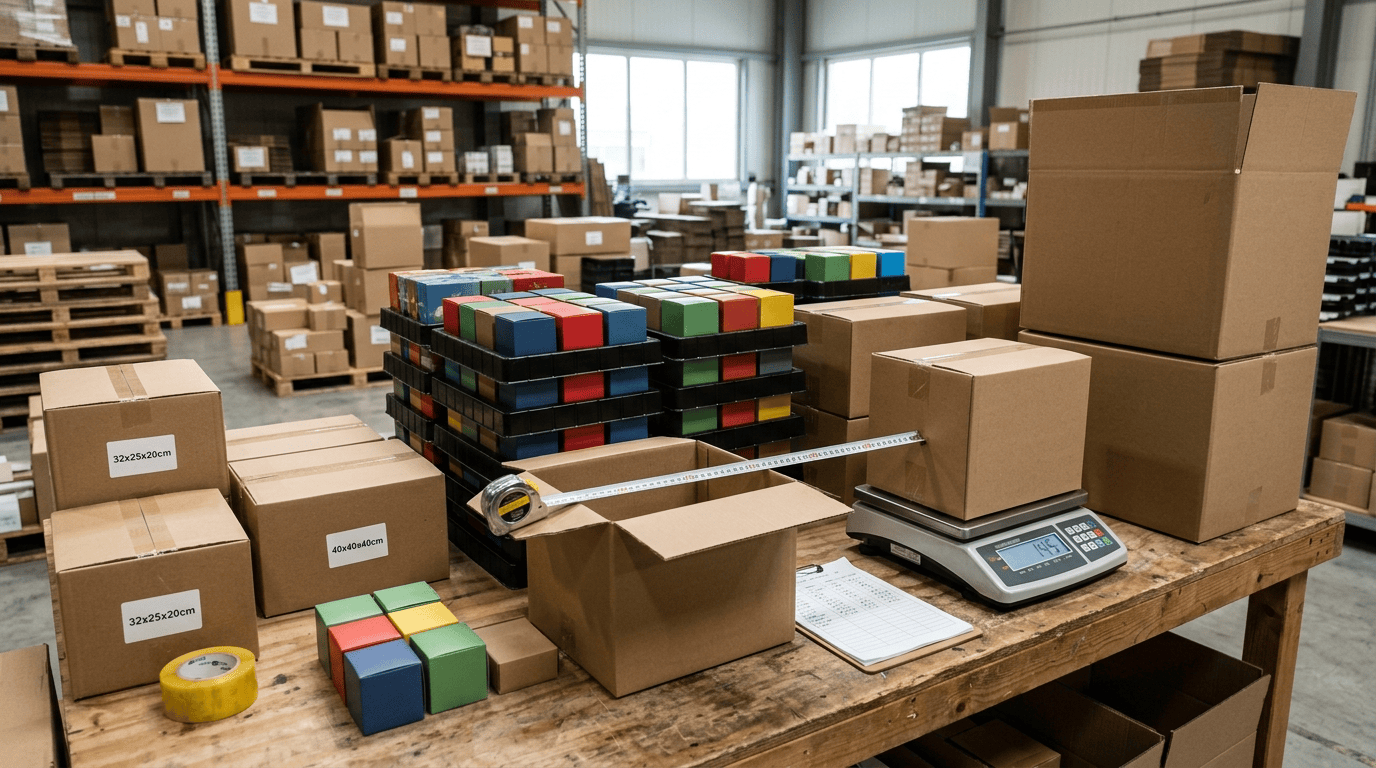
Packaging Checks for Figures That Display or Stack
Packaging has to protect both appearance and function. A figure with intact parts can still be unsaleable if the box is crushed, while a stacking set draws complaints if one connector or character is missing.
- Retail-box protection: Check corner clearance, tray fit, scuff prevention, and how much the product moves inside the box.
- Component control: Request a packing list or diagram showing every included piece.
- Stacking test: If stacking is a stated function, ask how a complete sample behaves on a level surface and whether the instructions explain the intended arrangement.
- Accessory fit: Check bases, supports, connectors, and removable parts across more than one sample.
- Carton protection: Review dividers, void space, master-carton condition, and whether retail boxes rub against each other in transit.
- Label review: Confirm product identity, age grading, warnings, importer information, material declarations, and any other labels required for the destination market.
Buyers should independently verify applicable toy safety, consumer labeling, customs, and intellectual-property requirements. Request relevant documentation, check that it matches the exact SKU and production batch where applicable, and confirm whether the branded goods may be sold through the intended country and channel.
When a Honkai Star Rail Toy Quote Is Not Yet Comparable
Pause the buying decision if a supplier dodges basic pack details or changes the definition of a unit mid-discussion. Other warning signs include copied-looking product images with no packaging photos, unexplained assortment substitutions, missing carton measurements, inconsistent material descriptions, or pressure to pay before documentation is reviewed.
Send a structured inquiry rather than a one-line request for the lowest price:
Hello, please quote the Chimera format and the character stacking format separately. For each SKU, provide the sales-unit definition, product and retail-box dimensions, material description, included components, character assortment, MOQ basis, units per display and master carton, carton dimensions and gross weight, packaging photos, sample options, current lead-time estimate, trade terms, and available product, labeling, safety, and IP-related documentation relevant to [destination market and sales channel]. Please also state whether character selection or mixed-format ordering is possible.
Compare responses line by line. If one quotation excludes inner packaging, freight terms, or a required component, correct it before ranking prices. A useful parallel framework is the comparison of blind box fridge magnets and bag charms, where intended use and attachment construction matter as much as visual design.
Before placing an order, request a written, SKU-specific quotation and confirm the approved sample, case configuration, packaging version, documentation, and shipping assumptions in the purchase record. This creates a clearer basis for inspection and cuts down on disputes caused by vague format names.
FAQ
Are Chimera and character stacking toys sold in the same type of assortment?
Not necessarily. Either format could be sold as individual SKUs, fixed sets, mixed cases, or randomized boxes. Buyers should confirm the sales unit, character ratio, and case configuration in writing.
Which format is better for a first test order?
The better test format depends on customer behavior and pack rules. Use the smallest commercially practical comparison the supplier allows, then track sell-through, customer questions, damage, missing parts, and repeat purchases.
What should be included in a stacking toy specification?
Request dimensions, materials, piece count, character list, connection or balancing method, base or support details, packaging structure, age grading, warnings, and carton information.
How should retailers compare prices for the two formats?
Compare estimated landed cost per saleable unit rather than quoted unit price alone. Include freight allocation, applicable duties and taxes, handling, inspection, channel costs, and an evidence-based allowance for losses.
What documentation should a buyer request for branded character toys?
Ask for product and labeling documents relevant to the exact SKU, destination market, and sales channel, along with evidence supporting authorized use or distribution of the intellectual property. Buyers should verify requirements independently.
Choose the Format Your Store Can Explain and Reorder
Judge Chimera and character stacking toys as different retail propositions, not two designs from the same entertainment property. Confirm what is inside each box, how the customer uses it, how the case is configured, and what each saleable unit costs after freight and handling.
The stronger choice is the format that fits your audience, survives its fulfilment route, carries clear documentation, and can be replenished without leaving you with an unsuitable mix of characters or components.