


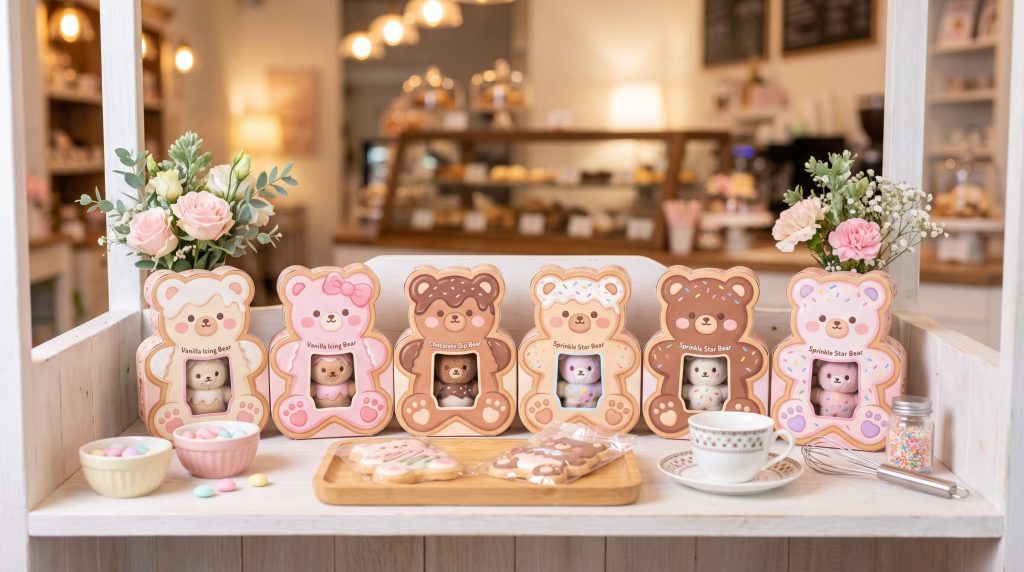
Retail buyers often see strong shelf appeal in food-themed plush, but the real decision is not only whether the product looks cute. A bakery plush blind box needs to fit the store’s customer profile, carton economics, packaging tolerance, and reorder calendar. The MayMei Tiny Bear Cookie Plush Blind Box is the kind of soft collectible line that may work well for gift shops, toy retailers, anime-style boutiques, lifestyle stores, and online sellers that want a gentle, snack-inspired plush assortment.
This guide focuses on the commercial questions buyers should ask before requesting a quote or placing a test order. Because product specifications, stock status, MOQ, and certification details can vary by supplier, treat this as a sourcing checklist rather than a claim about one fixed offer.
Why a bakery plush blind box needs more than cute product photos
Cookie, bear, and bakery themes are easy to understand at first glance. That is useful for impulse retail, especially when shoppers are buying small gifts, desk companions, bag decorations, or collectible plush. However, a buyer still needs to confirm how the blind-box format supports sales instead of creating inventory risk.
Start by defining the buyer type you are serving:
- Gift shops: need packaging that looks clean on shelves and feels presentable as a small present.
- Toy and collectible stores: need assortment clarity, character appeal, and repeat-purchase potential.
- Anime and lifestyle boutiques: often compare plush blind boxes with bag charms, badges, and small figures for add-on sales.
- Vendedores online: need product photos, dimension confirmation, and packaging protection to reduce damage complaints.
- Pop-up vendors: need compact carton planning and fast display setup.
A practical decision rule: if your customers respond well to soft textures, pastel colors, food motifs, and mystery packaging, the product may deserve a test. If your store is driven mainly by licensed character demand, confirm that the design language and brand recognition are enough for your shoppers before ordering deeply.
Match Tiny Bear Cookie plush to the right shelf and basket size
Before comparing quotes, decide where the MayMei Tiny Bear Cookie Plush Blind Box would live in your store. A bakery-themed plush line can be positioned as a collectible toy, a small gift, a checkout add-on, or part of a kawaii lifestyle display. Each placement changes the buying logic.
The table below can help buyers evaluate whether this style fits their retail plan.
| Retail question | What to check | Buyer action |
|---|---|---|
| Who is the likely shopper? | Gift buyer, plush collector, student, office worker, or blind-box fan | Match the product to your strongest customer segment, not only to trend photos |
| Where will it be displayed? | Checkout counter, plush wall, bakery-themed table, or online listing | Measure shelf depth and confirm box dimensions before ordering cases |
| Is the theme easy to explain? | Bear character plus cookie or dessert styling | Use simple merchandising language such as soft bakery surprise plush |
| Does it pair with other items? | Badges, keychains, small figures, stationery, gift bags | Create bundles or basket-builders if your margin model supports it |
| How sensitive is packaging condition? | Blind boxes often sell better when corners and seals look clean | Ask how inner boxes are protected inside master cartons |
| Can customers buy multiples? | Mystery format may encourage repeat purchases | Confirm assortment structure and whether duplicates are possible |
| What is the return risk? | Damaged boxes, wrong expectations, or unclear size | Prepare accurate listing notes and product photos for online sales |
| How will it be reordered? | Sales velocity, supplier availability, freight timing | Set a reorder trigger before your first shipment arrives |
If you already sell cute plush lines, compare this product with other soft collectible categories. For example, the romantic plush blind box buying guide shows how occasion-driven plush can be evaluated for gifting and display planning. If your shelves also mix in hard collectibles, the small figure sourcing guide is a helpful cross-reference for planning how plush and figures can share the same display space.
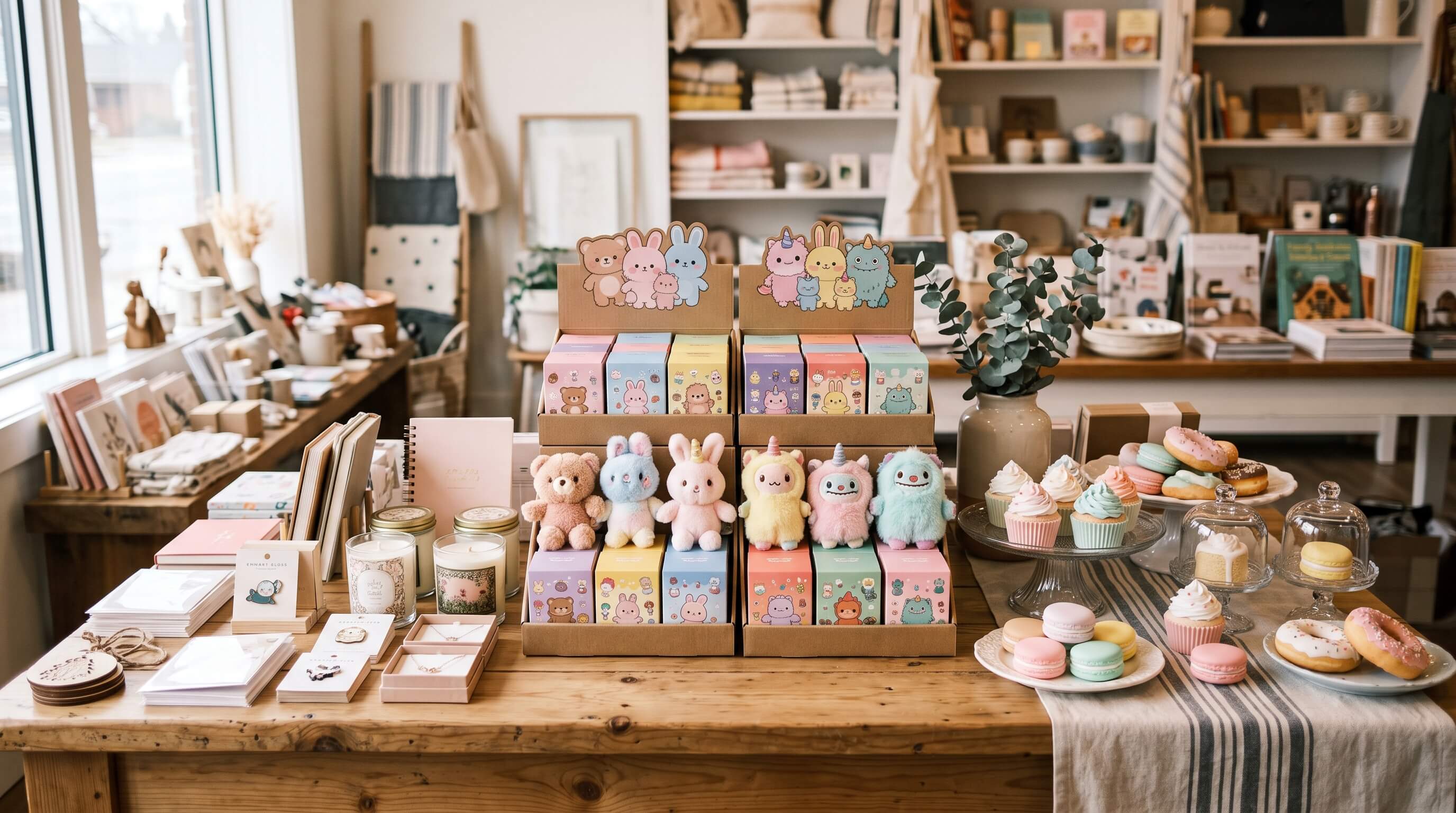
Confirm plush texture, cookie details, and blind-box format before quoting
Product photos rarely answer every purchasing question. For plush blind boxes, small specification differences can change both perceived value and after-sales risk. Buyers should request written confirmation rather than relying only on images.
Ask the supplier to confirm:
- Approximate plush size and whether size varies by character.
- Main outer material and filling description, if available.
- Whether each unit is individually sealed or boxed.
- Number of designs in the series and whether there is a hidden or chase style.
- Whether a full set can be ordered or whether cases are random assortment only.
- How the blind box is marked for SKU, barcode, or item code needs.
- Whether product photos are available for retail listing use.
For a test order, buyers often use planning quantities rather than committing to a deep buy immediately. As an example, a small boutique may compare one display case for shelf testing versus several cases for an online launch. The right quantity depends on MOQ, carton configuration, expected sell-through, and how quickly you can reorder.
Do not assume that every supplier uses the same case pack or assortment ratio. If complete-set selling matters to your store, ask directly whether the case structure supports that strategy.
How carton math changes MayMei plush buying decisions
The quoted unit price is only one part of the purchasing decision. For a bakery-themed plush line, the larger issue is whether the landed cost still supports your target retail price after carton volume, freight, handling, and possible damage allowance are considered.
Use a simple landed cost worksheet before approving an order:
- Quoted unit cost from the supplier.
- Inner box or display box cost, if charged separately.
- Estimated freight based on carton size and weight.
- Import duty, taxes, customs brokerage, or local fees where applicable.
- Payment fees or currency conversion costs.
- Damage or shortage allowance for planning purposes.
- Marketplace commission or fulfillment cost if selling online.
As a planning reference, compare two scenarios: a small test order with a higher freight cost per unit and a larger case order with better freight efficiency but greater inventory exposure. The better choice is not always the lower unit cost. If you are unsure about demand, a controlled test may protect cash flow better than a large first order.
If you are building a broader add-on strategy, compare plush blind boxes with smaller items such as low-cost plush add-ons. The goal is to understand which items create impulse purchases and which require more shelf storytelling.
Soft CTA: If you are preparing a quote request, collect your desired quantity range, destination country, packaging expectations, and target selling channel first. A clearer inquiry usually makes supplier comparisons faster and more accurate.
Protect bakery-style packaging from dents, dust, and shelf damage
Blind-box packaging is part of the product experience. A customer may accept minor variation in plush texture, but crushed boxes, dusty cartons, or weak seals can reduce perceived value quickly. This is especially important for cute bakery themes, where clean presentation supports giftability.
Before ordering, ask how individual boxes are packed inside inner cartons and master cartons. If the item will be sold online, also consider whether the retail box needs extra mailer protection. Buyers should not assume packaging is e-commerce ready unless confirmed.
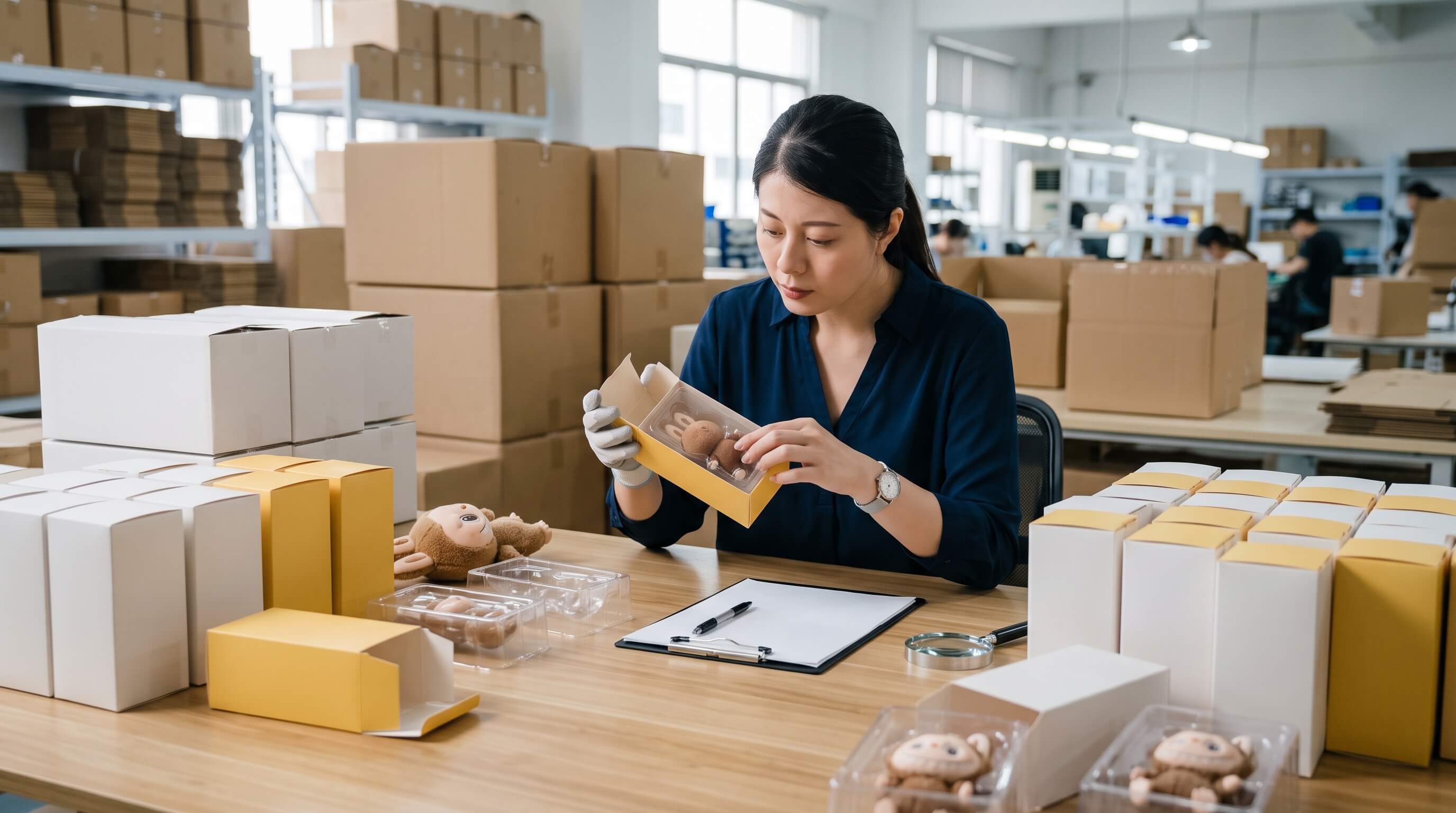
Useful packaging and quality checks include:
- Confirm outer box dimensions and whether boxes are easy to stack.
- Ask for photos of inner packing and master carton arrangement.
- Check whether carton labels match your warehouse receiving needs.
- Request clarification on acceptable packaging defects, such as corner dents or seal issues.
- Inspect sample plush for loose threads, uneven stitching, stains, or odor.
- Check that small accessories, tags, or hang loops are securely attached if included.
- Confirm labeling, language, and safety requirements for your destination market.
Compliance requirements can differ by country, buyer type, and sales channel. Buyers should verify applicable toy safety, textile labeling, age grading, import documentation, and marketplace rules for their own market before selling. Do not treat a general supplier statement as a substitute for your own compliance review.
Plan reorder timing before the cookie theme loses momentum
Food-themed plush can perform well when the display feels fresh, but blind-box sales can slow if shelves stay half-empty or if customers only see leftover duplicates. Reorder planning should begin before the first shipment sells through.
Set practical reorder triggers. For example, a retailer may decide to review sales when 50% of the first order has sold, reorder when inventory reaches 30%, and reduce future quantity if the same characters remain unsold. These are planning references only, not fixed rules.
Ask suppliers about estimated preparation time, shipping method options, carton measurements, and whether availability may change between orders. Avoid promising customers a restock date until you have written confirmation. If the product is part of a seasonal bakery, Valentine, cafe, or gift display, build in extra time for customs, local delivery, and merchandising setup.
For seasonal comparison, the seasonal blind box planning guide explains why ordering windows and sell-through timing matter when a product is connected to a specific shopping occasion.
Red flags when comparing Tiny Bear Cookie plush quotes
A low quote can be attractive, but it should not be accepted without context. The most common sourcing mistakes happen when buyers compare unit prices while ignoring assortment, packaging, freight, and after-sales terms.
Watch for these red flags:
- Unclear assortment information: the supplier cannot explain how many designs are included or how randomization works.
- No carton details: case quantity, carton size, and packing method are missing from the quote.
- Only edited product images: there are no realistic sample, packaging, or carton photos available for review.
- Vague material claims: plush fabric, filling, or accessory details are not described clearly.
- Compliance overpromising: the supplier claims universal approval without documents or market-specific details.
- Pressure to order too much: the recommended quantity does not match your test plan, retail space, or cash flow.
- No defect process: the quote does not explain how shortages, damaged boxes, or incorrect items are handled.
If your shop also sells accessories, compare the blind box against related small-format products such as the bag charm retail guide. This helps decide whether the bakery plush should be a hero item, a bundle component, or a checkout add-on. For a higher-price anchor, the big-size figure sourcing guide shows how larger collectibles can frame the value of a smaller plush blind box on the same shelf.
Questions to send with your MayMei Tiny Bear inquiry
A good inquiry makes it easier to compare suppliers fairly. Instead of asking only for the best price, send a structured request that covers product, packaging, shipping, and documentation.
Hello, we are evaluating the MayMei Tiny Bear Cookie Plush Blind Box for retail sale. Please quote based on the quantity ranges below and confirm product size, assortment structure, case pack, carton dimensions, packaging method, available photos, estimated preparation time, shipping options to our destination, and any available compliance or labeling documents. Please also explain your process for damaged boxes, shortages, or incorrect items.
Include this checklist in your message:
- Target order quantity or quantity range.
- Destination country and preferred shipping method, if known.
- Sales channel: physical store, online shop, marketplace, event, or wholesale resale.
- Need for full sets, random cases, or mixed assortment.
- Packaging sensitivity: gift-ready shelf boxes, mailer protection, or display cases.
- Barcode, label, invoice, or customs documentation requirements.
- Sample request, if you need to inspect texture and packaging first.
- Expected launch window and latest acceptable arrival date.
Stronger CTA: Before placing a first order, prepare this inquiry checklist and request comparable quotes from suppliers using the same quantity, destination, and packaging assumptions. Clear comparisons help you choose the offer that best fits your margin, timing, and customer expectations.
PERGUNTAS FREQUENTES
Is the MayMei Tiny Bear Cookie Plush Blind Box suitable for small retailers?
It may be suitable if the store already sells cute plush, blind boxes, gifts, or kawaii lifestyle products. Small retailers should confirm MOQ, case pack, packaging condition, and reorder availability before committing to a large quantity.
What should buyers confirm before requesting a bakery plush blind box quote?
Buyers should confirm plush size, assortment structure, case quantity, carton dimensions, packaging method, destination shipping options, and any available labeling or compliance documents relevant to their market.
How can retailers reduce blind-box inventory risk?
Retailers can start with a controlled test quantity, track sell-through by week, monitor duplicate or slow-moving designs, and set a reorder trigger before inventory becomes too low.
Why does packaging matter for plush blind boxes?
Packaging affects giftability, shelf presentation, and online customer satisfaction. Dented boxes, weak seals, or dusty cartons can reduce perceived value even when the plush item itself is acceptable.
Should buyers compare this plush with other blind box formats?
Yes. Comparing plush blind boxes with figures, badges, bag charms, and seasonal blind boxes helps retailers decide the right price point, display strategy, and basket-building role.
Before you place that first order
The MayMei Tiny Bear Cookie Plush Blind Box can be an appealing bakery-themed addition for retailers that understand their customer base and buying limits. The safest sourcing process is practical: confirm specifications, compare landed cost, inspect packaging expectations, verify market requirements, and plan reorders before the launch.
A cute product photo may start the conversation, but a clear quote, realistic carton math, and disciplined test order are what help turn a plush blind box into a controlled retail opportunity.