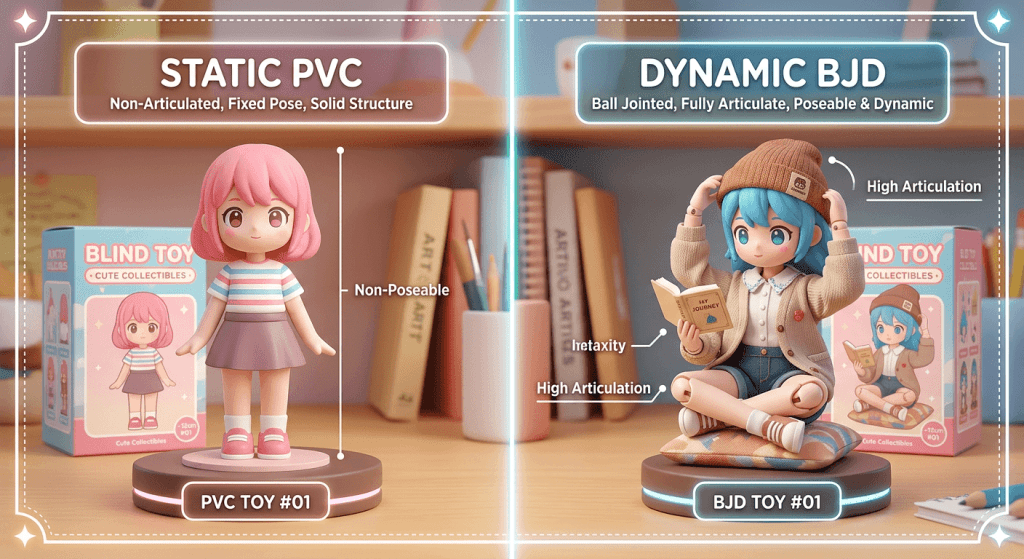




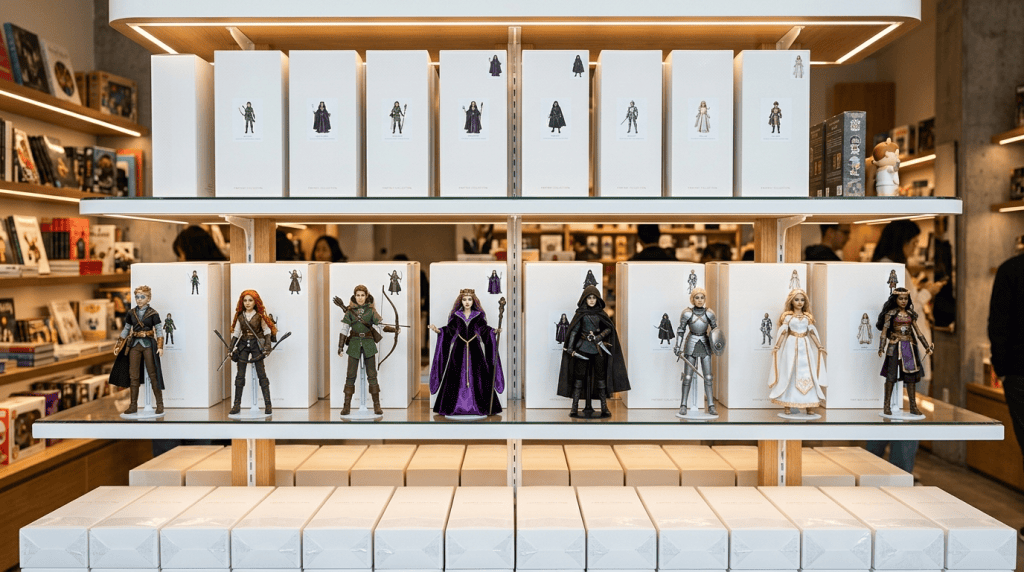
Deciding which new doll line earns shelf space takes more than judging whether it looks appealing in supplier photos. Scale, articulation, character variety, outfit detail, case configuration, packaging durability, and freight all affect whether new 1/8 BJD blind boxes fit a doll shop or art toy store.
The word “best” is therefore store-specific. A fashion-led series may suit collectors who enjoy dressing and displaying dolls, while an expressive fantasy series may perform better in an art toy shop. This guide explains how to build a defensible shortlist without relying on unsupported rankings or product photos alone.
Which stores are a good fit for 1/8-scale BJD series?
The format is most relevant when shoppers want more interaction than a static mini figure provides. Before requesting quotes, identify the customer behavior the series is expected to serve.
- Doll specialists: Look for credible articulation, removable garments, accessory compatibility, and a scale that complements existing displays.
- Art toy stores: Prioritize distinctive sculpting, a coherent character concept, shelf impact, and crossover appeal to designer-toy collectors.
- Gift retailers: Examine whether the packaging explains the surprise format and whether small parts or delicate accessories complicate the intended recipient profile.
- Online sellers: Confirm master-carton protection, sellable-box condition, product photography availability, and clearly documented assortment information.
- Convention vendors: Favor designs that can be understood quickly from a display sample, but calculate the cost of opening units for merchandising.
A mixed store should also compare scale before committing. The 1/12 Sakura BJD buying guide provides a useful smaller-scale reference, while the 1/6 Bonnie BJD sourcing guide illustrates questions associated with a larger format. Do not assume collectors view these scales as interchangeable.
Build a scorecard instead of ranking by looks
Start with a scorecard rather than a visual popularity contest. Ask each supplier for the same information, record unanswered points, and weight the criteria according to the store’s audience.
| Evaluation point | What to confirm | Retail decision |
|---|---|---|
| Finished dimensions | Actual assembled height and any variation caused by ears, hats, or shoes | Check shelf spacing, display cases, and shipping-box fit |
| Articulation | Joint locations, range of motion, stability, and whether a stand is included | Decide whether the play and posing value supports the retail position |
| Body and head materials | Material specification for major parts, hair, eyes, clothing, and accessories | Compare appearance, handling expectations, and care instructions |
| Series composition | Regular designs, possible secret design, and stated assortment method | Estimate duplicate risk and collector completion potential |
| Clothing and accessories | What is removable, what is permanently attached, and what each design includes | Avoid advertising compatibility or contents that have not been confirmed |
| Retail packaging | Individual box dimensions, sealing method, identification markings, and inserts | Assess shelf presentation and resistance to tampering |
| Case configuration | Units per sealed display and displays per master carton | Translate the quote into usable store-level inventory |
| Documentation | Available product, material, labeling, and test documentation | Review suitability for the destination market before importing |
Give extra weight to information that can be verified from samples, specifications, packaging photos, or documents. A supplier repeatedly answering “standard” without dimensions, materials, or case details has not provided enough information for a comparable quote.
Character design must work beyond the reveal photo
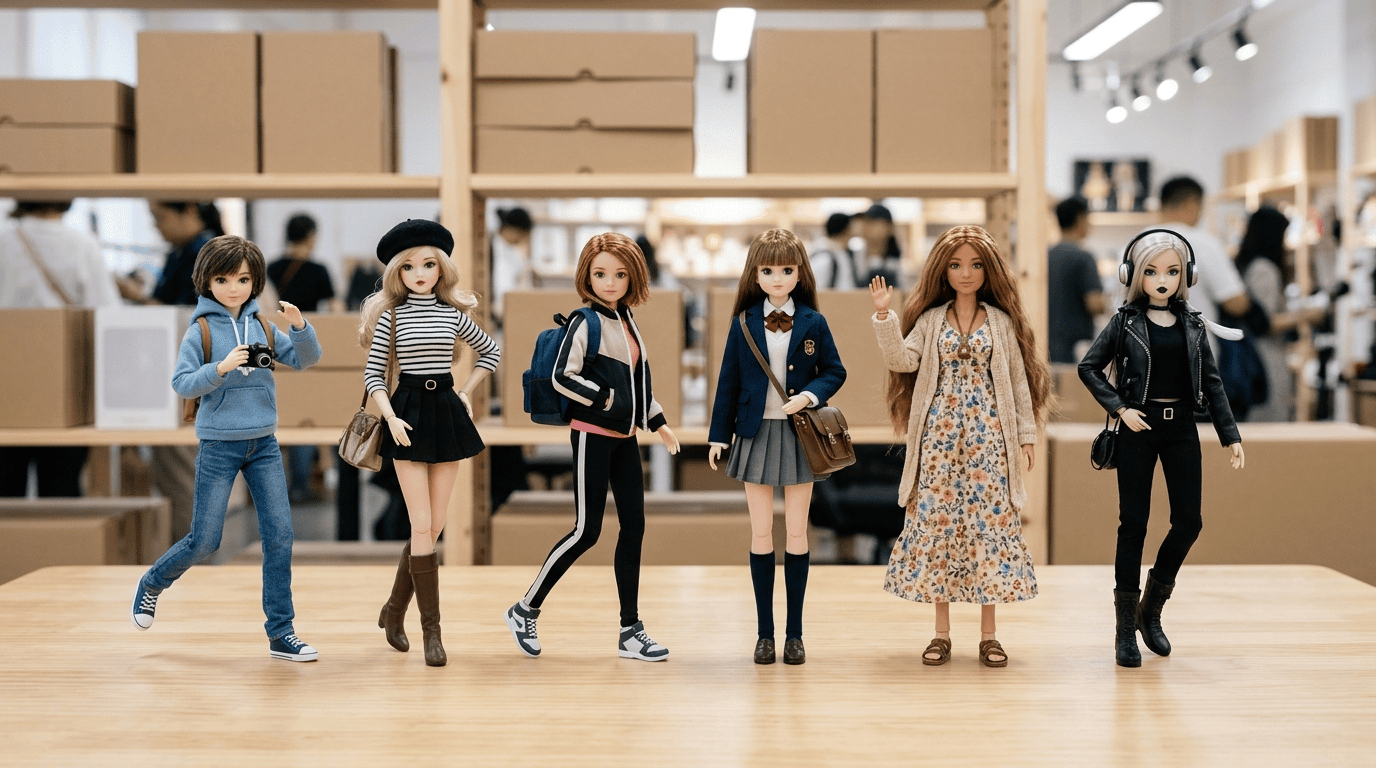
A new series can attract attention with elaborate artwork yet disappoint at retail if the physical doll is hard to pose, the clothing obscures the joints, or most characters look too similar from a distance. Request front, side, and back views as well as close-ups of hands, face paint, hair attachment, shoes, garment closures, and included accessories.
Use three merchandising tests:
- One-character test: Would a shopper be satisfied receiving any regular character, not only the most promoted design?
- Full-series test: Do silhouettes, colors, outfits, or expressions make the lineup feel varied when displayed together?
- Replacement test: If one small accessory is lost or arrives detached, can staff identify the correct contents and explain the issue accurately?
For another perspective on evaluating a doll line’s visual theme, outfit presentation, and retail positioning, review the Luluya BJD blind box retail guide.
How case packs change the risk of a promising doll line
MOQ and case quantity are different questions. MOQ is the minimum amount accepted for an order, while case configuration determines how that inventory arrives and how easily it can be divided among locations. Ask whether the MOQ is expressed in individual boxes, sealed display cases, master cartons, or a monetary threshold.
Also confirm whether a sealed display is described as non-repeating, randomly packed, or simply factory sealed. These terms should not be treated as equivalent. The sealed series sets versus mixed assortments guide explains how each format changes duplicate risk and merchandising control.
As a planning example, a retailer with two stores may compare one sealed display per location with a larger mixed purchase held centrally for replenishment. The correct choice depends on units per case, duplicate policy, display needs, and the ability to rebalance inventory. This is an inventory example, not a statement of any supplier’s MOQ.
Before committing to volume, consider requesting a quote for both the smallest acceptable commercial order and the next efficient carton tier. That comparison can reveal whether the apparent unit saving justifies the additional inventory exposure.
Calculate 1/8 BJD blind box cost at the sellable-unit level
A quoted unit price is not the final inventory cost. Larger articulated dolls may occupy more carton volume than smaller blind-box figures, and decorative packaging can increase dimensional freight exposure. Calculate landed cost using the quantities and shipping terms actually quoted.
Planning formula: landed order cost = merchandise cost + freight + insurance, duties, taxes, brokerage, payment charges, inspection costs, and other applicable import expenses. Divide by the expected number of sellable units, not merely the number ordered.
Allow for operational costs that may not appear on the supplier invoice: display samples, damaged retail boxes, customer-service replacements, marketplace fees, photography, and local fulfillment. Tax, duty, customs, and valuation treatment vary by destination, so buyers should verify current requirements with qualified local resources.
A useful quote comparison puts every offer into the same table: currency, trade term, carton count, gross weight, carton dimensions, shipment method, and included packaging. If one quote excludes freight and another includes delivery, the unit prices are not yet comparable.
Soft next step: Send a preliminary specification request before asking for a final price. Accurate dimensions, case quantities, and carton data make the landed-cost estimate more meaningful.
Protect joints, outfits, and gift-ready boxes in transit
BJD-style products combine several inspection points: articulated bodies, painted faces, hair parts, garments, and small accessories. Ask how the doll is restrained inside the inner packaging and whether accessories are bagged, nested, or attached. Packaging should limit movement without placing avoidable pressure on delicate projections or clothing.
For a sample or pre-shipment review, document a repeatable sequence:
- Inspect the shipping carton and retail box for crushing, moisture exposure, or broken seals.
- Compare the doll, clothing, and accessories with the confirmed contents list.
- Check visible paint application, scratches, stains, loose parts, and garment stitching.
- Move each intended joint gently and confirm the doll can hold representative poses.
- Review whether the stand, if specified, supports the doll securely.
- Photograph findings by carton and unit so issues can be discussed precisely.
Buyers should request available labeling, material, age-grading, warning, and testing information relevant to the destination market. Do not infer compliance from a CE-style mark, marketplace listing, or a verbal assurance. Product classification and requirements can differ by market and intended use, so obtain appropriate professional guidance when necessary.
New releases need a reorder plan before the first order
Ask separately about production readiness, order processing, and transit. A supplier’s production estimate is not the same as door-to-door delivery. Build the schedule from sample approval, order confirmation, production or allocation, inspection, export handling, transport, customs clearance, and local delivery.
For planning purposes, a store might review sell-through after the first quarter of its test quantity has sold, then reassess again near the halfway point. Those are example review triggers rather than universal reorder thresholds. The actual trigger should reflect supplier lead time, freight mode, sales volatility, and available cash.
New series carry two opposing risks: ordering too deeply before demand is proven, and waiting so long to reorder that customer interest fades. Ask whether repeat orders are expected to use the same case configuration and whether packaging or assortment details could change between production batches. No availability should be assumed until confirmed in writing.
Questions that expose an incomplete 1/8 BJD quote
A strong inquiry makes it easier to compare suppliers and reduces follow-up. Include the following points in one message:
- Series name, version, and requested quantity or carton tier
- Finished doll dimensions and scale reference
- Body, head, hair, eye, clothing, and accessory materials
- Joint count or articulation diagram, plus stand details
- Regular-character count, secret-character information, and assortment method
- Units per display case and displays per master carton
- Individual-box and master-carton dimensions and weights
- MOQ, sample options, quote validity, currency, payment terms, and trade term
- Estimated production or dispatch basis and shipping options
- Retail packaging photos, contents list, and available compliance documentation
- Procedure for shortages, transit damage, defects, or incorrect items
Inquiry template: “Please quote the specified 1/8-scale BJD blind box series for [destination and planned quantity]. Please include the exact version, unit and case configuration, materials, articulation details, package and carton dimensions, weights, MOQ basis, trade term, payment terms, estimated order-processing basis, available documents, and issue-resolution procedure. Please also confirm whether the display case is sealed and how the assortment is configured.”
Pause the comparison if the version is unclear, case quantities change between messages, carton data are unavailable, or payment is requested before basic commercial details are documented. Other warning signs include copied images with no packaging proof, pressure to treat a sample as compliance evidence, and vague answers about missing accessories or damaged boxes.
Ready to build a shortlist? Prepare the destination, target quantity, preferred scale, customer profile, and required delivery window, then request itemized quotes. Compare only offers that identify the same series version, packaging level, case quantity, trade term, and shipping scope.
FAQ
What should retailers confirm about 1/8 BJD blind boxes first?
Confirm the finished dimensions, articulation, materials, included clothing and accessories, series composition, and case configuration. The scale label alone does not provide enough information for shelf planning or quote comparison.
Is a sealed case guaranteed to contain every regular character?
Not necessarily. Ask the supplier to document the assortment method and whether a sealed display is non-repeating. “Factory sealed,” “random assortment,” and “complete regular set” can describe different configurations.
How should a store choose an opening order quantity?
Base the opening order on expected customer fit, units per case, display requirements, available cash, and reorder timing. A smaller test may reduce inventory exposure, but buyers should compare it with the freight and carton efficiency of the next order tier.
What quality points matter most for articulated doll blind boxes?
Check joint movement and pose stability, paint application, part attachment, garment condition, accessory completeness, stand function when included, and retail-box condition. Record inspection findings with unit-level photographs.
How can buyers compare quotes with different shipping terms?
Normalize each quote by currency, trade term, product quantity, carton configuration, freight scope, duties and taxes, and other import costs. Compare estimated landed cost per expected sellable unit rather than quoted product price alone.
Before adding a new BJD series to the shelf
The best choice is the line that matches the store’s customers and survives a disciplined commercial review. Verify the physical specifications, assortment, case pack, landed-cost assumptions, packaging, documentation, and reorder conditions before paying. Attractive character art can start the conversation, but complete specifications and comparable quotes should decide the order.