



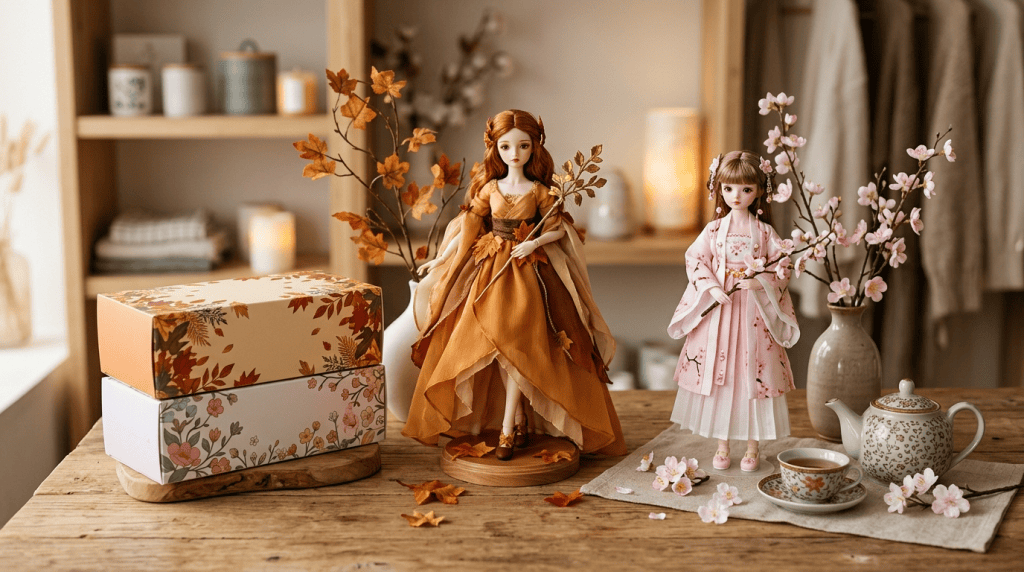
A pretty listing photo tells you almost nothing about whether a character-doll series will sell through in your store. Scale, articulation, assortment structure, packaging condition, case quantity, and replenishment terms all decide whether the line fits collectors, gift buyers, or casual blind-box shoppers.
The Momotale Four Seasons Tea Tales series should therefore be treated as both a collectible and an inventory commitment. Because the available product information does not confirm its exact dimensions, materials, character count, hidden-edition structure, or case configuration, ask for a written specification sheet before you compare offers.
Which Shoppers Will Actually Buy Four Seasons Tea Tales?
The first decision is not how many units to buy, but which customer is expected to buy them. BJD-style blind boxes can appeal to collectors interested in posing and display, while the seasonal tea theme may also suit gift-oriented merchandising. That does not automatically make the series right for every store.
- Collectible toy stores: Confirm articulation, scale, included accessories, and whether the series has a complete-set structure.
- Gift and lifestyle retailers: Check whether the outer box communicates the seasonal theme clearly without staff explanation.
- Online sellers: Request accurate packaged dimensions and weights for fulfillment and shipping-cost planning.
- Hobby and doll shops: Ask whether clothing, hands, hair pieces, or accessories are removable and whether any parts are interchangeable.
- Pop-up sellers: Favor quantities you can display and sell through without relying on a later replenishment.
Retailers comparing adjacent BJD formats can also review the Luluya BJD blind box buying guide and the Sakura 1/12 BJD guide. These comparisons help you identify which specifications should be documented instead of assuming all BJD blind boxes share the same construction or scale.
Build a Four Seasons Tea Tales Specification Brief
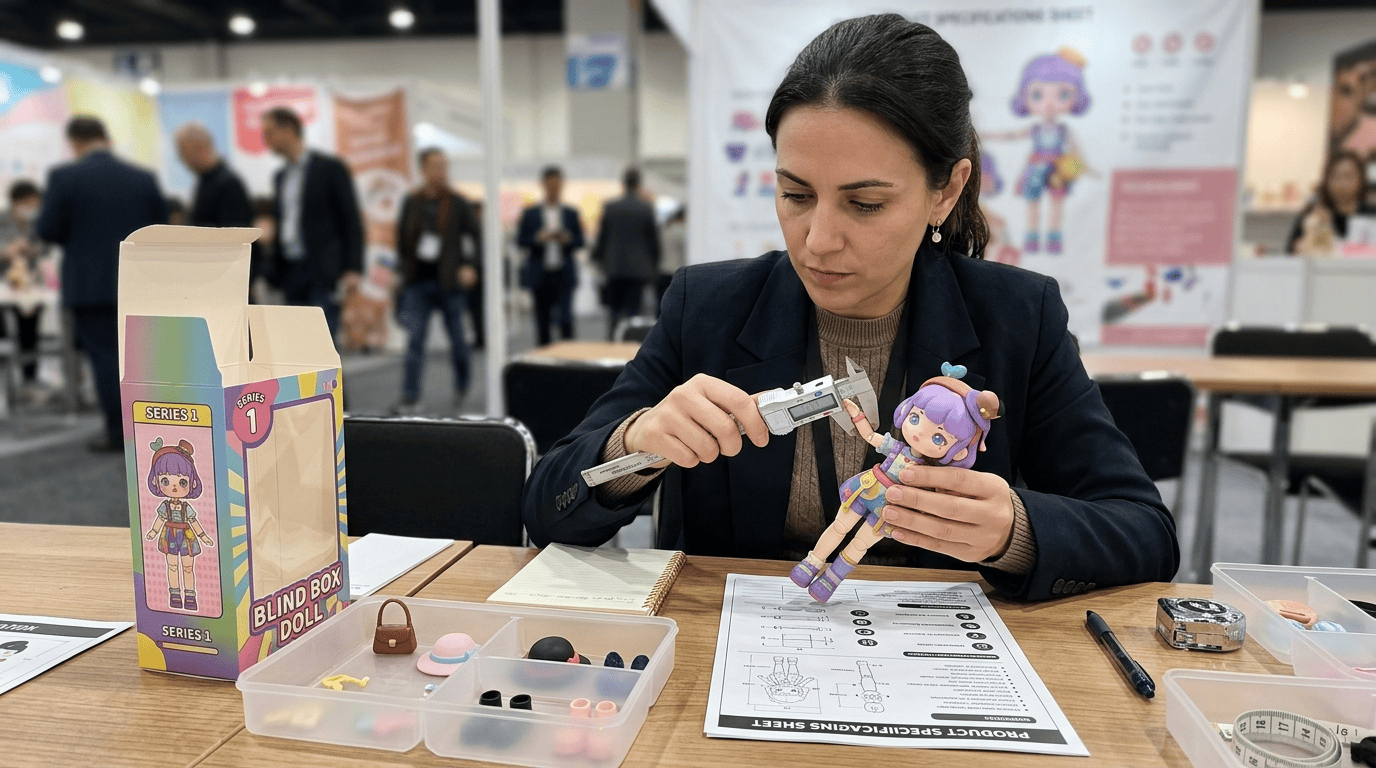
A quotation is hard to judge when the product description is just a series name and promotional images. Send every supplier the same specification brief and ask for answers in writing. If a term such as “BJD” appears, confirm what it means for this particular product rather than assuming a specific joint system.
| Item to confirm | Why it affects the buying decision | Question for the quote |
|---|---|---|
| Doll height or scale | Determines shelf placement, display compatibility, and shipping volume | What is the assembled height, and how is scale described? |
| Body construction | “BJD” may be used differently across product listings | Which joints move, and what mechanism connects them? |
| Materials | Affects handling, customer expectations, and compliance review | What materials are used for the body, hair, clothing, and accessories? |
| Regular designs | Needed for assortment and complete-set planning | How many regular designs belong to the series? |
| Special editions | Can change the contents of a sealed case | Is there a secret or special design, and how does it affect a regular design? |
| Included pieces | Prevents confusion over stands, clothing, props, or spare parts | What is included with every individual box? |
| Individual and case packaging | Influences display quality and damage risk | What are the box and master-carton dimensions and gross weights? |
| Assortment method | Determines duplicate risk and set-selling options | Is the offer for a sealed series case, mixed units, or loose random boxes? |
Request current product photos that show the sealed box, internal protection, doll body, accessories, and carton markings. A polished character render alone does not confirm the deliverable product.
Sealed Cases, Loose Boxes, and Duplicate Risk
Case format changes the retail proposition. A factory-sealed series case can help when you want a documented assortment, but never assume no-duplicate or complete-set behavior. Ask the supplier to explain the packing logic and the effect of any special edition in plain language.
Loose random units can support a smaller test, but their source and assortment history matter. Units removed from opened cases may not carry the same probability profile as an untouched case. Ask whether loose boxes were randomly selected, consolidated from multiple cases, or pulled from cases after certain designs had already been identified.
As a planning example, a retailer might split a test allocation among single-box sales, one display sample, and a small reserve for customer-service issues. Let the confirmed case quantity drive the split rather than an invented standard. For a fuller treatment of the trade-offs, see the guide to sealed series sets versus mixed blind box assortments.
If the assortment format is unclear, pause the quantity decision and request a carton packing statement before proceeding.
Cost the Series at the Sellable-Unit Level
The quoted unit price is only one part of the commercial decision. Estimate landed cost using the product cost, supplier-side handling where applicable, freight, insurance if used, import duties or taxes, customs-related charges, domestic delivery, payment fees, and an allowance for damaged or unsellable packaging.
Use packaged carton measurements rather than doll height when requesting a freight estimate. Decorative blind-box packaging and protective inserts can make a lightweight item surprisingly volume-intensive. Confirm whether the quotation is priced by individual box, sealed case, or master carton.
- Convert every quotation to the same number of sellable blind boxes.
- Separate product cost from freight and other charges.
- Record the applicable shipping term and the point where responsibility transfers.
- Estimate landed cost per sellable unit, not merely per shipped unit.
- Run a second scenario with a modest damage allowance for planning purposes.
A lower product quote may end up less competitive if it forces an unfavorable carton quantity, has weak packaging protection, or creates expensive domestic fulfillment. Verify duties, taxes, customs classification, and import requirements with appropriate professionals in the destination market.
Keep Doll Parts and Gift-Ready Boxes Intact in Transit
Articulated dolls may include small components, clothing, hair pieces, or accessories, but the exact Momotale contents must be confirmed. Ask how the doll and every separate piece are restrained inside the retail box. Movement within the package can cause scuffing, deformation, detached parts, or poor presentation even when the shipping carton arrives intact.
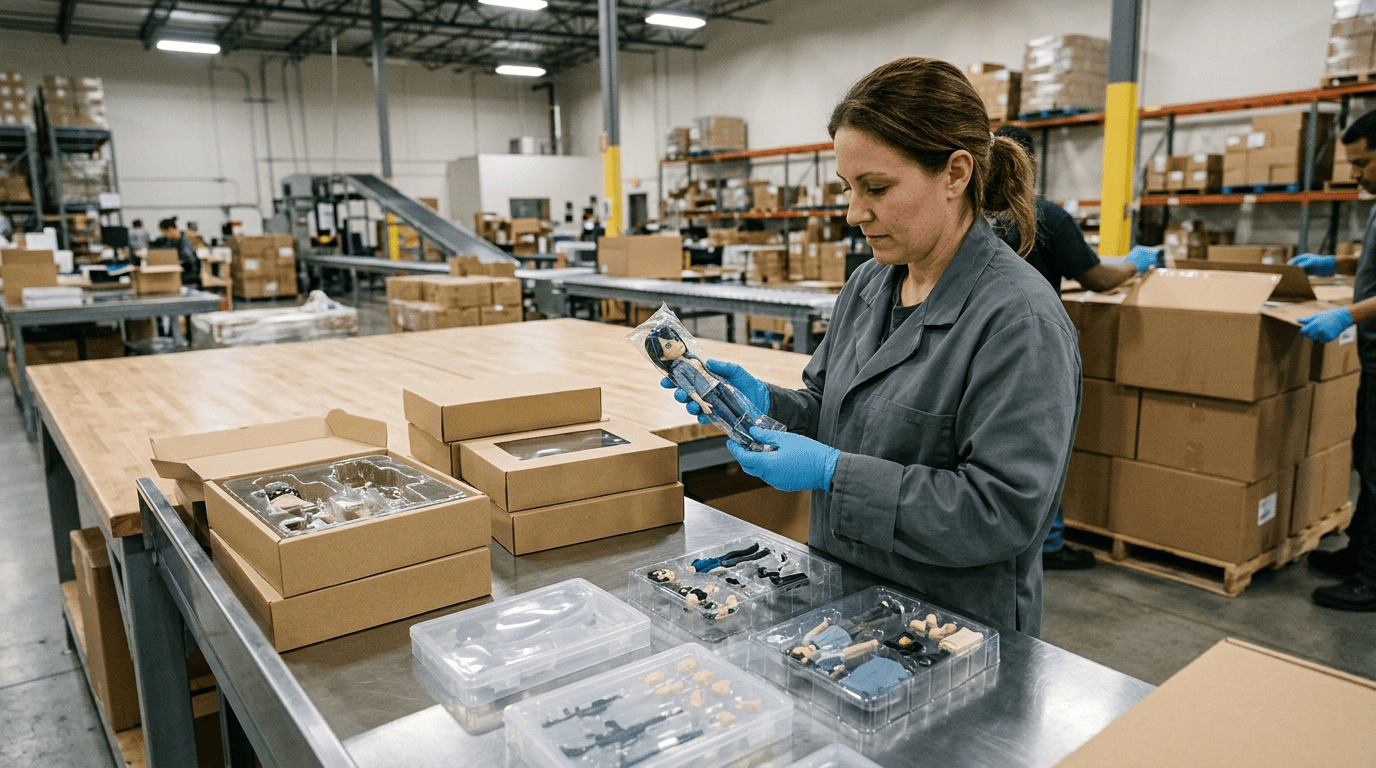
Before approving a commercial order, request packaging details and set up a receiving check:
- Inspect master cartons for crushing, moisture, punctures, and resealing.
- Count cases and individual units against the packing list.
- Photograph carton labels and any damage before opening affected cartons.
- Sample boxes from more than one carton rather than checking only the top layer.
- Check joint function, surface finish, clothing placement, accessory count, and box condition against the approved reference.
- Document discrepancies by carton and unit so the supplier can review the evidence.
Also request applicable age grading, warnings, labeling information, and product documentation for your destination market. Requirements vary, and the series name or product category does not prove compliance. Avoid making safety or suitability claims to customers until the relevant documentation has been reviewed.
Time Reorders Around Real Arrival Dates, Not Promises
A quoted production or dispatch estimate is not the same as an in-stock date. Ask suppliers to separate order preparation, production if applicable, inspection, export handling, main transport, customs clearance, and final delivery. Confirm which stages are estimates and whether timing starts at deposit, artwork approval, or another milestone.
As a planning example, a retailer may set a reorder trigger based on average weekly sales plus the full replenishment cycle and a buffer. If sales run eight units per week and the confirmed replenishment cycle is several weeks, waiting until only eight units remain would likely be too late. Use your actual sales and supplier-confirmed timing rather than copying this example.
Seasonal naming does not necessarily mean the series has a fixed holiday deadline, but the Four Seasons concept may support rotating displays. Test whether customers respond to the full collection, individual character imagery, or tea-themed gifting before increasing the next order.
When Two Momotale Quotes Are Not Yet Comparable
Two offers are not comparable if one is priced by loose box and the other by sealed case, or if freight, accessories, taxes, and packaging are handled differently. Warning signs include vague answers about assortment, refusal to provide carton data, inconsistent product photos, changing material descriptions, or pressure to pay before the product version is documented.
Use one inquiry format for every prospective source:
Please quote the Momotale Four Seasons Tea Tales series and confirm the exact product version, doll height, materials, joint construction, included accessories, number of regular designs, special-edition arrangement, units per sealed case, cases per master carton, carton dimensions and weight, minimum order requirement, price basis, payment terms, preparation or production estimate, shipping term, packaging method, available product documentation, and process for reporting shortages or damage.
Also ask how samples relate to the commercial order. A sample can help you evaluate construction and presentation, but it may not establish the packing pattern of a sealed case. Keep the approved specification, photos, quotation, and packaging description together as the purchase reference.
Scale is another frequent source of confusion. The Bonnie 1/6 retail sourcing guide shows why buyers should compare stated scale, assembled dimensions, and carton impact instead of treating every articulated blind-box doll as interchangeable.
Before paying for stock, request a written quote tied to a clearly identified version and case format. A complete inquiry makes it easier to compare total cost, expose missing information, and pick an order size that matches your sales channel.
FAQ
What should retailers confirm before ordering the Momotale series?
Confirm the exact version, doll dimensions, materials, joint construction, included pieces, regular-design count, special-edition arrangement, sealed-case quantity, carton data, packaging method, and order terms in writing.
Does a sealed case guarantee a complete set?
Not automatically. Ask for the series packing logic, whether regular designs repeat, and whether a special edition replaces a regular design. The supplier’s written case description should guide the decision.
How should a retailer choose a first order quantity?
Base the quantity on confirmed case packs, available display space, expected weekly sales, cash exposure, and the replenishment cycle. A smaller test can reduce inventory risk, but loose-box sourcing may introduce assortment uncertainty.
Which quality checks matter for a BJD blind box?
Check retail-box condition, surface finish, joint movement, clothing placement, accessory count, internal restraint, and consistency with the approved sample or specification. Sample units from multiple cartons when possible.
What documents should import buyers request?
Request product specifications, material information, age grading, warnings, labeling details, packing data, and any documentation relevant to the destination market. Independently verify current customs, safety, and legal requirements.
Before Placing the First Order
The Four Seasons Tea Tales concept may create a distinctive display story, but commercial suitability depends on facts a theme cannot answer. Document the product construction, assortment, case pack, landed-cost assumptions, packaging protection, and replenishment path before committing inventory.
A disciplined first order should produce more than sales: it should reveal which characters attract attention, how quickly sealed and individual formats move, how the packaging survives fulfillment, and when a reorder would be justified.