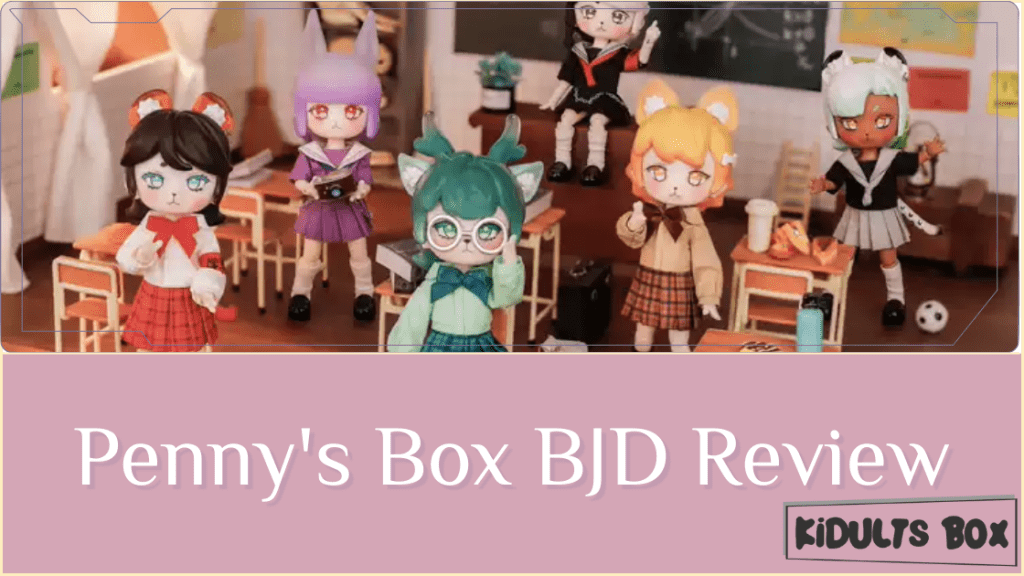




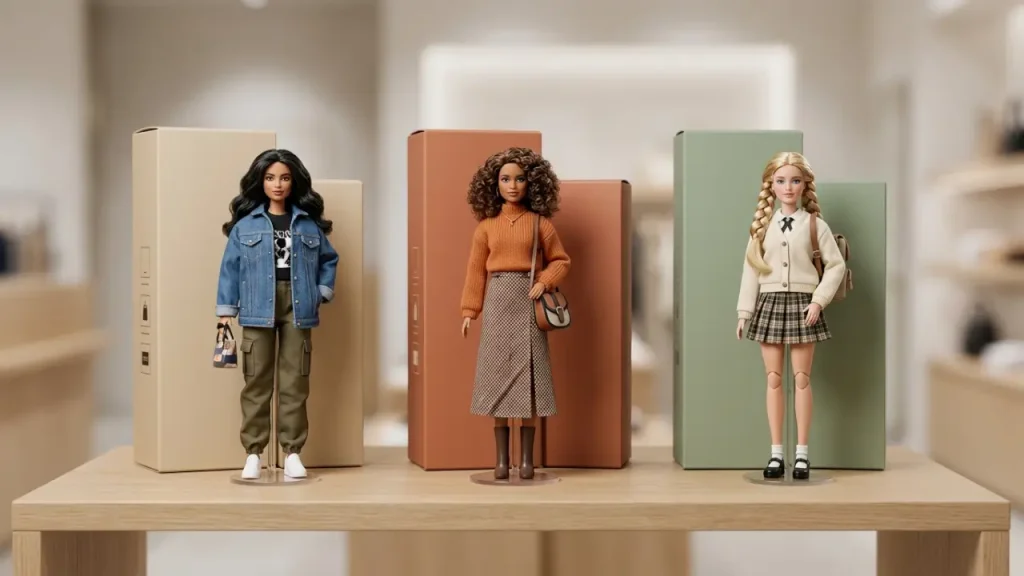
Small-format dolls can look easy to stock, but attractive product photography rarely answers the questions that decide whether a series actually sells at retail. Before choosing between Aurora Bonnie, Nagi Step and No Symptoms, verify scale, articulation, assortment structure, packaging condition and total landed cost so the artwork is not doing all the persuading.
There is no universally best series. The practical choice depends on the customer, the sales channel and confirmed product specifications. This guide provides a comparison framework without assuming unverified details about a particular edition, case pack or supplier.
Which Compact Doll Series Fits Your Customer?
Begin with the intended buyer rather than the character design. A specialist doll shop may prioritize articulation, clothing compatibility and customization potential. A gift retailer may care more about an immediately understandable theme, compact packaging and an accessible unboxing experience.
- Doll collectors: Ask about joint structure, stability, face design, hair format and included accessories.
- Customization buyers: Confirm whether clothing, wigs, eyes or other parts can be changed without damage.
- Gift and lifestyle stores: Review whether the packaging explains the assortment clearly and presents well on a shelf.
- Online retailers: Request accurate dimensions, packaged weight and usable product images for listing preparation.
- Anime, hobby and pop-culture stores: Compare the visual theme with existing customer preferences and nearby product categories.
Aurora Bonnie, Nagi Step and No Symptoms should therefore be treated as three candidates to investigate, not as interchangeable boxes. Ask for the current series sheet for each one, because editions, configurations and packaging may vary.
How to Compare Aurora Bonnie, Nagi Step and No Symptoms
Use the same questions for every quote. If one seller provides a detailed specification sheet and another supplies only promotional images, the offers are not yet comparable.
| Evaluation point | What to request | Why it affects the decision |
|---|---|---|
| Product terminology | Confirmation of whether the item is described as BJD, MJD or another articulated doll format | The terms may not represent identical construction across brands or sellers. |
| Actual dimensions | Standing and seated height, plus head and foot measurements where relevant | A nominal 1/12 label alone does not establish accessory compatibility. |
| Joint system | Images or video showing articulation and how the body is assembled | Posing range, stability and handling expectations can differ. |
| Included contents | Itemized list for the standard designs and any special design | Outfits, shoes, stands and handheld pieces affect perceived value. |
| Assortment map | Number of regular designs, special-design rules and sealed-case configuration | Retailers need to explain buying odds accurately and manage duplicates. |
| Packaging format | Box dimensions, inner protection and case quantity | This influences shelf capacity, damage risk and freight calculations. |
| Replacement process | Procedure and evidence required for missing, incorrect or damaged parts | Multi-part dolls can generate service issues that are difficult to resolve after sale. |
| Order status | Whether the quote concerns available goods, a preorder or a planned restock | The status changes cash-flow and launch planning. |
Record the answers in three columns—one for each series—and leave unknown fields blank. An unknown should not be treated as a favorable specification. Buyers wanting another compact-doll reference can review the Sakura 1/12 BJD sourcing guide and apply the same questions.
Why “1/12 Scale” Still Needs Measurement Checks
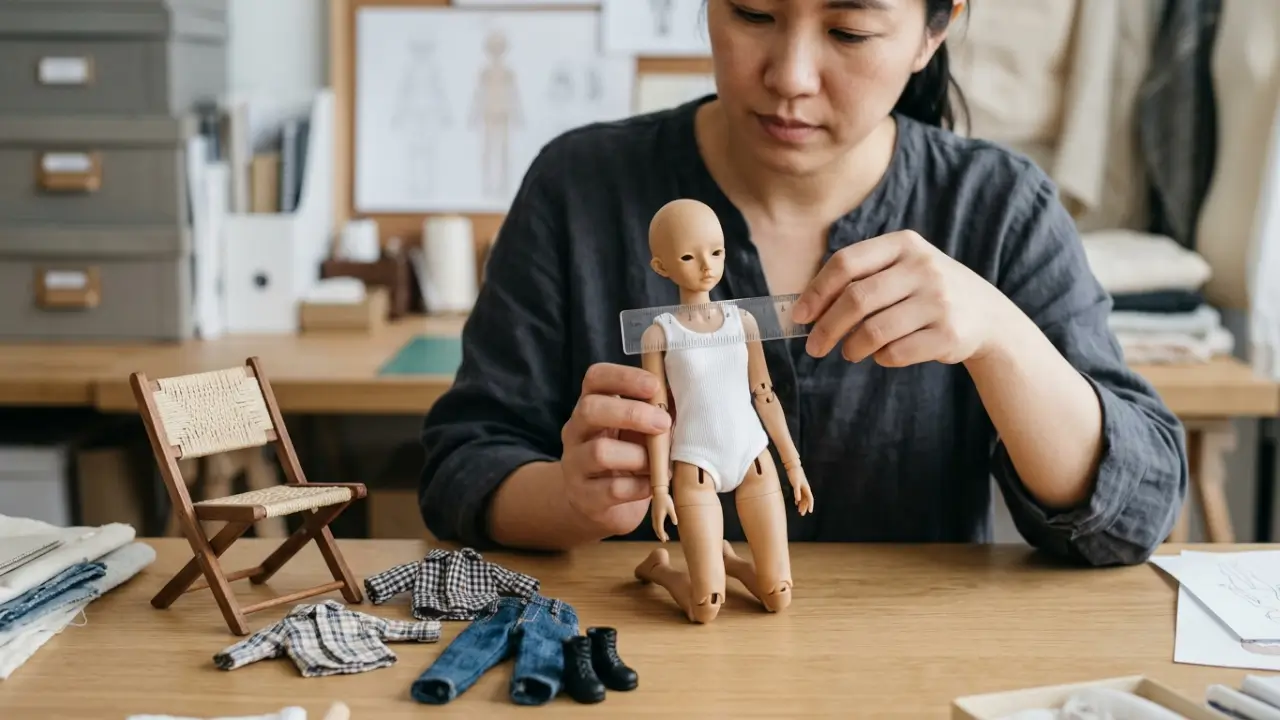
Scale labels are useful for browsing, but they do not guarantee that two dolls can share clothes, shoes, furniture or display stands. Head proportions, torso width, foot length and joint placement can differ even when products are sold under the same nominal scale.
Request a dimension diagram for Aurora Bonnie, Nagi Step and No Symptoms before advertising compatibility. At minimum, confirm total height, shoulder width, chest or torso circumference, waist, hip width and foot length. If interchangeable eyes or wigs are part of the sales proposition, request the corresponding measurements and fitting method as well.
A practical test is to obtain a sample and repeat three normal customer actions: change an outfit, place the doll in a stable seated pose and return every component to the packaging. Document tight joints, loose joints, staining, difficult fasteners or small accessories that are easy to lose.
Do not copy compatibility claims from a visually similar doll. Retailers comparing a larger format can use the Bonnie Dream of Toy Box 1/6 guide to understand why scale changes shelf space, display expectations and accessory planning.
Case Structure Can Decide Which 1/12 BJD Blind Boxes to Stock
Once the product format is understood, compare the commercial unit. Ask for the MOQ, pieces per sealed case, number of standard designs, duplicate pattern if disclosed, and whether individual boxes or only complete cases can be ordered. Do not assume that the number of displayed characters equals the case quantity.
For example, a retailer planning a test across three stores may allocate one sealed case to each location rather than split a single case immediately. That preserves the original assortment while producing store-level sell-through data. This is a planning example, not a recommended quantity; the right order depends on the confirmed case configuration and local demand.
Sealed cases can be easier to merchandise as a coherent series, while mixed assortments may reduce commitment to one theme. They also create different expectations around duplicates and special designs. The guide to sealed series sets versus mixed blind box assortments explains the operational trade-offs.
If these three series are being quoted now, ask the supplier to place Aurora Bonnie, Nagi Step and No Symptoms in one comparison sheet. That small step makes missing assortment and case information much easier to spot.
Calculate the Cost per Sellable Doll, Not Just the Box Price
The lowest unit quotation may not produce the lowest retail cost. Build an estimate that includes the quoted goods value, international freight, customs-related charges where applicable, payment costs, local delivery, inspection expense and a reasonable allowance for non-sellable packaging or unresolved defects.
Planning formula: estimated landed cost per sellable unit = total order-related cost divided by the number of units expected to be saleable.
Compare like with like. A quote per individual blind box cannot be placed beside a quote per sealed case until the case quantity is confirmed. Likewise, confirm the currency, trade terms, carton count, carton measurements, gross weight and quote validity.
Compact dimensions can support efficient storage, but small dolls may include numerous parts and protective packaging. Ask for shipping-carton data rather than estimating freight from the doll height. Also avoid setting a retail price until duties, taxes and marketplace fees have been checked for the destination and sales channel.
Protect Small Parts and Retail Boxes in Transit
For articulated dolls, quality review should cover both cosmetic condition and functional assembly. Request clear photos of the inner tray or protective bag, accessory arrangement, retail box and master carton. Packaging should hold the doll and loose components securely without creating pressure marks or excessive movement.

Use a receiving checklist that employees can repeat:
- Photograph the master carton before opening if crushing, punctures or water exposure are visible.
- Count retail units and compare them with the packing list.
- Inspect a planned sample across different carton positions rather than opening only the top layer.
- Check paint application, surface marks, joint movement, outfit condition and included parts.
- Separate transit damage from apparent production issues and retain labels or batch references.
Buyers should also verify age grading, warning labels, material declarations, intellectual-property authorization and any testing or documentation required in the destination market. Requirements differ by country and sales channel, so a supplier statement should not replace independent compliance review.
Time Reorders Around Sell-Through, Not Empty Shelves
Ask whether each quote is for available inventory, preorder allocation or a future production run. Then confirm the estimated preparation period, shipping method, transit estimate and how delays will be communicated. Treat timing as an estimate until the order terms are documented.
A useful reorder trigger combines stock on hand with average weekly sales and replenishment time. For example, a buyer may review replenishment when remaining stock equals the expected sales during the full reorder window plus a buffer. This is planning logic rather than a promised lead time.
Track sell-through by series and, where possible, by store or channel. If Nagi Step attracts customization buyers while Aurora Bonnie or No Symptoms performs differently in gift-led environments, separate data will produce better reorders than one combined “doll” total. Avoid deep replenishment based only on launch-week demand, which may reflect collector urgency rather than stable sales.
Questions to Send Before Paying for Compact BJD Stock
Watch for inconsistent product names, missing case quantities, refusal to provide carton data, unclear order status, no itemized contents and vague answers about damaged or incomplete dolls. Another warning is a quote that uses “1/12 compatible” without supplying measurements.
Send a structured inquiry so every seller answers the same points:
- Which exact Aurora Bonnie, Nagi Step or No Symptoms edition does this quote cover?
- Is the product classified as BJD, MJD or another construction type, and how is the body assembled?
- What are the doll, retail box and master carton dimensions?
- What is included with every regular design, and can contents vary by character?
- What are the MOQ, sealed-case quantity and assortment structure?
- How are special designs handled, if the series includes them?
- Is the order available stock, preorder inventory or a planned restock?
- Which trade terms, currency and quote-validity period apply?
- What evidence is needed to report missing parts, defects or transit damage?
- Which labeling and product documents are available for buyer review?
Before committing to a larger order, request a comparable quotation for the shortlisted series and resolve every blank specification. A sample review, documented carton data and a written issue process provide a stronger basis for purchasing than promotional images alone. For another product-specific benchmark, see the Luluya Cloud Feather Pavilion BJD buying guide.
FAQ
Which is the best choice: Aurora Bonnie, Nagi Step or No Symptoms?
The best choice depends on confirmed specifications, customer fit, assortment structure, landed cost and delivery status. Compare all three with the same quote sheet rather than choosing from artwork alone.
Are all 1/12 BJD dolls compatible with the same clothes?
No compatibility should be assumed from scale alone. Confirm shoulder, torso, waist, hip and foot measurements, then test clothing on a sample where possible.
What is the difference between a BJD and an MJD blind box?
Terminology can vary between brands and sellers. Ask for the actual joint mechanism, body construction and handling instructions instead of relying only on the BJD or MJD label.
Should a retailer buy sealed cases or individual blind boxes?
Sealed cases can preserve a planned assortment, while individual boxes may allow a smaller or more flexible test. Compare case quantity, duplicate structure, MOQ and customer expectations before deciding.
What should be inspected when compact dolls arrive?
Check carton condition, unit count, retail packaging, surface finish, joint movement, outfit condition and all listed accessories. Photograph problems and retain packaging labels needed for a claim.
Before Selecting the First Series
Aurora Bonnie, Nagi Step and No Symptoms may each suit a different customer or channel. Build the decision around measurable facts: dimensions, construction, contents, case structure, packaging, landed cost and replenishment status. The strongest first order is not necessarily the largest or cheapest; it is the one whose specifications and commercial risks are understood before payment.